Google has a new story to tell Indian users, and this time the story is about them. The tech giant has launched its experimental AI app Dreambeans in India, making the country the first market outside the United States to get it. The app, which turns everyday digital activity into personal illustrated stories, arrived on Android and iOS on Monday, with support for 13 Indian languages alongside English.
For Google, the choice of India as the first stop beyond the US is deliberate. India is the world’s second-largest internet market, and Indian users are among the heaviest users of Google’s own services. The company says India stood out because so many people here use Gemini, Gmail and Google Photos together, giving Dreambeans plenty of everyday material to work with.
What Dreambeans actually does
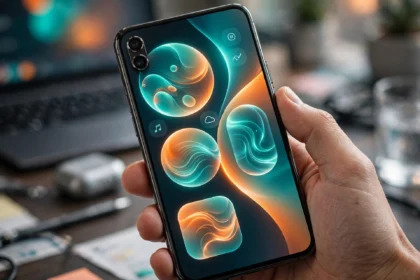
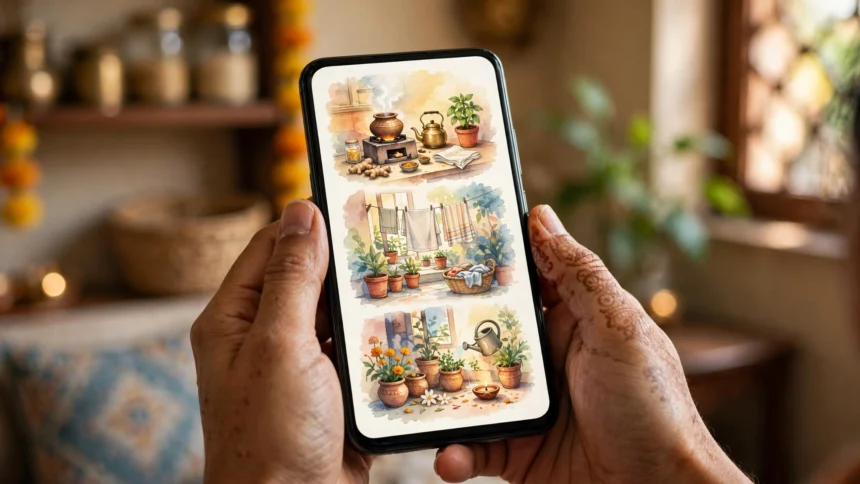
Dreambeans is not another chatbot. You do not type a question and wait for an answer. Instead, the app looks at information from connected Google services, including Calendar, Gemini, Gmail, Photos, Search and YouTube, and proactively creates illustrated stories about your interests and daily life. No prompt is needed. Open the app, and a story is already waiting.
The app was first introduced in June in the US. At launch it featured static, AI-generated illustrations, but Google has since added a feature that uses its Veo video-generation model to animate images in select stories. The idea is closer to a personal magazine than a search box: your week, your trips, your hobbies, retold as a visual story.
Google product manager Gozde Oznur told reporters during a briefing that the company picked India because of strong interest from Indian users seeking access to the app, along with the widespread use of its services in the country. That overlap, she said, is exactly what Dreambeans needs to work well.
13 languages, but one at a time
Language is central to the India launch. Dreambeans supports 13 local languages, including Hindi, Punjabi, Tamil, Telugu and Bengali, alongside English. That breadth matters in a country where most people do not use English as their first language, and where voice and local-language use is growing fast.
There is a catch, though. Users can select only one language at a time for their generated stories. The app can draw on information across Google services in multiple languages, but it cannot yet generate stories that mix languages. In a country where millions switch between Hindi and English mid-sentence, often in what is commonly called Hinglish, that limitation could feel real.
Google has not said when mixed-language stories might arrive, but the gap is worth noting for anyone who lives their digital life in two or three languages at once.
Why India matters for Dreambeans
The timing also tells a story. In the US, Dreambeans has had a slow start. Market intelligence firm Sensor Tower estimates the app has recorded nearly 55,000 downloads in the US since its June debut. About 63 percent of those downloads came in September, when Google opened the app to all eligible US users aged 18 and older. Downloads then dropped 84 percent month over month to about 5,500 in October.
For comparison, in their respective first 30 days after launch, Meta’s Muse recorded an estimated 7.4 million downloads, ChatGPT 2.8 million, Grok Bot 362,000 and Claude 155,000, while Dreambeans recorded about 29,000. The comparison is not quite like-for-like, since Dreambeans is a niche storytelling app rather than a general-purpose AI assistant, but the gap shows how much work Google has to do to make the app a habit.
India, with its scale and its enthusiasm for new Google products, is the bet to change that momentum. If Indian users take to personal visual stories, the app could find the audience it has struggled to build at home.
The privacy question
An app that reads your calendar, email and photos will naturally raise privacy questions, and Google addressed them head-on in its briefing. Users can choose which Google services to connect to Dreambeans and disconnect them at any time. They can also delete their Dreambeans data from within the app.
Oznur said information deleted from the underlying connected services is also removed from Dreambeans’ personalisation system. Users can also tell the app to avoid certain subjects, including business-related information, and it will try to adjust its stories accordingly.
Two more limits are built in. Dreambeans is available only to personal Gmail account holders, not enterprise users, and generated stories are visible only to the account holder. There is also a sensitive edge the company acknowledged: the app could surface memories involving people who have died. Users can ask it to stop showing certain subjects, similar to the controls in Google Photos that let people limit which memories appear.
What comes next
Google says it is exploring ways to make Dreambeans more actionable, moving beyond personalised stories and recommendations to help users act on the app’s suggestions. What that looks like in practice is still unclear, but it points to a future where the app does more than narrate your week.
For now, the India launch is a test of a simple idea: that people want AI to show them their own lives back, beautifully illustrated, without being asked. Whether Indian users embrace that idea, in Hindi, Tamil, Bengali or any of the other supported languages, will decide whether Dreambeans becomes a daily habit or remains an experiment.
FAQs
What is Google Dreambeans?
Dreambeans is Google’s experimental AI app that creates personalised, illustrated stories from your activity across connected Google services, without needing a prompt.
Is Dreambeans available in India?
Yes. Google expanded Dreambeans to India on Monday, its first market outside the United States. It is available on Android and iOS.
Which languages does Dreambeans support in India?
The app supports 13 Indian languages, including Hindi, Punjabi, Tamil, Telugu and Bengali, alongside English, though each story uses only one language at a time.
Does Dreambeans need my Google data to work?
Yes, it draws on connected services such as Calendar, Gmail, Photos, Search and YouTube. Users choose which services to connect, can disconnect them anytime, and can delete their Dreambeans data in the app.
Is Dreambeans free?
Google has launched the app as an experimental product for personal Gmail account holders aged 18 and older. It has not announced any paid tier for the India launch.
Dreambeans is an experimental Google product, and its features may change as the app develops. Users should review the app’s data controls before connecting personal Google services.