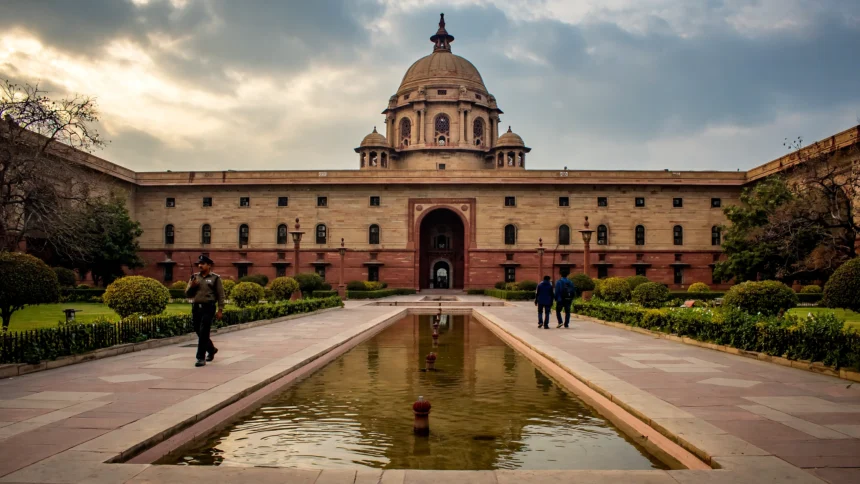
India’s economy is set to grow 7.3 per cent in the current financial year, and the pace could quicken to 7.7 per cent in the next quarter, S Mahendra Dev, Chairman of the Economic Advisory Council to the Prime Minister (EAC-PM), said on Tuesday. The forecast, delivered on the sidelines of the JRD Tata Awards 2026 in New Delhi, is the latest in a series of upgrades that have put India firmly at the top of the world’s major-economy growth league.
Dev pointed to three forces behind the momentum: exports that keep finding new markets, foreign money returning to India, and a domestic economy that has held up despite a difficult global backdrop. He also said India is targeting $1 trillion in exports in 2026-27, a goal that would mark a new high for the country’s trade.
What the EAC-PM chief said
Speaking to reporters in the capital, Dev said the economy’s growth this year would come in at 7.3 per cent, with the following quarter looking stronger still. “India’s growth we are expecting 7.3 per cent this year. And then next quarter, about 7.7 per cent,” he said.
He credited the sustained momentum in exports, the diversification of export markets and improving foreign investment inflows. Both foreign direct investment and foreign portfolio investment are coming back to India, he said, and that return of foreign capital will give fresh energy to economic activity and help push exports higher.
The $1 trillion export target for FY 2026-27 sits at the centre of that story. India has been widening its export basket beyond traditional markets, and Dev said the diversification is already paying off. “Because we have diversified our exports, so I think it will continue throughout the year, and we are planning for $1 trillion in exports this year for FY 2026-27,” he said.
How the forecast stacks up
Dev’s 7.3 per cent call does not stand alone. It matches the Finance Ministry’s own raised forecast: in its Monthly Economic Review for October, released on 29 October, the ministry lifted its FY27 growth estimate to 7.3 per cent from the 6.8 to 7.2 per cent range given in the Economic Survey in February. The ministry also put July-September growth at 7.35 per cent on its nowcasting model.
Other forecasters are close, though slightly more cautious:
- Economic Advisory Council to the PM: 7.3 per cent for FY27, 7.7 per cent next quarter
- Finance Ministry: 7.3 per cent for FY27, 7.35 per cent for the July-September quarter
- Reserve Bank of India: 7.1 per cent for FY27
- International Monetary Fund: 7 per cent for FY27, raised from 6.4 per cent in July
- ICRA: 7.5 per cent for the July-September quarter, a five-quarter low
The economy grew 7.8 per cent in the April-June quarter, the first quarter of FY27. The official number for the July-September quarter will be released by the Ministry of Statistics and Programme Implementation on 30 November, and it will be the first hard test of these forecasts.
Why it matters
A 7.3 per cent growth rate matters because of what it buys. At that pace, India remains the fastest-growing major economy in the world, comfortably ahead of China and every large Western economy. For ordinary readers, the number is not abstract: faster growth is what turns into new jobs, higher tax collections that fund welfare and infrastructure, and rising incomes.
Three things make this forecast different from a routine upgrade. First, it comes with exports, not just domestic demand, doing the heavy lifting. Export-led growth tends to create better-paying manufacturing and services jobs than a purely consumption-driven boom. Second, the return of foreign portfolio investors, after months of outflows, takes pressure off the rupee, which has strengthened to around Rs 93.46 to the dollar. Third, the forecasters are converging: when the Prime Minister’s advisory council, the Finance Ministry, the RBI and the IMF all land within a few tenths of each other, the estimate is harder to dismiss as optimism.
But the number also sets a bar. If growth does touch 7.7 per cent next quarter, it would be the strongest quarterly print in over a year, and it would arrive just as the government begins pre-budget consultations for 2027. A strong print would give the Finance Ministry room to spend; a weak one would force hard choices.
The inflation question
The one cloud over the growth picture is prices. Retail inflation rose to 6.09 per cent in October, crossing the Reserve Bank’s 6 per cent upper tolerance limit for the first time in nearly two years and the highest since October 2024. Food inflation accelerated to 8.94 per cent, and wholesale inflation jumped to 12.29 per cent in October, driven by fuel and energy costs.
The RBI has already responded, raising its repo rate by 25 basis points to 5.50 per cent in October. Its Monetary Policy Committee meets again early next month, and the inflation data will weigh on that decision. Higher rates cool prices, but they also raise borrowing costs for businesses and homebuyers, which is why the growth-versus-inflation balance is the most watched question in Indian economic policy right now.
For now, the growth story and the inflation story are running in parallel. The economy is expanding fast, and prices are rising fast. Which one the RBI prioritises in December will shape interest rates, and through them, loans, EMIs and investment decisions for months to come.
What to watch next
- 30 November: Official July-September GDP data from MoSPI, the first reality check on the 7.3 per cent forecast.
- Early December: The RBI’s Monetary Policy Committee decision, with inflation above the tolerance band.
- Export numbers: Monthly trade data will show whether the $1 trillion target is on track.
- Foreign flows: Whether FPI inflows, which returned in November, keep coming.
FAQs
What is India’s GDP growth forecast for FY27?
EAC-PM Chairman S Mahendra Dev expects 7.3 per cent growth in FY 2026-27, rising to about 7.7 per cent in the next quarter. The Finance Ministry has also raised its forecast to 7.3 per cent.
Who is S Mahendra Dev?
He is the Chairman of the Economic Advisory Council to the Prime Minister, an independent body that advises the Prime Minister on economic policy.
What is India’s export target for FY27?
India is targeting $1 trillion in exports in FY 2026-27, helped by diversification into new markets and returning foreign investment.
When will the July-September GDP data be released?
The Ministry of Statistics and Programme Implementation will release the Q2 FY27 GDP data on 30 November 2026.
Why is inflation a concern if growth is strong?
Retail inflation hit 6.09 per cent in October, above the RBI’s 6 per cent tolerance limit, and wholesale inflation reached 12.29 per cent. High inflation eats into household budgets and may push the RBI to keep interest rates higher for longer.
India’s growth forecast has rarely looked this confident, and rarely faced this sharp a test from prices. The next two data points, GDP on 30 November and the RBI’s December decision, will show which story wins.