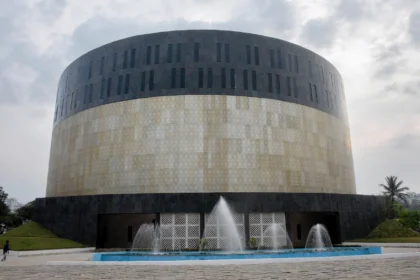
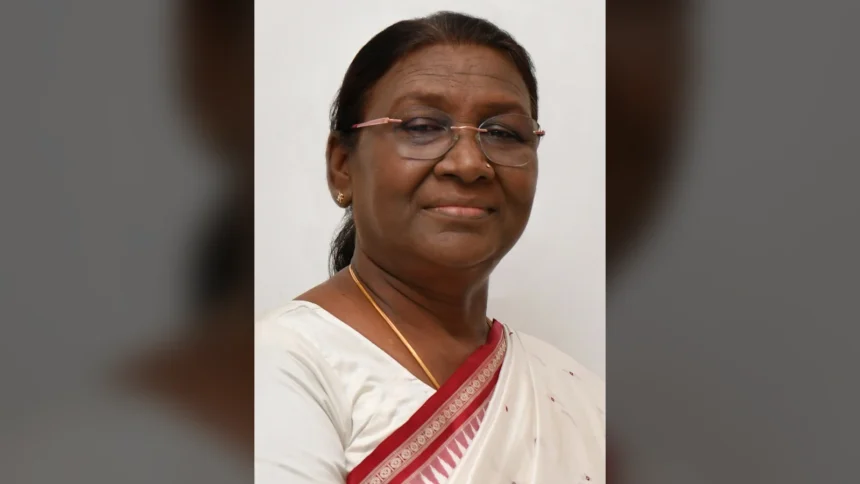
New Delhi: President Droupadi Murmu on Friday told a hall full of young doctors that the white coat they were about to wear carries a responsibility far bigger than a degree. Addressing the 12th convocation of the Atal Bihari Vajpayee Institute of Medical Sciences (ABVIMS) and Dr Ram Manohar Lohia Hospital at Vigyan Bhawan in New Delhi, she urged the graduating students to keep medical ethics, compassion and service to humanity at the centre of their practice.
Union Health Minister J P Nadda, who was present at the ceremony, said medical education is both a privilege and a profound responsibility towards society. During the convocation, 324 medical graduates received degrees across undergraduate, postgraduate and super-speciality disciplines, and 58 gold medals were conferred for academic excellence. Nadda also pointed to the government’s initiative of Rs 15,000 crore to add 10,000 medical seats, aimed at strengthening India’s healthcare workforce.
But the sharpest message of the day was about a disease India has fought for decades. The President used the occasion to underline how far the country has come in controlling malaria, a disease she said she had seen up close in villages, where it hit livelihoods, schooling and entire families, especially in rural and tribal communities.
Malaria cases down nearly 80% in a decade
Malaria cases and deaths in India have declined by nearly 80 per cent between 2015 and 2025, President Murmu said, drawing on figures she had first highlighted earlier this week while inaugurating the Golden Jubilee celebrations of the Indian Council of Medical Research, National Institute of Malaria Research (ICMR-NIMR) on Tuesday.
The numbers behind that fall are striking. The count of high-burden districts has come down from 155 to 33, and as many as 160 districts reported zero indigenous malaria cases during 2022 to 2025, a sign that local transmission is being broken in large parts of the country. India also exited the World Health Organisation’s High Burden to High Impact group in 2024, a recognition of the progress made.
Health Minister Nadda added another measure of the change at the same event. India is home to about 16 per cent of the world’s population, he said, but accounts for only around 0.7 per cent of global malaria cases and 0.6 per cent of malaria deaths.
The President also expressed confidence in the indigenous malaria vaccine being developed in Bhubaneswar, and appreciated ICMR-NIMR’s contribution to it over five decades of research. She noted the institute’s wider work as well, including research against tuberculosis, leprosy and kala-azar, and its role in building a nationwide testing network and in the development of India’s first indigenous COVID-19 vaccine.
What she told the young doctors
The convocation address was as much about the future of medicine as it was about the past. President Murmu asked the graduating doctors to uphold medical ethics and to place compassion, sensitivity and service at the heart of healthcare. She also stressed a practical point that matters in malaria treatment: patients must complete the full prescribed course of medication, because stopping early allows the disease to return and weakens the gains made.
That advice lands at a moment when researchers are testing ways to make treatment easier to finish. A randomised controlled trial published in The Lancet Regional Health, Southeast Asia in October 2026 compared a seven-day course of the drug primaquine with the standard 14-day course for treating P. vivax malaria, the relapsing form of the disease. Shorter courses, if they prove equally effective, could help more patients complete treatment.
Surveillance remains the other half of the task. A study published in the Malaria Journal in October 2026, based on an investigation in an informal settlement in Rajasthan, a state not usually seen as malaria-endemic, showed why vigilance cannot stop at the borders of high-burden districts. The final push towards elimination will need better detection in vulnerable communities that are easy to miss.
Why it matters
The headline figure is a genuine public health achievement, but it is not the whole story. Malaria was once one of India’s most serious health challenges, and its retreat changes daily life in ways a percentage cannot capture. Fewer cases mean fewer lost school days for children, fewer lost wages for daily-wage families, and less pressure on rural clinics that once filled up every monsoon with fever cases.
The district-level numbers matter more than the national average. When 160 districts report zero indigenous cases over four years, it means local transmission has been interrupted in those places, not merely reduced. And when the high-burden list shrinks from 155 districts to 33, the fight becomes more focused: resources, testing and mosquito control can concentrate where the disease still holds ground.
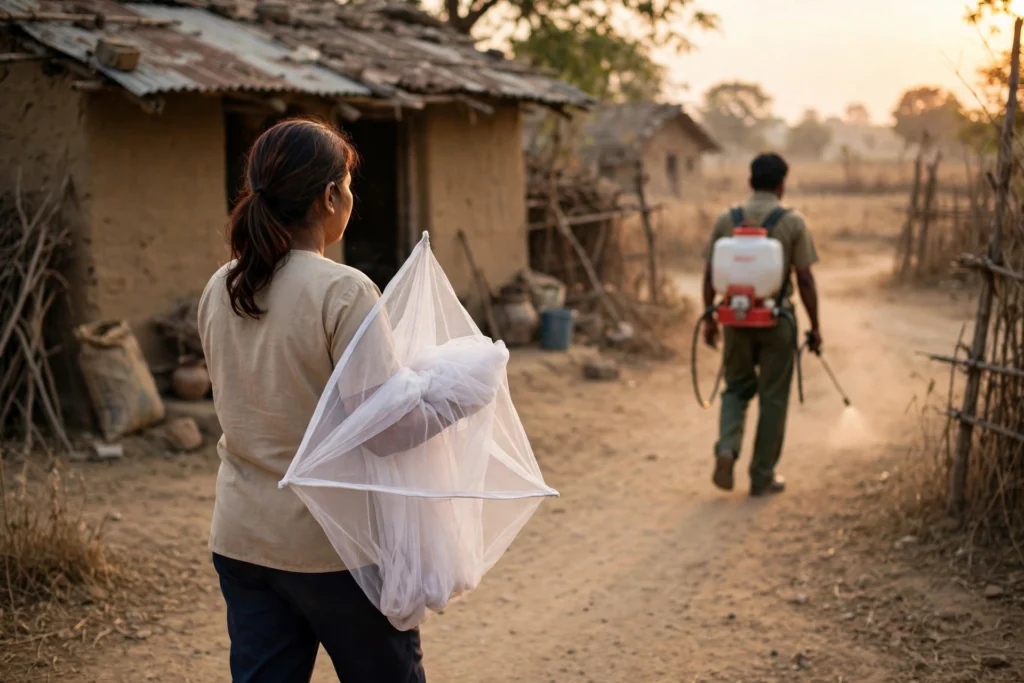
There is also a practical implication for readers. The tools that drove the decline, bed nets, indoor spraying, rapid testing and full treatment courses, still depend on ordinary behaviour. Using a net, getting a fever tested quickly and finishing the medicine are small acts that protect the national gain. The President’s warning at the ICMR-NIMR event was that climate change, unplanned urbanisation and mosquitoes growing resistant to insecticides could slow the push, so the gains need defending, not just celebrating.
India has set itself the goal of eliminating malaria by 2030 under the National Framework for Malaria Elimination. The distance left is real: in 2024, the WHO South-East Asia Region recorded an estimated 2.7 million malaria cases and 3,900 deaths, and India accounted for 73 per cent of the region’s cases and 89 per cent of its deaths. The country has come furthest in the region, and it also has the most left to finish.
What happens next
The road to 2030 runs through stronger disease surveillance, research, mosquito control and community participation, the four areas President Murmu called for at the ICMR-NIMR Golden Jubilee. The National One Health Mission, which she praised at the event, is meant to strengthen India’s capacity to spot health risks that emerge where humans, animals and the environment meet.
For the 324 doctors who graduated on Friday, the message was direct: the country’s biggest health wins have come from science combined with service, and their generation will be judged on whether the last, hardest stretch of elimination gets finished.
FAQs
What did President Murmu say about malaria?
She said malaria cases and deaths in India have declined by nearly 80 per cent between 2015 and 2025, and that the number of high-burden districts has fallen from 155 to 33.
How many districts are now free of local malaria transmission?
As many as 160 districts reported zero indigenous malaria cases during 2022 to 2025.
When does India aim to eliminate malaria?
India targets malaria elimination by 2030 under the National Framework for Malaria Elimination (2016-2030).
What could slow the progress?
President Murmu warned that climate change, unplanned urbanisation and growing mosquito resistance to insecticides could threaten elimination efforts.
What did the President tell the graduating doctors?
At the ABVIMS convocation in New Delhi, she urged young doctors to uphold medical ethics and keep compassion, sensitivity and service to humanity at the heart of healthcare.
India’s malaria story has moved from a nationwide burden to a focused final battle, and the doctors who graduated on Friday will be the ones fighting its last stretch.