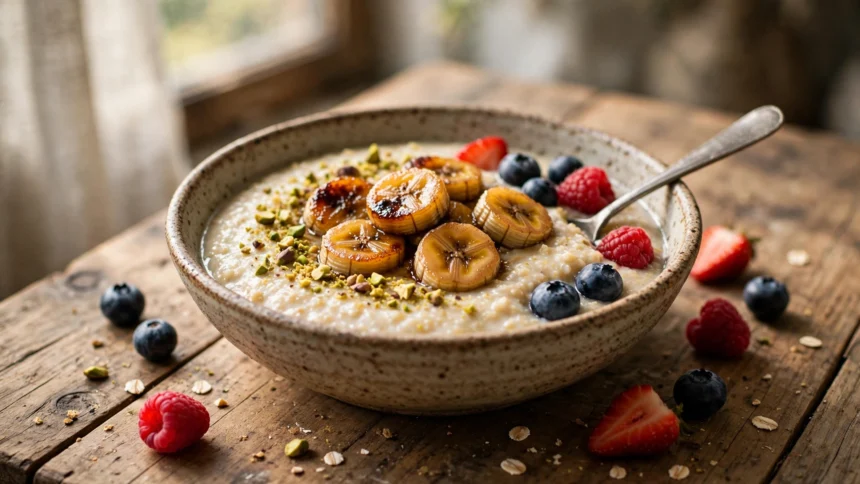
There was a time when porridge meant one thing: a plain, slightly sad bowl eaten because it was good for you, not because you wanted it. That time is over. In kitchens, cafes and on social media feeds across India this week, the humble bowl of porridge is getting a full makeover, and the reason has a name that is suddenly everywhere: fibremaxxing.
The trend is simple, which is probably why it is catching on. Instead of cutting foods out, fibremaxxing asks you to add more fibre to what you already eat. Oats, beans, lentils, fruits, vegetables, nuts and seeds all count. Porridge, it turns out, is the perfect starting point, because it is already a fibre-rich base waiting for a topping.
From hospital food to gourmet bowl
Walk into the new version of porridge and you will barely recognise it. Chefs and home cooks are dressing up oat bowls with caramelised bananas, pistachio butter, sour cherries, poached pears and even savoury toppings like mushrooms with pesto. What was once a sweet, one-note breakfast is now showing up as a carefully built dish, sometimes sweet, sometimes savoury, and often good enough to photograph before eating.
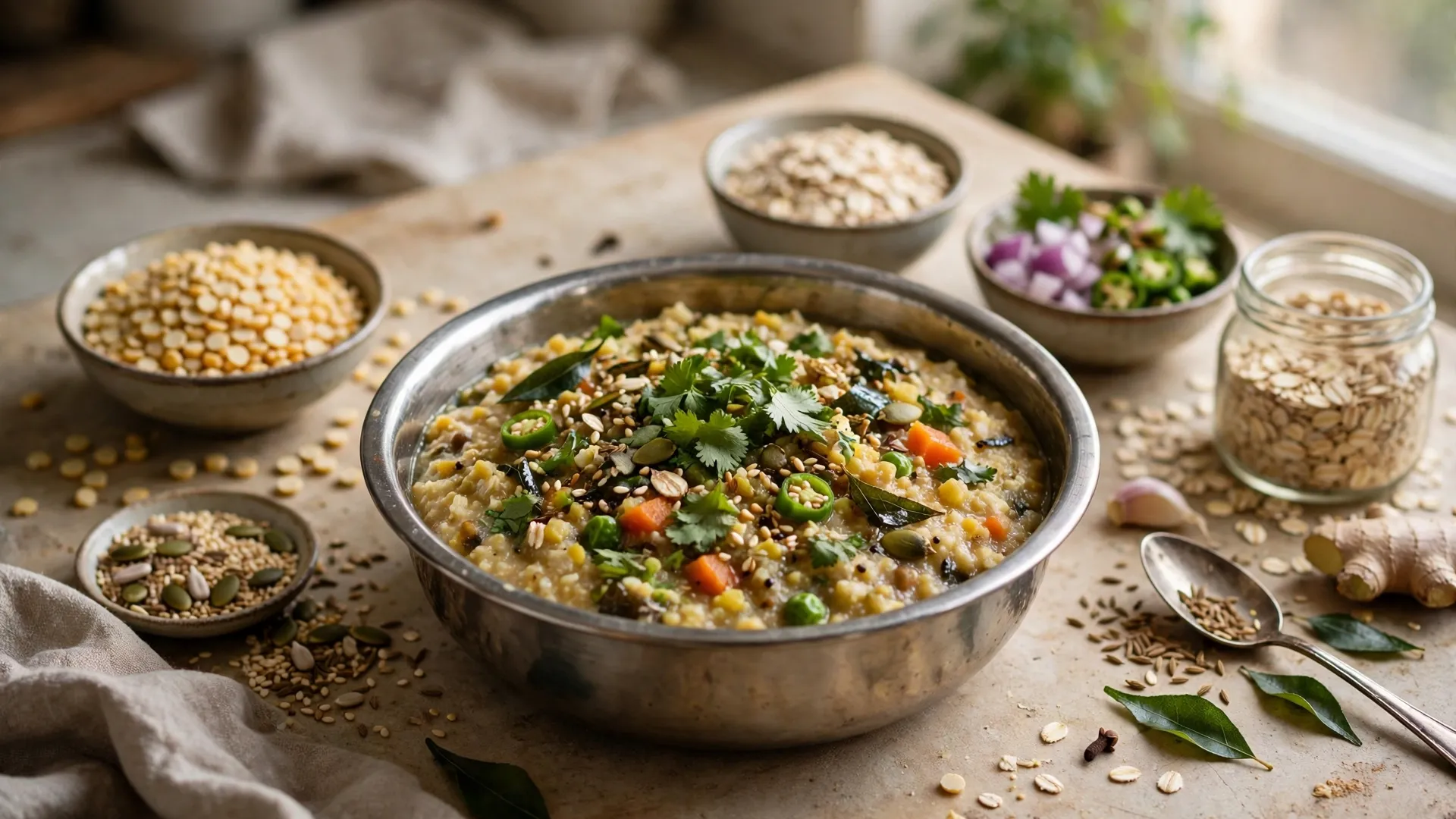
India, of course, had its own version of this all along. Khichdi, made with rice and lentils, sometimes with vegetables, ghee and warming spices, has long been the comfort bowl for upset stomachs, tired evenings and family dinners. Dalia, the broken-wheat preparation, plays a similar role in many homes. Now oats khichdi is finding its own audience, a small twist that keeps the comfort and adds the fibre focus that fibremaxxing celebrates.
Why fibre is having its moment
For years, protein stole the spotlight in wellness conversations. Fibre is finally getting its turn, and the science behind it is straightforward. Oats contain a soluble fibre called beta-glucan, which supports digestive health and can help lower LDL cholesterol. That is one reason a bowl of oats feels so filling and steady compared with a sugary breakfast that fades by mid-morning.
Most adults need roughly 25 to 38 grams of fibre a day, yet many people eat far less. Fibremaxxing is, at heart, an attempt to close that gap without a complicated diet plan. A cup of cooked oatmeal provides around 4 grams of fibre on its own, and the toppings do the rest of the work: a handful of chia seeds, some berries, crushed almonds or a spoonful of nut butter can lift a simple bowl into genuinely fibre-rich territory.
How to build a better bowl at home
You do not need imported ingredients or expensive powders to join in. The Indian kitchen is already well stocked for this trend:
- Start with a base you like: rolled oats, dalia, ragi porridge or even a light moong dal khichdi all work.
- Add crunch and fat: crushed almonds, walnuts, pistachios or a spoonful of peanut or pistachio butter.
- Add fruit for sweetness: banana, berries, stewed apple or poached pear beat refined sugar for flavour and fibre.
- Go savoury sometimes: try oats or dalia with sauteed mushrooms, herbs, a drizzle of olive oil and a pinch of salt.
- Keep the seeds small but mighty: chia and flax seeds pack close to 10 grams of fibre into just two tablespoons.
The one rule worth respecting is patience. Nutrition experts warn against jumping from very little fibre to a very high intake overnight, because that can bring bloating and discomfort. Increase gradually, by a few grams every few days, and drink enough water through the day so the extra fibre can do its job properly.
Old food, new feeling
Part of porridge’s comeback is nostalgia, and part of it is practicality. It is cheap, quick, easy to customise and genuinely filling. In a season when festive eating is in full swing, a lighter, fibre-rich bowl in the morning feels like a small reset rather than a punishment.
So if your breakfast bowl suddenly looks fancier than your dinner plate, you are not imagining it. Porridge has stopped apologising for itself. With a little fibre, a little creativity and a topping or two, the plainest bowl in the kitchen has become one of the most interesting things to eat right now.
FAQs
What is fibremaxxing?
It is a social media nutrition trend that encourages deliberately eating more fibre, mainly from whole foods like oats, beans, lentils, fruits, vegetables, nuts and seeds, to support digestion and gut health.
How much fibre do adults need each day?
Most guidance puts the range at roughly 25 to 38 grams a day for adults, though individual needs vary. Many people currently eat well below that range.
Is porridge actually high in fibre?
Yes, especially when built well. A cup of cooked oatmeal gives around 4 grams of fibre, and toppings like chia seeds, berries and nuts raise the total considerably.
Can I do fibremaxxing with Indian food?
Easily. Dal, chana, rajma, millets, whole wheat, vegetables and seeds are all fibre-rich, and dishes like khichdi, dalia and oats khichdi fit the trend naturally.
Is there a downside to eating too much fibre too fast?
Yes. A sudden jump can cause gas, bloating and cramping. Increase intake gradually over days and drink enough water alongside the extra fibre.
Porridge may have started as the plainest breakfast in the house, but in 2026 it has earned its glow-up. Pass the pistachio butter.