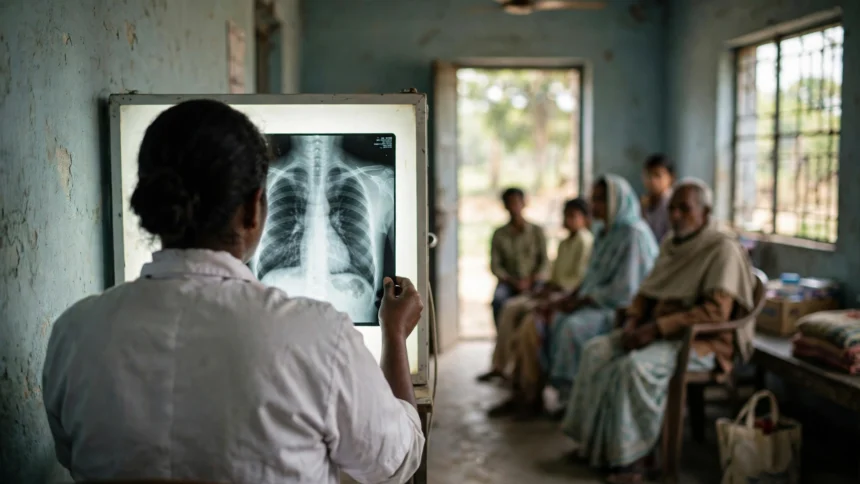
India has recorded its sharpest ever fall in tuberculosis deaths, with the World Health Organization reporting a 38 per cent decline in TB mortality since 2015. The figure, released in the WHO Global Tuberculosis Report 2026 on Thursday, puts India ahead of the global reduction of 35 per cent over the same period, and it comes with another strong number: a 94 per cent treatment success rate among patients with drug-susceptible TB.
The report says India’s estimated TB mortality rate fell from 28 deaths per lakh population in 2015 to 18 per lakh in 2025. For a disease that still kills lakhs of Indians every year, that is a meaningful shift, and the Health Ministry credits it to a mix of faster detection, better diagnostics and food support for patients on treatment.
What the WHO report says
The WHO Global Tuberculosis Report 2026 is the organisation’s annual check on how countries are doing against the disease. This year’s edition notes that India, which carries the world’s largest TB burden, has managed to bend the curve on deaths even as case detection has gone up, a combination that usually points to cases being caught earlier and treated better.
The 94 per cent treatment success rate is significant because it covers patients with drug-susceptible TB, the most common form of the disease. A high cure rate means fewer patients drop out midway, fewer develop drug resistance, and fewer pass the infection on to others.
The ministry also pointed out that 96 per cent of the funding for India’s TB programme now comes from domestic resources, a sign of how much of the effort is being paid for at home rather than by outside donors.
A screening drive on a scale few countries have attempted
Much of the progress is being linked to the TB Mukt Bharat Abhiyaan, the intensified screening campaign that began on December 7, 2024. In its first phase it covered 347 high-priority districts across 33 states and Union Territories, before being expanded across the country. A second, 100-day intensified round began on March 24, 2026, focusing on 1.58 lakh high-risk villages and wards, crowded settings and vulnerable groups.
The numbers from the campaign, counted between December 7, 2024 and November 8, 2026, show its scale:
- More than 25 crore people screened for TB symptoms
- Over 11 crore chest X-rays carried out
- More than 3 crore nucleic acid amplification tests (NAAT) for rapid diagnosis
- 48.64 lakh new TB cases identified
- 14.97 lakh of those cases had no symptoms at all
That last figure matters most. Nearly 15 lakh people were found to have TB even though they felt fine, which means they would probably never have walked into a clinic on their own. Finding them early is exactly what breaks chains of transmission in crowded neighbourhoods, workplaces and hostels.
Technology is doing the heavy lifting
Under the National TB Elimination Programme, the government has pushed AI-enabled chest X-rays that can flag a likely TB case in minutes, rapid molecular tests that confirm the diagnosis the same day, and treatment that starts promptly once a case is confirmed. Patients also get nutritional support through the Ni-kshay Poshan Yojana, and the Ni-kshay Mitra initiative connects them with community supporters.
AI tools are also being used to spot disease hotspots and predict which patients are at higher risk of a poor outcome, so health workers can follow up with them first. The Ni-kshay digital platform tracks patients through diagnosis, treatment and follow-up, while tools like the Khushi AI chatbot help answer questions from patients and families
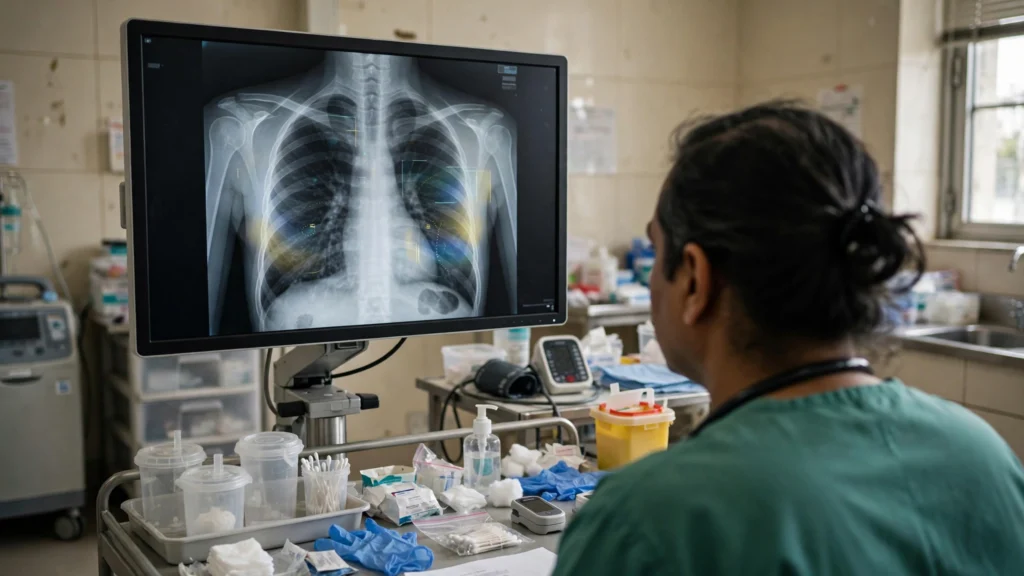
Community participation has grown alongside the technology. Panchayati Raj institutions, civil society groups, private doctors and corporate partners have all been drawn into the effort, and 67,933 panchayats were declared TB-free in 2025.
What still needs watching
The report is good news, but it is not the end of the story. India still has the highest TB burden in the world, and the WHO is yet to publish an updated country profile for India. The Indian Council of Medical Research’s National Institute for Research in Tuberculosis carried out a nationally representative TB prevalence survey in 2025, and its findings have been shared with the WHO and are under technical discussion.
Drug-resistant TB remains a harder problem than the drug-susceptible form, and the 94 per cent success rate does not cover those tougher cases. Sustaining the screening intensity, keeping patients on treatment for the full course, and making sure the price of that effort does not fall on patients will decide whether the decline continues.
For now, though, the direction is clear. A disease that once seemed impossible to control at India’s scale is being pushed back, one screening camp, one X-ray and one completed treatment at a time.
FAQs
How much have TB deaths fallen in India since 2015?
TB mortality has fallen by 38 per cent since 2015, according to the WHO Global Tuberculosis Report 2026, compared with a global decline of 35 per cent over the same period.
What is India’s TB treatment success rate?
The treatment success rate is 94 per cent among patients with drug-susceptible TB, the most common form of the disease.
How many people were screened under the TB Mukt Bharat Abhiyaan?
More than 25 crore people were screened between December 7, 2024 and November 8, 2026, leading to 48.64 lakh new TB cases being found, including 14.97 lakh people with no symptoms.
What is the TB mortality rate in India now?
The estimated TB mortality rate fell from 28 deaths per lakh population in 2015 to 18 per lakh in 2025.
How is India’s TB programme funded?
About 96 per cent of the funding requirement for the TB programme is met through domestic resources, according to the Health Ministry.
India’s fight against TB has reached a turning point, and the next test is whether the pace of the last two years can be held for the years ahead.