
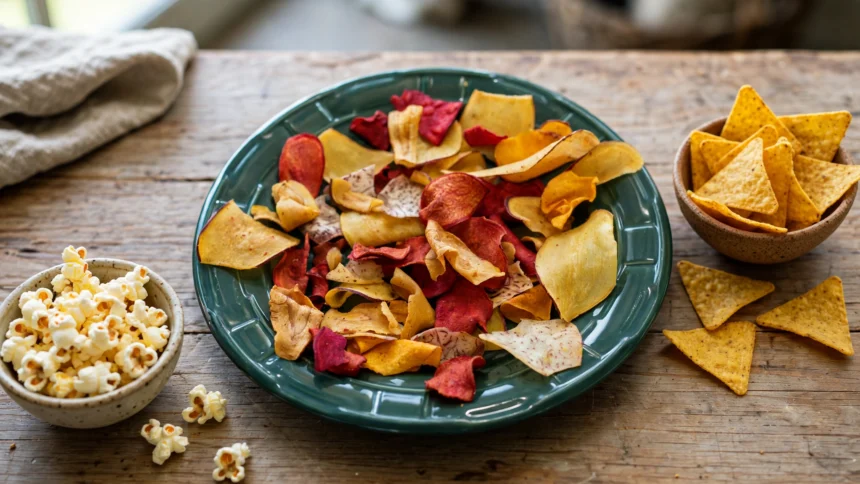
Teenagers who ate a lot of salty snacks faced a higher risk of inflammatory bowel disease as young adults, a study has found. Published in the journal Gut, it tracked nearly 1.12 lakh children and teenagers in Norway, Denmark and Sweden for over a decade.
Compared with teenagers who ate few salty snacks, those who ate the most had a 32% higher risk of IBD, the umbrella term for Crohn’s disease and ulcerative colitis. For ulcerative colitis alone, the risk was 51% higher. There was a protective side too: teenagers who ate a lot of fruit had a 64% lower Crohn’s risk.
What the study found
University of Gothenburg researchers combined three long running birth cohorts, covering 111,999 participants whose diets were recorded at ages 7 to 8 and again at 11 to 15. Their health was followed through national patient registries until 2024, an average of 12 to 17 years. In that time, 653 people were diagnosed with IBD.
- Salty snacks in the teen years: high intake was linked to a 32% higher risk of any IBD and a 51% higher risk of ulcerative colitis.
- Fruit in the teen years: high intake was linked to a 64% lower risk of Crohn’s disease.
- Fruit and fish in childhood: higher intake at ages 7 to 8 was linked to a lower risk of Crohn’s disease later in life.
- No clear link: vegetables, dairy, meat, sugar sweetened drinks and sweet snacks showed no clear association with IBD risk.
Salty snacks meant crisps, corn chips and popcorn, and the findings describe an association, not proof the snacks caused the disease.
How the study was done
The three cohorts, in Norway, Denmark and Sweden, enrolled families from the late 1990s onwards. Parents and teenagers filled in diet questionnaires at set ages, and diagnoses came from official health registries rather than self reports. Following the same people from childhood let researchers separate early diet from teen diet. The results held up after checks for early life factors such as antibiotics in the first year of life and breastfeeding.
What it does not prove
This is an observational study, and the authors are open about that. It shows heavy teen salty snack eating and later IBD travel together, but cannot prove one caused the other. Teenagers who eat a lot of crisps may also share other habits, such as lower physical activity, that the study could not fully adjust for.
Only 653 of the nearly 1.12 lakh participants developed IBD, so the absolute risk for any one teenager stays small. IBD is a lifelong condition in which the gut becomes inflamed. Crohn’s can affect any part of the digestive tract, while ulcerative colitis affects the colon and rectum.
Why it matters
IBD was once seen mainly as a disease of the West, but cases have been climbing in India and across Asia as diets shift towards processed food. Crisps, namkeen style salty snacks and popcorn are everyday food for Indian teenagers, sold at every school gate. A study tying heavy teen snacking to later gut disease lands directly on that habit.
The study also found a protective pattern on the other side of the plate: fruit and fish in childhood were linked to lower Crohn’s risk, and fruit in the teen years to a much lower risk. The teen years look like a window that counts: habits set before adulthood, while the immune system and gut microbiome are still maturing. If other studies confirm the pattern, healthy eating in childhood could become a genuine prevention strategy for IBD.
What parents and teenagers can take from this
The findings point to a few practical steps:
- Keep salty snacks occasional, not daily. The risk was tied to high intake, so frequency is the lever families can control.
- Put fruit on the table first. The strongest protective link in the study was fruit, in childhood and the teen years.
- Add fish where the family eats it. Higher fish intake at ages 7 to 8 was linked to lower Crohn’s risk later.
- Watch for warning signs. Persistent stomach pain, ongoing diarrhoea, blood in the stool or unexplained weight loss should be checked by a doctor.
FAQs
What is inflammatory bowel disease?
A long term condition in which the gut becomes inflamed. Its two main forms are Crohn’s disease and ulcerative colitis.
How big was the study?
It covered 111,999 children and teenagers in Norway, Denmark and Sweden, followed for 12 to 17 years on average, and was published in Gut in November 2026.
Did salty snacks really raise IBD risk by 32%?
High intake meant a 32% higher risk of any IBD and a 51% higher risk of ulcerative colitis than low intake. The study shows a link, not proof of cause and effect.
Which snacks counted as salty snacks?
Crisps, corn chips and popcorn. Questions about salty snacks were asked only in the teen years, at ages 11 to 15.
Did anything lower the risk?
High fruit intake in the teen years was linked to a 64% lower risk of Crohn’s disease, and higher fruit and fish intake at ages 7 to 8 to lower Crohn’s risk later in life.
The study adds one more reason to treat teen snacking as a health decision, not just a taste preference. The crisps will still be there tomorrow. The question is how often they are on the plate today.