Every year, pneumonia quietly claims the lives of thousands of young children across India. It rarely makes headlines the way an outbreak does, yet it remains one of the leading causes of death among children under five. Today, on World Pneumonia Day, a nationwide push to change that begins again, with Andhra Pradesh rolling out a months-long campaign to catch the illness early and save young lives.
The campaign, called SAANS, short for Social Awareness and Action to Neutralise Pneumonia Successfully, will run from November 12, 2026, to February 28, 2027. In Andhra Pradesh, the Health Department has announced a state-wide rollout across all districts, with health workers fanning out into villages and towns to screen infants, spread awareness and make sure treatment reaches children fast.
Why pneumonia still matters
Pneumonia accounts for 17.2 percent of all deaths among children under five in India, according to figures cited by health officials launching the campaign. That makes it one of the biggest single killers of young children in the country, ahead of many diseases that get far more attention.
The tragedy is that most of these deaths are preventable. Pneumonia in children is treatable when it is spotted early, and much of it can be prevented altogether through vaccination, breastfeeding and cleaner air at home. The gap is not medicine, it is awareness and timely care, and that is exactly what SAANS is built to close.
The initiative was first launched by the Union Ministry of Health and Family Welfare in November 2019. Since then it has become an annual campaign, observed every year from November to February, the months when respiratory illness tends to rise. This year it carries the tagline “Pneumonia Nahi, Toh Bachpan Sahi”, a reminder that a pneumonia-free childhood is the goal.
What happens on the ground
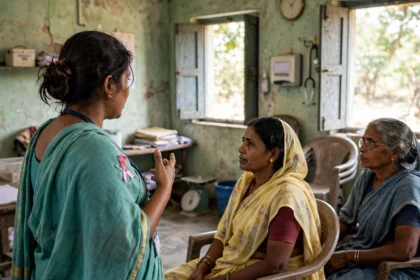
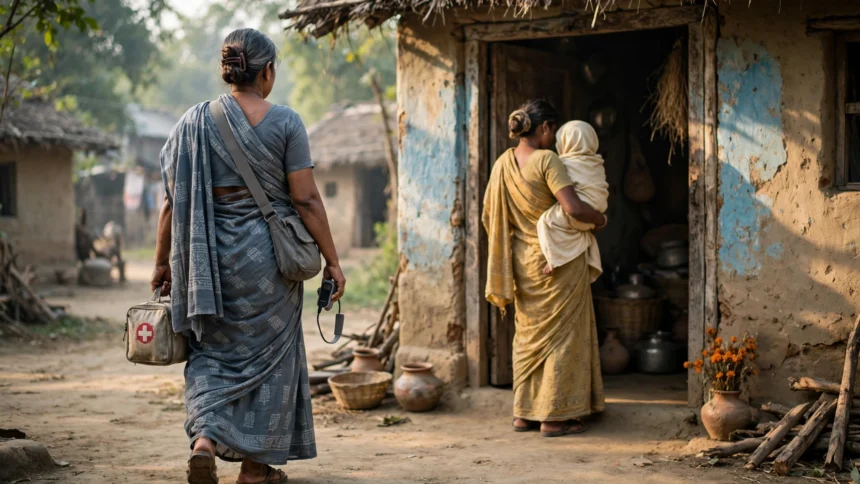
In Andhra Pradesh, Health Department Commissioner KVN Chakradhar Babu said the campaign will focus on three things: early detection, quick treatment and widespread public awareness. ASHA workers will go door to door to screen infants, look for signs of respiratory distress and refer sick children to higher-level hospitals without delay.
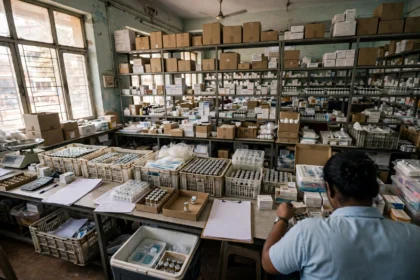
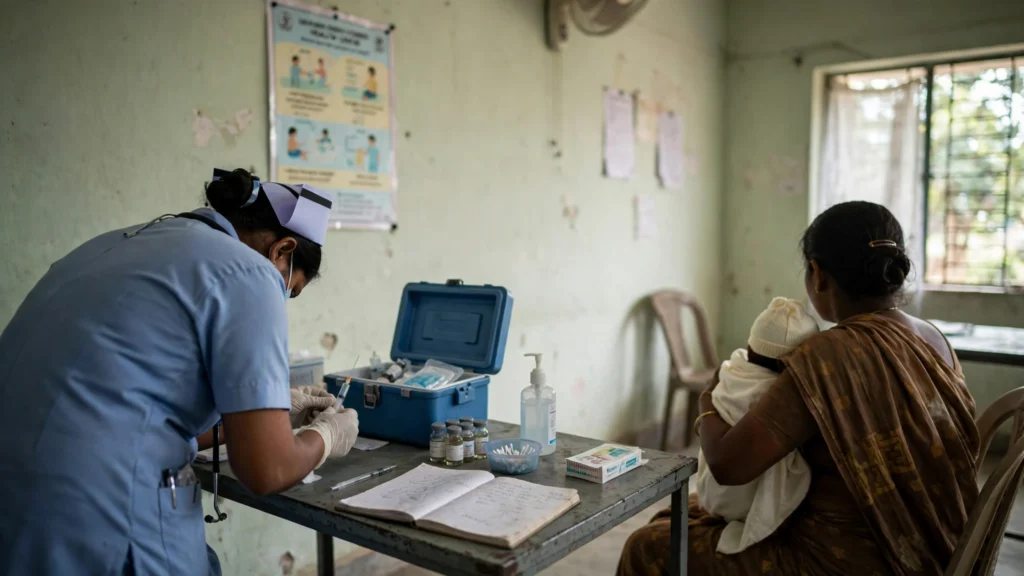
Government health facilities across the state are being stocked with essential paediatric medicines, including Amoxicillin, Gentamicin and Ampicillin, along with pulse oximeters and working oxygen support systems. Immunisation is being pushed too, with health workers making sure infants complete the three-dose schedule of the Pneumococcal Conjugate Vaccine, known as PCV, which protects against one of the main causes of severe pneumonia.
Every screened case and treatment outcome will be tracked in real time through two dedicated mobile apps, ANM SAANS and MO SAANS, so that district officials can see where cases are rising and where follow-up is lagging.
Signs parents should never ignore
Health officials have urged parents to watch for four warning signs in children under five: a persistent cough, rapid breathing, the chest pulling inwards with each breath, and difficulty breathing. Any of these means the child should be taken to the nearest health centre without delay.
Alongside treatment, the campaign will teach families the everyday habits that keep pneumonia away. Exclusive breastfeeding in the first months of life, good hygiene, a clean home environment and cutting down smoke exposure inside the house all reduce a child’s risk. Health workers will also talk about the dangers of indoor and outdoor air pollution, a message that matters more than ever as winter smog settles over much of the country.
A national effort, not just one state
Andhra Pradesh is not alone. The SAANS campaign for 2026-27 is being observed across states and union territories, from the Andaman and Nicobar Islands to Punjab, with the same dates, the same tagline and the same focus on children below five. The National Health Mission supports the drive in every state, and the campaign materials and guidance come from the Union Health Ministry.
That scale matters. Pneumonia does not respect state borders, and a child in a remote village faces the same risk as one in a big city. A campaign that reaches every district, with the same message and the same tools, is the only way to move the numbers.
What success would look like
The campaign runs until the end of February, and its real test will be in the data: how many children were screened, how many were treated early, and whether deaths among the under-fives fall in the districts where the drive was strongest. The tracking apps are meant to make that visible, district by district.
For parents, though, the message is simpler and more immediate. Know the signs, get the vaccine doses done on time, and do not wait if a small child starts breathing fast or struggling for breath. In the fight against childhood pneumonia, hours matter, and awareness is often the difference between a scare and a tragedy.
FAQs
What is the SAANS campaign?
SAANS stands for Social Awareness and Action to Neutralise Pneumonia Successfully. It is a national campaign launched by the Union Health Ministry in November 2019 to cut deaths from childhood pneumonia through awareness, early detection and treatment.
When does the SAANS 2026-27 campaign run?
From November 12, 2026, which is World Pneumonia Day, to February 28, 2027. It is observed across states and union territories.
How big a killer is pneumonia among young children?
Pneumonia accounts for 17.2 percent of deaths among children under five in India, making it one of the leading causes of under-five mortality.
What are the warning signs of pneumonia in a child?
Persistent cough, rapid breathing, chest indrawing and difficulty breathing. Parents should take the child to the nearest health centre immediately if any of these appear.
How can pneumonia in children be prevented?
The three-dose Pneumococcal Conjugate Vaccine, exclusive breastfeeding, good hygiene, and reducing smoke and air pollution exposure at home all lower the risk.
As the SAANS drive gets under way, the hope is simple: that fewer parents this winter will have to learn about pneumonia the hard way.