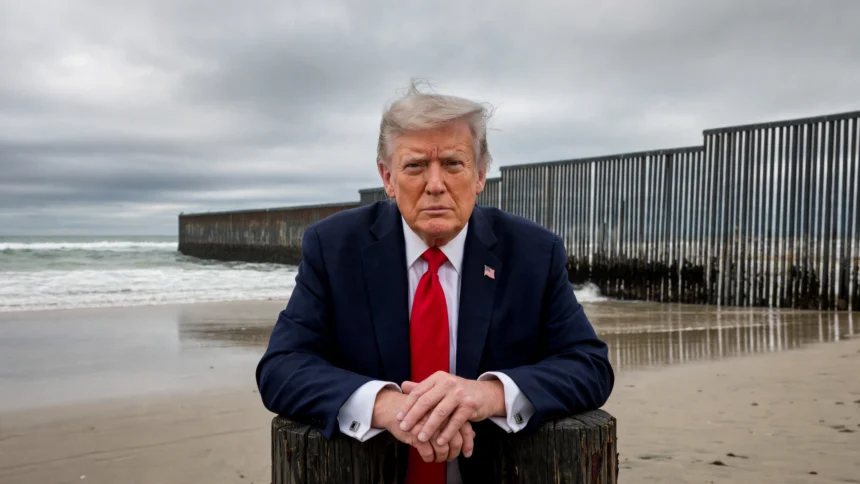
US President Donald Trump has threatened to immediately double tariffs on Mexico unless it stops migrant caravans heading for the United States border, reopening a trade fight with Washington’s biggest trading partner just as the two countries negotiate a new trade deal.
Trump issued the warning on Thursday in a post on Truth Social, his social media platform, saying huge caravans were forming and beginning what he called an illegal march through Mexico towards the American border.
“They will not be accepted! MEXICO MUST STOP THEM, NOW, and if they do not do so, the Tariffs on Mexico will be IMMEDIATELY DOUBLED,” Trump wrote. He added that Mexico, the governor of Texas, the Border Patrol and Immigration and Customs Enforcement had been informed, and that there would be no leniency.
What triggered the threat
Trump linked the warning directly to last week’s midterm elections in the United States, in which Democrats made gains. “Here we go again! With the perceived loss by the Republicans in the Midterms, the INVASION of our Country is taking place again,” he wrote in the post.
The caravan at the centre of the row set off on Tuesday from Tapachula, a city in southern Mexico near the border with Guatemala. Reuters estimated the group at around 1,500 people, mostly from Central America, while other reports put the figure closer to 2,000. The migrants have said they hope the Democrats’ election gains could open a path for them to live and work in the United States.
Trump did not say which tariffs would be doubled, whether existing exemptions would remain in place, or when any new duties would take effect. That vagueness matters, because the threat could land very differently depending on the answer.
What tariffs are already in place
Trade between the two countries is already heavily taxed. Current US tariffs on Mexican imports generally include:
- 25 percent on most goods that do not qualify for preferential treatment under the United States-Mexico-Canada Agreement (USMCA)
- 50 percent on steel and aluminium products imported from Mexico
- Additional sector-specific duties on cars and other manufactured goods
Doubling those rates would sharply raise costs on one of the world’s busiest trade lanes. The United States bought 481.6 billion dollars worth of Mexican goods through September this year, more than from any other country, according to US Census Bureau data. Bilateral commerce between the two countries totalled 96.34 billion dollars in September alone.
The warning also lands in the middle of live negotiations. Washington and Mexico City are renegotiating the terms of their free trade deal after Trump chose in July not to extend the USMCA in its current form. A tariff hike now would complicate those talks and hit supply chains that run through border crossings such as Laredo in Texas.
Mexico pushes back
Mexican President Claudia Sheinbaum pushed back against Trump’s account of the situation at her daily morning news conference on Thursday. She said no migrant caravan had reached Mexico’s northern border since Trump returned to office in January 2025, and that Mexican authorities had regularly intervened to stop groups travelling north from Central America.
Sheinbaum acknowledged that two caravans were currently moving through southern Mexico, one in Arriaga in the state of Chiapas that began with 500 to 600 people and had shrunk to fewer than 100, and another from Honduras. She said Mexican authorities were working to manage both groups.
Her government has blocked several caravans since September, and the latest groups are still deep inside Mexico, hundreds of kilometres from the US border.
Who pays for the tariffs
If the threat becomes reality, American consumers and businesses would carry most of the cost. The Congressional Budget Office has estimated that US consumers bear about 95 percent of tariff costs, with foreign exporters absorbing only around 5 percent. The Tax Foundation has estimated that tariffs now in place cost the average US household about 820 dollars a year.
That is why the warning drew a quick reaction from trade groups and cross-border businesses, even though no new duty is in effect yet. A threat in a social media post is not a customs rate, and nothing in Trump’s post reprices goods already moving across the border. But the uncertainty alone can disrupt orders, contracts and prices for companies that depend on Mexican suppliers.
What happens next
All eyes are now on whether the White House follows the post with a formal order, and on what Mexico does with the caravans in the coming days. Sheinbaum’s government has so far managed to keep caravans from reaching the border, and its handling of the two groups now on the move will be watched closely in Washington.
For now, the episode is a reminder of how quickly trade policy can become a lever in the immigration debate, and how a single post can put billions of dollars of trade at risk.
FAQs
What did Trump threaten?
He threatened to immediately double tariffs on Mexico unless it stops migrant caravans heading for the US border, in a Truth Social post on Thursday.
How many migrants are in the caravan?
Reuters estimated around 1,500 people, mostly from Central America, who set off on Tuesday from Tapachula in southern Mexico. Other reports put the number closer to 2,000, and Mexico says a second, smaller caravan is also on the move.
Which tariffs would be doubled?
Trump did not specify. Current US tariffs on Mexican goods include 25 percent on most non-USMCA goods and 50 percent on steel and aluminium.
What has Mexico said?
President Claudia Sheinbaum said no caravan has reached the US border since Trump took office in January 2025, and that Mexican authorities are managing the two groups currently travelling through southern Mexico.
Are the higher tariffs in effect now?
No. The threat was made in a social media post, and no formal order or effective date has been announced.
Trump’s tariff warning and Mexico’s response are developing stories, and the figures in this article are based on reports by Reuters, The Hindu BusinessLine, FreightWaves and the Center Square.