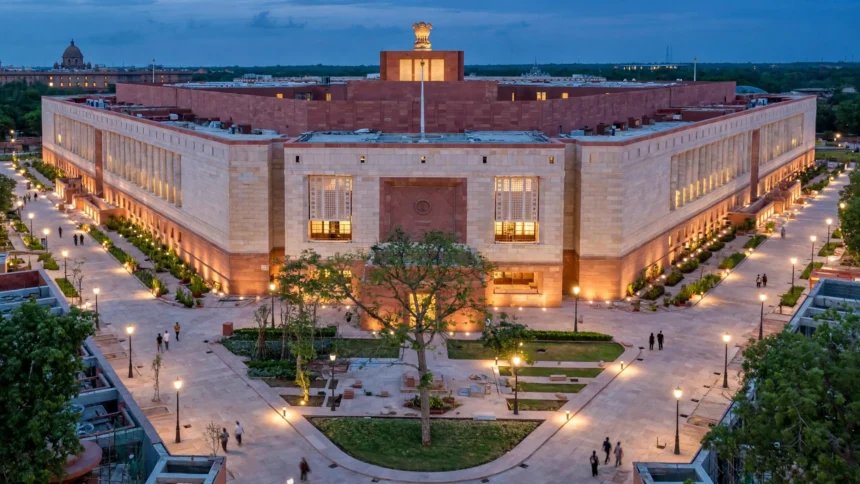
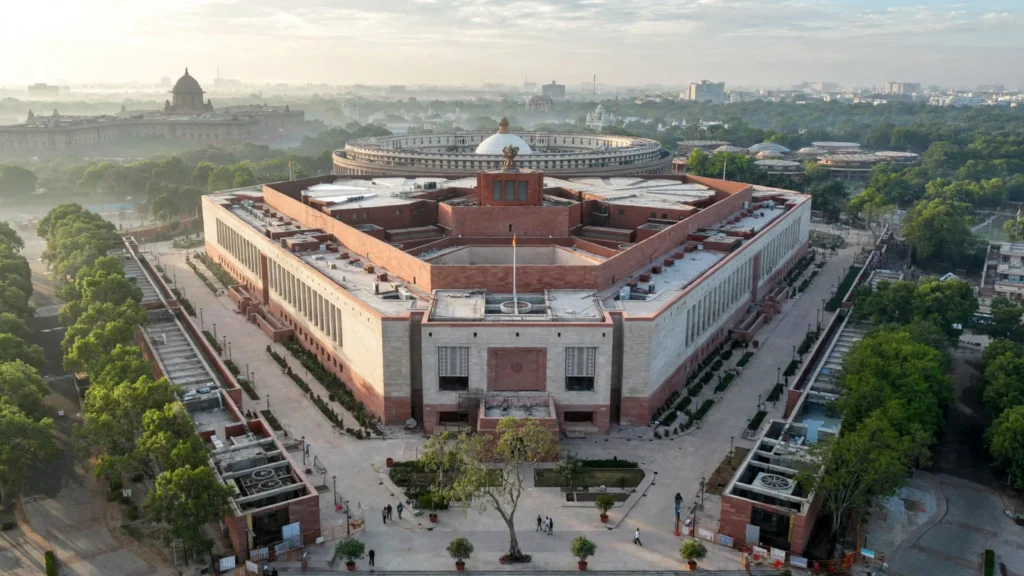
Parliament is set to return to work in the first week of December, and the government has already picked the headline item for the winter session: a Constitution amendment bill that links women’s reservation to delimitation and could raise the strength of the Lok Sabha from 543 seats to a maximum of 850.
News agency PTI reported on Sunday that the winter session is likely to begin in the first week of December, with possible dates discussed at the highest levels of the government. The bill, which would pave the way for 33 per cent reservation for women in Parliament and state legislatures before the 2029 general elections, is the government’s biggest legislative priority for the session.
But the numbers tell a harder story. A Constitution amendment needs the support of two-thirds of the members present and voting. In the present Lok Sabha, that works out to 361 votes if all members vote. The ruling National Democratic Alliance has 320 members, which means the government will need opposition support to get the bill through. A senior government functionary, however, expressed confidence on Thursday that the legislation would pass with a margin of 15 to 18 votes.
What the bill would change
The proposed amendment does two things at once. First, it raises the ceiling on the Lok Sabha’s strength through delimitation, from the current 543 seats to a maximum of 850. Second, it uses that expanded House to implement one-third reservation for women in the Lok Sabha and state assemblies.
The government is exploring a formula under which seats would increase by about 50 per cent across states while the 1971 Census continues to be the basis for deciding each state’s share. The idea is to expand the House without reopening the politically sensitive question of how seats are divided between states.
The bill is not new. A version of the legislation failed to secure the required numbers during a special sitting of Parliament on April 17 this year, which is why its fate in the winter session is being watched as a key political test for the government.
A stormy session is likely
Even before the bill comes up for a vote, the session promises to be confrontational. Opposition parties have stepped up their campaign against the Special Intensive Revision of electoral rolls and are demanding the resignation of Chief Election Commissioner Gyanesh Kumar. They are expected to carry those protests into the House.
The winter session also arrives after an unusually long gap in parliamentary procedure. The monsoon session was adjourned sine die on August 13 and has remained unprorogued for 94 days, passing the previous record of 87 days set in 2008. The government has kept the session technically alive all this time, a point the opposition has repeatedly criticised.
With the women’s reservation bill, the delimitation debate and the row over electoral rolls all landing in the same session, December is shaping up to be one of the most politically charged sittings of this Lok Sabha.
Why it matters
- 33 per cent reservation: If passed, the bill would reserve one in every three seats in the Lok Sabha and state assemblies for women, a change first promised years ago and still waiting for the numbers in the House.
- A bigger Lok Sabha: Raising the ceiling to 850 seats would be the largest expansion of the House since Independence, reshaping how constituencies are drawn across the country.
- The 2029 deadline: The government wants the reservation in place before the 2029 general elections, which makes this winter session the realistic window to pass it.
- The arithmetic test: With 320 members against a 361-vote threshold, the government needs opposition votes, which means the bill’s passage will depend on negotiation as much as on numbers.
What happens next
The exact dates of the session are expected to be announced soon, after which the government will finalise its legislative business. All eyes will then be on whether the opposition, which has opposed the government on the electoral rolls issue, is willing to back a bill it has long demanded in principle.
If the bill clears the Lok Sabha, it will still need to pass the Rajya Sabha and be ratified by at least half the state legislatures before it becomes law. That makes the winter session only the first step in a long process, but it is the step on which everything else depends.
FAQs
When is Parliament’s winter session likely to begin?
In the first week of December 2026, according to a PTI report citing sources familiar with the discussions. The exact dates are yet to be announced.
What is the women’s reservation and delimitation bill?
It is a proposed Constitution amendment that would raise the Lok Sabha’s strength from 543 to a maximum of 850 seats through delimitation and implement 33 per cent reservation for women in Parliament and state legislatures.
How many votes does the bill need in the Lok Sabha?
A Constitution amendment needs two-thirds of members present and voting, which works out to 361 votes in the present House. The ruling NDA has 320 members.
Why did the bill fail earlier this year?
The proposed legislation did not secure the required numbers during a special sitting of Parliament on April 17, 2026.
When would women’s reservation take effect?
The government aims to have the 33 per cent reservation in place before the 2029 general elections, if the bill is passed and ratified in time.
Parliament returns in December with a bill that could reshape the House itself. The numbers are tight, the politics are charged, and the outcome will decide whether women’s reservation finally moves from promise to law.