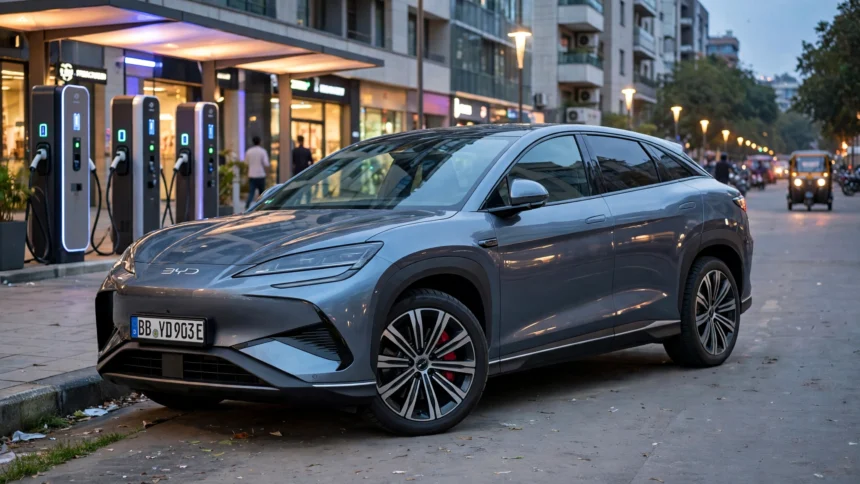
BYD can now bring in a lot more electric cars to India. The Chinese carmaker has secured local homologation from the Automotive Research Association of India (ARAI) for three of its four models on sale here, removing the annual import cap of 2,500 units per model. The news was confirmed on Monday, 16 November, by BYD India executive vice-president Rajeev Chauhan.
Until now, every BYD model without Indian certification could be imported only in limited numbers, even when demand was there. That ceiling is now gone for three cars, so the company can plan volumes around actual orders rather than a quota.
Which BYD cars are now homologated
The three certified models are the Atto 3 compact SUV, the eMax 7 MPV and the Sealion 7 premium crossover. The Seal electric sedan is the only model in BYD’s current Indian range still waiting, and it stays under the earlier import restriction for now.
Homologation means proving that a vehicle meets India’s technical and safety standards through a certified agency such as ARAI. Carmakers relying on international certification can import up to 2,500 units of a model each year without it; once a model clears the domestic tests, that ceiling no longer applies.
The Sealion 7 gains the most: it joined BYD’s India range in February 2025 and had reportedly started bumping into the import quota. The eMax 7, priced from Rs 26.9 lakh, has now joined the list as well.
Why this matters for BYD in India
BYD sold 5,361 passenger vehicles in India in FY2026, up 54 percent from 3,481 units the year before, according to FADA data. But the wider Indian electric passenger vehicle market grew nearly 84 percent in the same period, so BYD lost ground to rivals in relative terms, and the import cap was one reason it could not keep pace.
With the cap lifted on its three highest-volume models, BYD can now import in line with demand instead of rationing imports across the year or watching a popular model hit its quota mid-year.
There are clear limits, though. Homologation does not cut import duties, which can run up to 100 percent on fully built cars, and it does not mean BYD is setting up a factory here. Its 2023 plan for a $1 billion plant with Hyderabad-based Megha Engineering was not approved by the government, and BYD has said it will not apply for benefits under the new EV policy in the short term, preferring the homologation route.
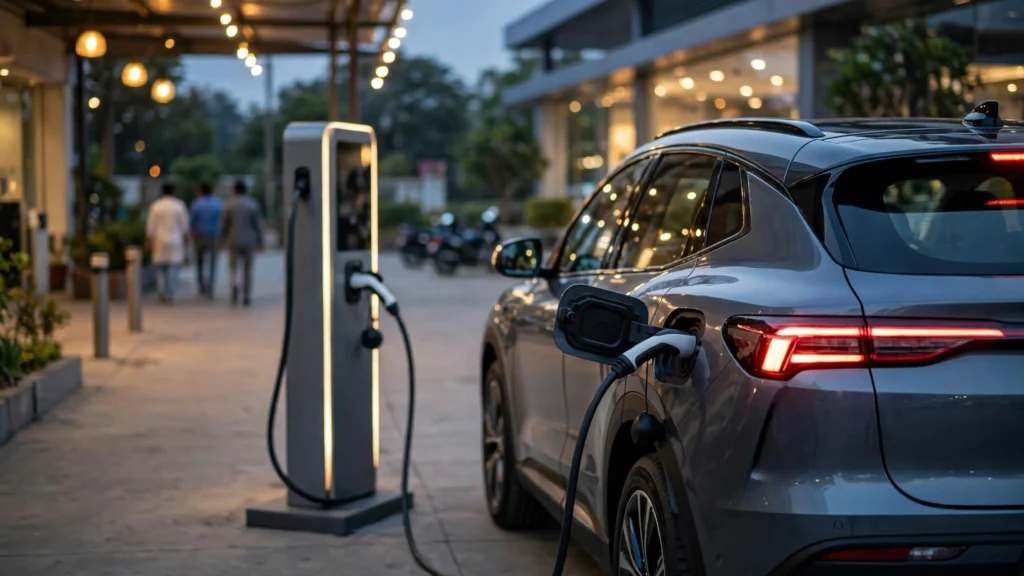
What about Denza?
The timing is notable because BYD’s luxury brand Denza only entered India on 13 November, with the D9 seven-seat electric MPV at Rs 90 lakh and the Z9 GT shooting brake at about Rs 1.57 crore. Both are imported as completely built units and remain under the 2,500-unit annual limit per model.
The D9 uses a 115 kWh battery pack with a claimed range of 730 km on the NEDC cycle, while the Z9 GT is reported to produce 1,156 hp. BYD will sell Denza cars through dedicated showrooms in six cities, Mumbai, Gurugram, Chennai, Hyderabad, Bengaluru and Ahmedabad, and expects to convert 80 to 100 early reservations into sales within two months. If demand holds, Denza’s models will likely go through homologation next.
What buyers should expect
- No price cuts yet: Homologation removes a volume cap, not customs duty, so do not expect immediate price drops.
- Better availability: Waiting periods should ease over time, since BYD can now import more cars of each certified model without hitting a quota.
- The Seal stays capped: The sedan is the only BYD model still under the 2,500-unit limit, so its supply remains constrained until it is homologated.
- More competition in premium EVs: Rivals such as Hyundai, Mahindra, Toyota and Honda are lining up their own launches, including Honda’s first made-in-India electric SUV, the ALPHA, due for a global debut on 2 December.
The homologation win does not solve BYD’s biggest India problem, which is the absence of local manufacturing and the heavy duties on imported cars. But it does remove the one barrier the company could fix on its own, and it gives BYD room to grow in a market where electric car sales are rising fast.
FAQs
Which BYD cars have received ARAI homologation in India?
The Atto 3, eMax 7 and Sealion 7 have been homologated by ARAI. The Seal sedan is yet to complete the process.
What was the 2,500-unit import cap?
Models imported under international certification, without Indian homologation, are limited to 2,500 units per model per year. Homologation removes that cap.
Does homologation mean BYD cars will get cheaper?
No. Homologation removes the volume cap but does not change customs duties, which can be up to 100 percent on imported cars.
Is BYD building a factory in India?
Not at present. Its 2023 plan for a $1 billion plant with a local partner was not approved, and nothing has been announced since.
Are Denza cars also homologated?
No. The Denza D9 and Z9 GT, launched on 13 November, are imported as completely built units and remain under the 2,500-unit annual limit for now.
What comes next is whether the Seal gets its homologation and whether BYD eventually commits to local assembly. For now, buyers of the Atto 3, eMax 7 and Sealion 7 should find the cars easier to get hold of in the months ahead.