Every year on 17 November, the world marks Cervical Cancer Elimination Day, a reminder that one of the most common cancers among women is also one of the most preventable. This year’s theme is “Together We Can Eliminate Cervical Cancer”, and the deadline is only four years away: the World Health Organization wants cervical cancer eliminated as a public health problem by 2030.
For India, the stakes are high: cervical cancer remains one of the major causes of cancer deaths among Indian women, yet almost every case can be prevented with a vaccine, caught early with a screening test, or treated when found in time.
What the 90-70-90 target means
The WHO launched its global strategy in November 2020. At its heart is a simple set of three numbers, known as 90-70-90, that every country is expected to meet by 2030.
- 90 per cent of girls fully vaccinated against HPV by the age of 15.
- 70 per cent of women screened with a high-performance test by the ages of 35 and 45.
- 90 per cent of women diagnosed with cervical disease receiving appropriate treatment.
Globally, the disease caused an estimated 6,04,000 new cases and 3,42,000 deaths in 2020, according to WHO figures.
Why this cancer can be prevented
Cervical cancer is mainly caused by persistent infection with HPV, the human papillomavirus. Most infections clear on their own, but a high-risk strain that persists can slowly change cells in the cervix over years. That slow pace is exactly what makes the disease preventable.
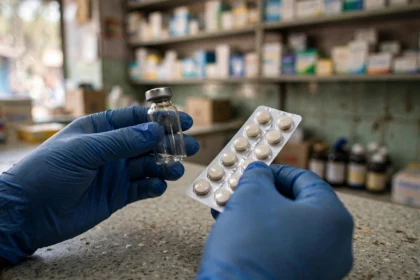
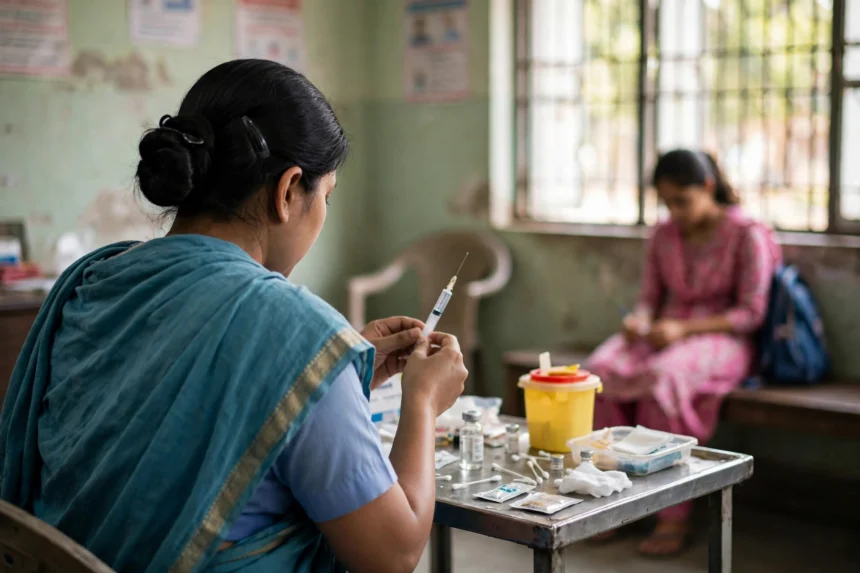
The HPV vaccine protects against the virus types responsible for most cases, and it works best before exposure. Girls should be vaccinated between 9 and 14, and adolescents and young women can also benefit. The vaccine prevents infection, it does not treat it, so timing matters.
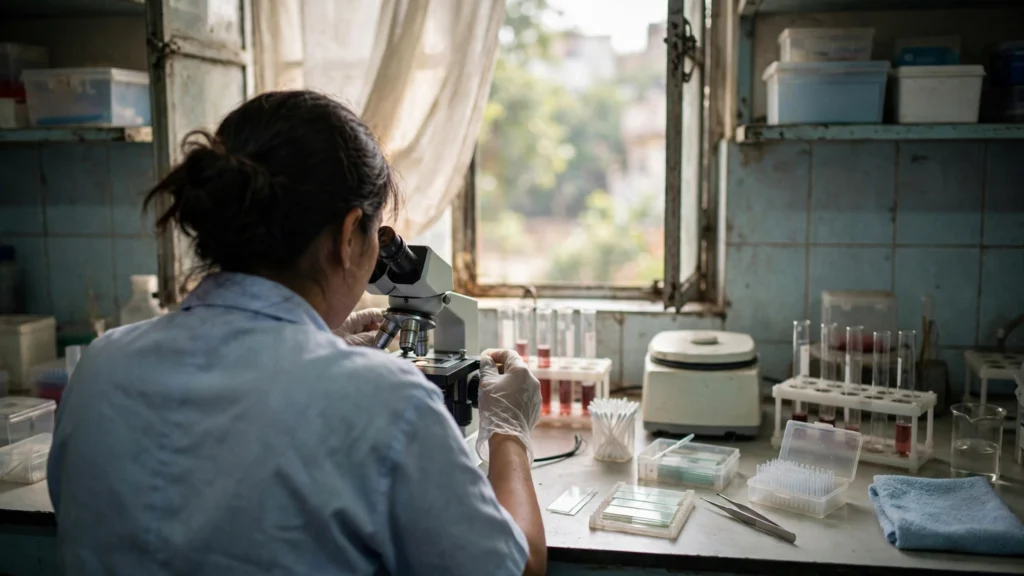
Screening is the second line of defence. The HPV DNA test, the Pap smear and visual inspection with acetic acid (VIA) pick up precancerous changes long before symptoms appear, and treating those changes can stop cancer from developing. Vaccinated women still need screening, because the vaccine cannot prevent every type of cancer caused by HPV.
Where India stands
India has taken steps to expand HPV vaccination through its national immunisation efforts, and screening is available through hospitals and primary health centres. But specialists say the gap between having the tools and reaching the targets is still wide.
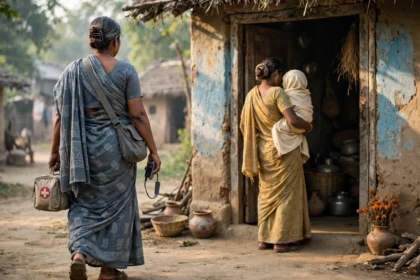
Many women never undergo regular screening. Limited awareness, social stigma, hesitation in discussing reproductive health at home, and poor access to diagnostic facilities all push detection late. Women diagnosed only after symptoms appear may already have advanced disease.
Dr Anup R Hegde, a medical oncologist at KIMS Hospitals in Bengaluru, has said India needs to move beyond awareness and focus on measurable interventions: screening that reaches rural women, follow-up that connects a positive test to treatment without delay, and plain-language information for parents and schools.
Why it matters
Six years have passed since the WHO launched its elimination strategy, and four remain until the 2030 deadline. India does not need a new discovery. It needs delivery: vaccines for adolescent girls, screening for women in their thirties and forties, and treatment that follows every abnormal result.
Five countries in WHO’s South-East Asia region, Bhutan, Maldives, Myanmar, Sri Lanka and Thailand, have already introduced nationwide HPV vaccination. Closing that gap is the single biggest step towards the 90 per cent vaccination target. There is also a quiet economic case: treating advanced cancer costs families far more, in money, time and lost work, than a vaccine or a screening test ever will.
What women and families can do
- Parents of girls aged 9 to 14: ask your doctor about the HPV vaccine. It works best before exposure to the virus.
- Women aged 30 and above: ask about screening, even if you feel healthy. The WHO framework calls for screening at 35 and again at 45.
- Watch for warning signs: unusual bleeding, bleeding after intercourse or menopause, persistent discharge and pelvic pain all deserve a medical check.
- Do not skip follow-up: if a screening result is abnormal, complete the further tests and treatment.
As Dr Nisha Thottam Vishnu of KIMS Hospitals, Bengaluru, put it, prevention must become a central part of women’s healthcare, rather than an emergency response after the disease has developed.
FAQs
What is World Cervical Cancer Elimination Day?
It marks the launch of the WHO’s global strategy to eliminate cervical cancer as a public health problem, and pushes countries towards the 90-70-90 targets by 2030. It is observed every year on 17 November.
What does the 90-70-90 target mean?
90 per cent of girls vaccinated against HPV by 15, 70 per cent of women screened at 35 and 45, and 90 per cent of women with cervical disease treated.
At what age should girls get the HPV vaccine?
Between 9 and 14, when it offers the strongest protection. Adolescents and young women may also benefit.
Do vaccinated women still need screening?
Yes. The vaccine does not protect against every HPV type that can cause cancer, so regular screening remains necessary.
Cervical cancer is one of the few cancers the world knows how to end. The vaccine, the tests and the treatment all exist. On this 17 November, the challenge for India is to make sure they reach every woman, not just the few who reach a big-city hospital.