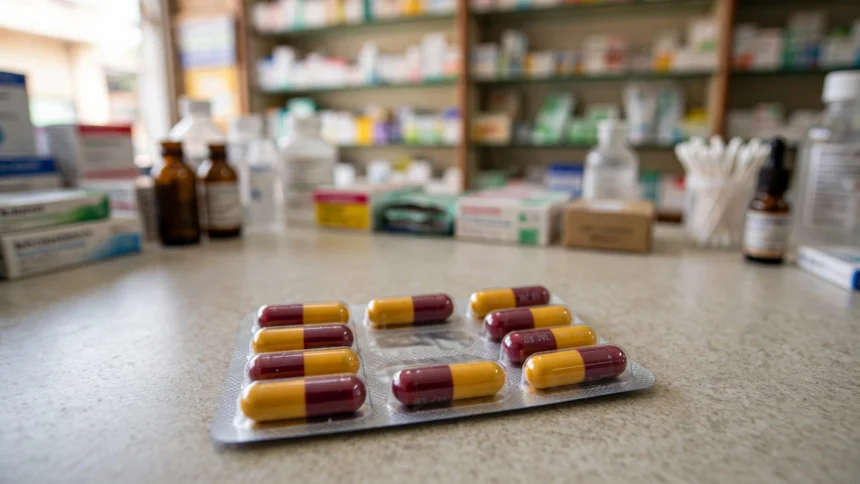
The antibiotics Indians buy at their neighbourhood chemist could soon pass through a tougher quality check before they ever reach the shelf. The Union Health Ministry said on Thursday that it has proposed bringing antimicrobial drugs under central regulatory oversight, a move aimed at stopping substandard medicines at the factory gate and slowing the spread of drug-resistant infections.
Under the proposal, antimicrobials would be treated as “new drugs” under the New Drugs and Clinical Trials Rules, 2019. That single change in definition would mean manufacturers must first get permission from the Central Licensing Authority before they can even apply to a state authority for a manufacturing licence.
At present, state authorities can clear antimicrobial manufacturing on their own. The ministry says licences have in some cases been granted without adequate scrutiny, including bioavailability, bioequivalence and stability studies, the tests that show whether a medicine works as claimed and stays safe through its shelf life.
What the proposal changes
The draft amendment was issued through Gazette Notification G.S.R. 983 (E), dated November 6, 2026. It seeks to include antimicrobials within the definition of a “New Drug” under Rule 2(1)(w)(v) of the 2019 rules. Once antimicrobials sit inside that definition, the full regulatory framework that applies to new drugs would apply to them as well.
In practice, the change adds a second gate. A company wanting to make an antibiotic, antifungal or similar medicine would first need the central authority’s nod, and only then approach the state authority for its licence. The ministry has invited objections and suggestions from stakeholders and the public within 30 days of the Gazette notification being made available.
A second reform for bulk drugs
Alongside the antimicrobial proposal, the ministry has also proposed a separate licensing framework for the wholesale sale of bulk drugs. Through a draft amendment to the Drugs Rules, 1945, notified as G.S.R. 987 (E) on November 2, 2026, it plans to introduce a distinct application form, Form 19-BC, and licence form, Form 20-BC, for the sale of bulk drugs, covering active and inactive pharmaceutical substances.
Bulk drugs are the raw ingredients that go into finished medicines, and their wholesale trade has so far been licensed under the same provisions as formulations. A dedicated framework would bring sharper oversight of that supply chain and clearer accountability for who sells what, including substances covered under the Narcotic Drugs and Psychotropic Substances Act, 1985.
The bulk-drug proposal was agreed upon by the Drugs Consultative Committee at its 67th meeting. For existing licence holders, the new requirements would apply on expiry of their current retention period or 12 months after final publication, whichever is later.
Why it matters
Antimicrobial resistance is one of the quietest public health threats India faces. When antibiotics are weak, wrongly dosed or simply not what the label claims, infections linger, treatment fails, and bacteria learn to survive the drugs meant to kill them. The ministry launched World AMR Awareness Week 2026 this week, and these proposals tighten the system where medicines are made, not only where they are prescribed.
For patients, it should mean fewer poor-quality antibiotics in circulation, though the effect will take time to reach the chemist counter. For manufacturers, it means an extra approval step and longer timelines, but also a level playing field, since firms that already run proper studies will no longer compete against those that skip them. For the health system, it closes a gap that has existed for years: a drug class central to modern medicine was being licensed without the central scrutiny applied to other new drugs.
Timeline: how the proposals have unfolded
- November 2, 2026: Draft notification G.S.R. 987 (E) proposes a separate licence for bulk drug sales under the Drugs Rules, 1945.
- November 6, 2026: Draft notification G.S.R. 983 (E) proposes bringing antimicrobials under the “New Drug” definition.
- November 19, 2026: Health Ministry publicly announces both proposals and opens them for feedback.
- Next 30 days: Stakeholders and the public can file objections and suggestions.
- After that: The ministry considers the feedback and decides on finalising the amendments.
FAQs
What exactly has the government proposed?
The Health Ministry has proposed amending the New Drugs and Clinical Trials Rules, 2019, so antimicrobials count as “new drugs”. Makers would then need Central Licensing Authority permission before applying for a state manufacturing licence.
Does this ban any antibiotic?
No. The proposal changes how antimicrobial medicines are licensed and checked for quality. It does not ban any drug or change what doctors can prescribe.
Why are bulk drugs part of the same announcement?
The ministry has separately proposed a dedicated licence for the wholesale sale of bulk drugs, the raw ingredients used to make medicines, so their supply chain gets focused oversight instead of sharing the rules meant for finished formulations.
When will the new rules take effect?
Not yet. Both proposals are drafts open for public feedback for 30 days. They will take effect only after the government considers the responses and publishes final rules.
What should patients do?
Nothing changes for now. Patients should continue taking antibiotics only as prescribed and complete the full course, which remains one of the simplest ways to slow drug resistance.
The proposals now go through public consultation, and their final shape will depend on the feedback received in the coming weeks.