A gas pipeline explosion tore through the al-Hartha thermal power station near Basra in southern Iraq early on Saturday, killing at least four people and injuring 35, officials said. The blast, which struck at around 6am local time, set off a fire that spread to nearby homes and forced the 800-megawatt plant to shut down.
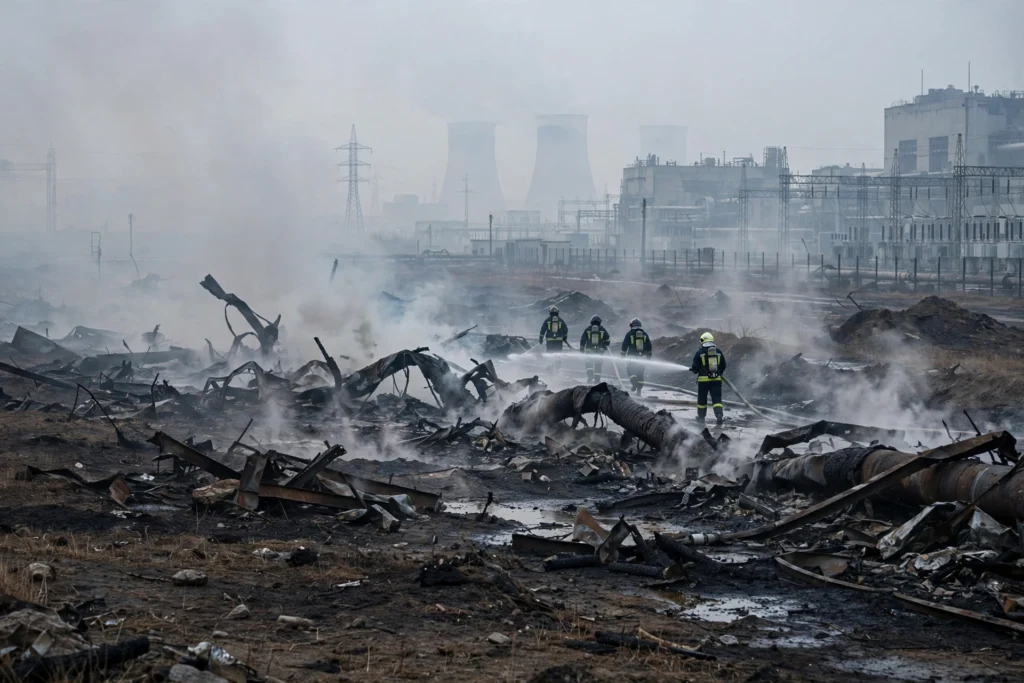
Civil defence teams brought the fire under control after several hours, Iraq’s state news agency INA reported. But with the death toll expected to rise and the cause still unknown, the incident has put Iraq’s fragile power network back in the spotlight.
What happened at al-Hartha
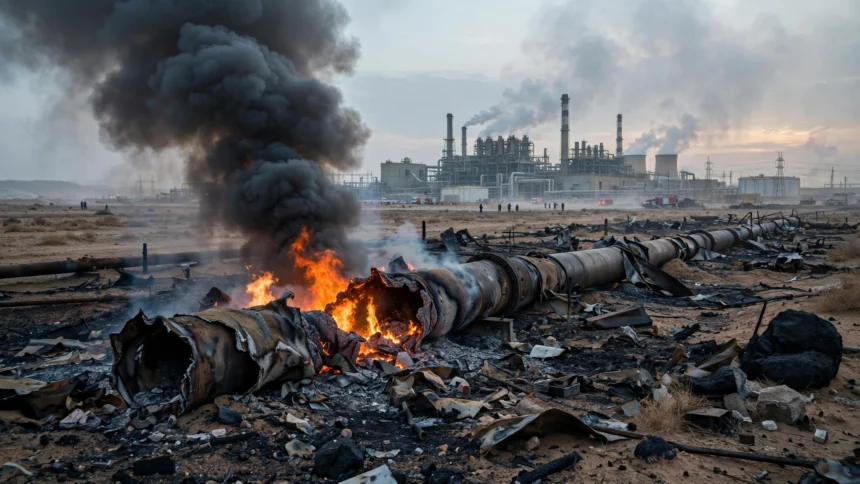
The explosion hit a gas pipeline feeding the al-Hartha station, about 20 kilometres north of Basra, according to Iraq’s Electricity Ministry. The blast damaged sections of the pipeline and scattered debris across the site, with photographs showing blackened ground around the wreckage.
The fire spread quickly beyond the plant boundary to adjacent caravans and houses. Most of the casualties were residents of those homes, Iraq’s Security Media Cell said. Many suffered burns and smoke inhalation, and emergency crews evacuated people from the surrounding area as flames and thick smoke rose into the sky.
The Hartha station has an installed generating capacity of 800 megawatts but had been operating at around 400 megawatts before the fire, security officials said. The plant was shut down after the blast, cutting that supply from the grid while engineers assess the damage.
The toll, and why the numbers differ
The casualty figures changed through Saturday as different agencies reported their own counts. The Security Media Cell, citing a preliminary assessment, reported four people killed and 35 injured, a figure carried by Reuters, Xinhua and several other outlets.
Iraq’s health ministry later put the toll at two dead and 44 injured, with 17 people discharged and three in intensive care. The Basra Health Directorate reported two deaths and 28 injuries in its own preliminary tally. A local source told the news outlet Shafaq that eight people, including children, had died and more than 30 were injured.
- Security Media Cell (preliminary): 4 dead, 35 injured
- Health ministry: 2 dead, 44 injured, 3 in intensive care
- Basra Health Directorate: 2 dead, 28 injured
- Local source to Shafaq News: 8 dead, including children, 30+ injured
Officials warned the toll could rise further as rescue teams search the damaged area and hospitals update their lists.
Investigation ordered
Iraqi Prime Minister Ali al-Zaidi ordered an urgent investigation into the explosion to determine its cause and establish responsibility, his office said on Saturday. There was no immediate official word on what triggered the blast, and the Electricity Ministry confirmed only that a gas pipeline supplying the station was involved.
Why it matters
For Iraqis, this is not an abstract infrastructure story. It is about electricity, the service that shapes daily life more than almost any other in the country. Iraq’s power grid has struggled for years to keep up with demand, and Basra has repeatedly seen protests over outages.
The detail that matters most is the one buried in the official statements: al-Hartha was running at only about half its 800-megawatt capacity before the fire. Even before the blast, the plant was not delivering what it was built to deliver. Now, with the station shut down, that shortfall grows, and the homes and businesses it served will feel it first.
The incident also underlines a wider pattern. Iraq’s power plants depend on gas pipelines that run through populated areas, and a failure in one can reach into people’s homes within minutes, as it did in al-Hartha on Saturday. That is why the investigation matters beyond the immediate toll: it must answer whether the pipeline was properly maintained and whether homes should ever have been that close to a high-pressure gas feed.
What happens next
Engineers will first need to establish how much of the station and pipeline can be salvaged and how long repairs will take. The Electricity Ministry has not yet said when al-Hartha might return to service.
The prime minister’s inquiry will also be expected to report on the cause and on who is accountable. In past infrastructure accidents in Iraq, such investigations have often moved slowly, and residents of al-Hartha will be looking for answers, and for compensation, sooner rather than later.
FAQs
Where did the Basra explosion happen?
At the al-Hartha thermal power station, about 20 kilometres north of Basra in southern Iraq. A gas pipeline supplying the station exploded at around 6am local time on Saturday, November 21, 2026.
How many people were killed and injured?
The preliminary official toll is at least four dead and 35 injured, according to Iraq’s Security Media Cell. Other agencies have reported different figures as updates continue to come in.
What caused the explosion?
The cause is not yet known. The Electricity Ministry said a gas pipeline feeding the power station was involved, and Prime Minister Ali al-Zaidi has ordered an urgent investigation.
Is the power station still running?
No. The 800-megawatt al-Hartha station, which had been operating at around 400 megawatts, was shut down after the blast and fire.
Did the fire spread beyond the plant?
Yes. The fire spread to nearby caravans and houses, and most of the casualties were residents of those homes, suffering burns and smoke inhalation.