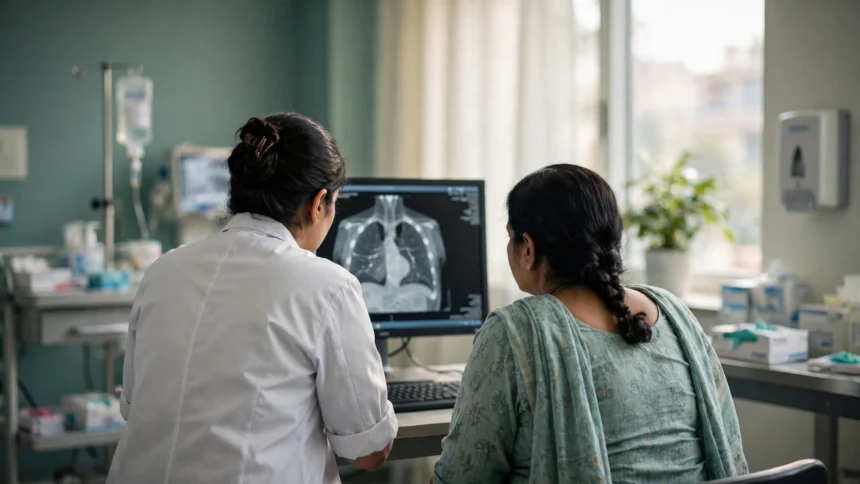
India has a new weapon in its fight against cancer, and it fits on a phone screen. On Saturday, November 21, Union Health Secretary Punya Salila Srivastava launched NCG VISHWAS, an AI-enabled patient education platform, at the National Cancer Grid Annual Meeting 2026 in Mumbai. The platform uses short, clinician-reviewed videos to explain cancer prevention, diagnosis, treatment and long-term care in simple language, in Hindi, Marathi, Tamil and English to start with.
The launch comes at a moment when cancer screening in India is running at an enormous scale. The government said on Saturday that more than 153 crore screenings for non-communicable diseases have been carried out so far under national programmes at primary health centres across the country. That includes 37.1 crore screenings for oral cancer, 17.4 crore for breast cancer and 9.7 crore for cervical cancer.
What NCG VISHWAS actually does
VISHWAS stands for Videos to Support Health, Wellness, Awareness and Self-care. It is a patient education initiative of the National Cancer Grid, the network that links cancer centres and research institutions across India. The videos cover the three most common cancers in the country: oral, breast and cervical cancer.
Each video is reviewed by clinicians before it goes out, so families get reliable information instead of the half-truths that spread on social media and messaging apps. The content covers the full journey: how to spot early warning signs, what tests and treatments involve, and how to manage life after treatment. The idea is that a patient in a small town, or a family member caring for one, can watch a short video in their own language and understand what comes next.
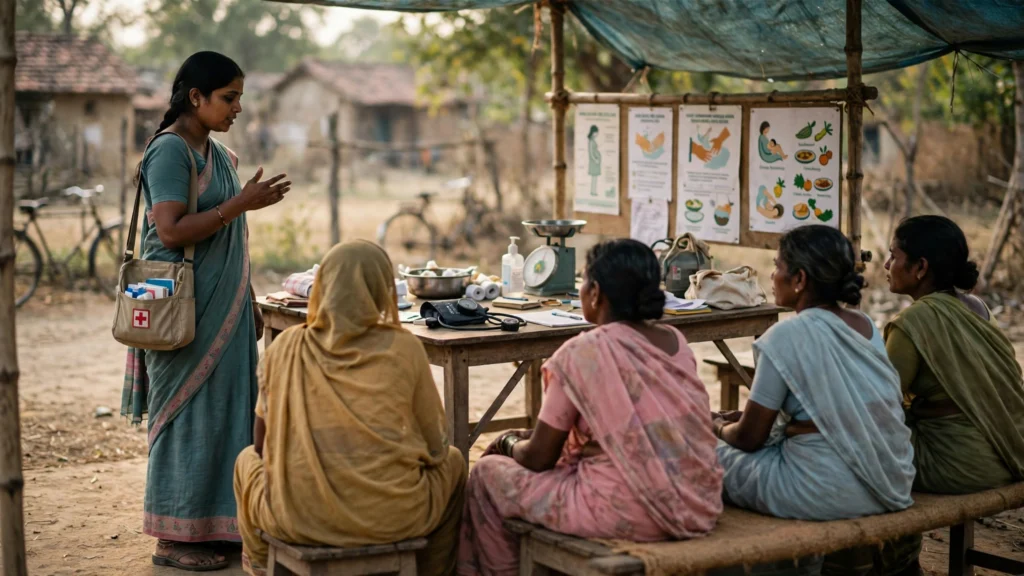
The platform will be shared through the National Cancer Grid network of hospitals and healthcare partners. The Health Secretary also suggested taking it further, through ASHA and Anganwadi workers, Ayushman Arogya Shivirs and community platforms, so it reaches people who never walk into a big cancer hospital until it is late.
Why screening records now matter as much as the tests
A second, quieter announcement at the same meeting could matter just as much. Srivastava stressed that cancer screening records should be linked with a patient’s Ayushman Bharat Health Account, or ABHA ID, so that a person’s medical history follows them from a primary health centre to a district hospital to a specialist cancer institute, with their consent.
The scale of the digital backbone behind this is already large. Around 99 crore ABHA IDs have been created so far, and about 100 crore health records have been linked under the Ayushman Bharat Digital Mission. The thinking is simple: a screening done at a village health centre should not have to be repeated, or lost, when the patient reaches a bigger hospital months later. Linking records is meant to cut that loss to follow-up, which is one of the biggest reasons cancer in India is still caught late.
Dr C S Pramesh, Convener of the National Cancer Grid, said the platform combines the grid’s clinical expertise with artificial intelligence to put trustworthy information in the hands of patients and families in several languages.
The numbers behind the launch
The screening figures shared at the meeting show how far the national programme has come, and where the gaps still are:
- 153 crore plus: total screenings for non-communicable diseases carried out under national programmes so far.
- 37.1 crore: screenings for oral cancer, the highest of the three cancers tracked.
- 17.4 crore: screenings for breast cancer.
- 9.7 crore: screenings for cervical cancer, the lowest of the three, even though cervical cancer is largely preventable.
- 99 crore: ABHA IDs created, with about 100 crore health records linked digitally.
- 300 plus: cancer centre leaders, policymakers and technology developers gathered at the two-day NCG Annual Meeting in Mumbai.
Why it matters
Most cancer patients in India still reach a doctor only after the disease has advanced, and late detection is the single biggest reason treatment becomes harder, longer and more expensive. Screening exists, it is free at government health facilities, and the infrastructure to track it now exists too. What has been missing is the middle step: people understanding why they should get screened, what a result means, and what to do next.
That is the real bet behind NCG VISHWAS. A video watched on a phone in Marathi or Tamil, shared by an ASHA worker during a home visit, can do what a poster in a hospital corridor cannot: reach the person before they become a patient. If the platform works as planned, its success will not be measured in video views but in how many more people turn up for screening early, and how many screening records actually follow the patient to the hospital where treatment happens. The ABHA linkage is the unglamorous part of this story, but it is the part that decides whether early detection becomes routine instead of luck.
For readers, the practical takeaway is straightforward. Adults aged 30 and above can get free screening for oral, breast and cervical cancers at their nearest Ayushman Arogya Mandir. A screening that takes a few minutes can catch something years before it becomes a crisis, and now the information about what happens next is available in four languages on a phone.
FAQs
What is NCG VISHWAS?
It is an AI-enabled patient education platform launched by the National Cancer Grid on November 21, 2026. It offers clinician-reviewed videos on prevention, diagnosis, treatment and long-term care for oral, breast and cervical cancers.
In which languages is NCG VISHWAS available?
The videos are available in Hindi, Marathi, Tamil and English to begin with, with more languages expected as the platform expands.
Who launched the platform and where?
Union Health Secretary Punya Salila Srivastava launched it at the National Cancer Grid Annual Meeting 2026 in Mumbai on November 21, 2026.
How many cancer screenings has India done so far?
More than 153 crore screenings for non-communicable diseases have been carried out under national programmes, including 37.1 crore for oral cancer, 17.4 crore for breast cancer and 9.7 crore for cervical cancer.
Where can I get free cancer screening?
Adults aged 30 and above can get free screening for oral, breast and cervical cancers at Ayushman Arogya Mandirs, the primary health centres under the national programme, across India.
India’s cancer fight is shifting from hospital corridors to phone screens and village health centres. Early screening, in your own language, is the simplest step, and it is free.