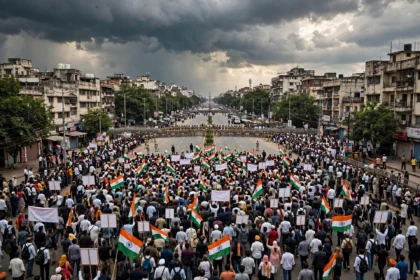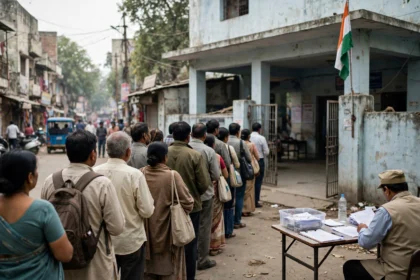
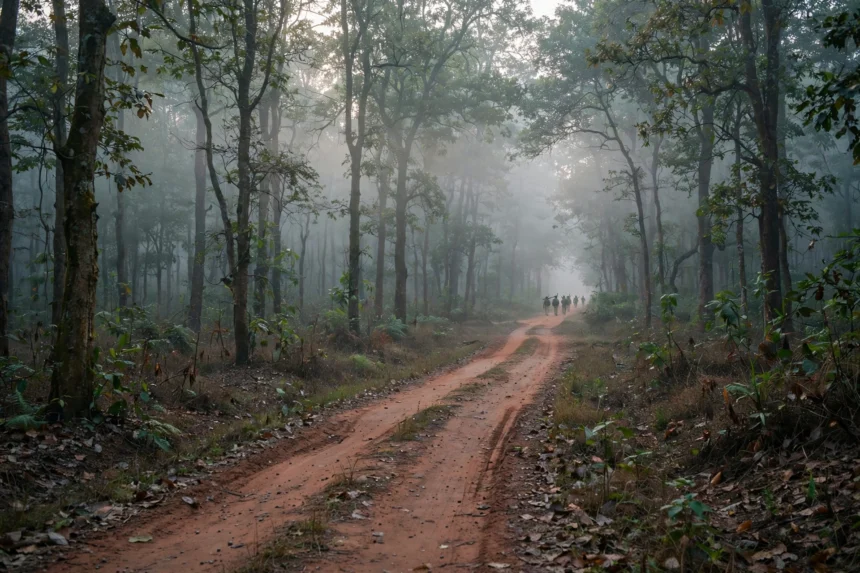
India is now effectively free of Left-Wing Extremism. The Union Home Ministry said on 24 November that no district in the country remains classified as Naxal-affected, closing a chapter that once touched 126 districts across ten states. The milestone was reached on 31 March 2026, the deadline the government had set for itself in August 2024, and the formal announcement came with a detailed account of how the numbers moved over twelve years.
For a country that lived with Maoist violence for nearly six decades, the claim is a big one. Naxalism began in Naxalbari in West Bengal in 1967 and spread through the forested tribal belt of central and eastern India. In 2014, the government counted 126 districts as affected. By March this year, that number was zero.
What was announced
The announcement came through a Press Information Bureau release from the Ministry of Home Affairs on 24 November. It said India had achieved the historic milestone of becoming effectively free from Left-Wing Extremism, with no district remaining LWE-affected as of 31 March 2026. The government had set the target on 24 August 2024, giving itself less than two years to finish the job, and says the deadline was met on schedule.
The numbers behind the claim
The government case rests on a steep fall across every measure it tracks. LWE-affected districts fell from 126 in 2014 to 90 in April 2018, 70 in July 2021, 38 in April 2024, eight in December 2025, and zero by March-April 2026. The count of the most-affected districts dropped from 35 to zero over the same period.
Violence fell with it. Naxal-related incidents dropped from 870 in 2014 to 33 in 2026, as of 29 July, while deaths fell from 310 to around 12. About 8,526 Maoist cadres had surrendered by November 2026, according to the ministry. The National Investigation Agency had registered 112 LWE cases and filed 100 chargesheets as of June 2026, seizing assets worth more than Rs 40 crore, while the Enforcement Directorate attached assets worth Rs 12 crore and state agencies confiscated another Rs 40 crore.
How it happened
The government credits an integrated strategy built on three strands: restoring trust in the state, expanding infrastructure, and delivering welfare. The framework was the National Policy and Action Plan of 2015, which replaced what the ministry describes as an earlier ad hoc, incident-driven response with a whole-of-government approach coordinated by the Home Ministry.
On the ground, the turning point came through a series of coordinated operations. Operation Black Forest, in April 2025, dismantled a major Maoist stronghold and led to the elimination of more than 30 Maoists, triggering a sharp rise in arrests and surrenders. Operation Double Bull cleared Gumla, Lohardaga and Latehar districts in Jharkhand. Operations Octopus, Thunderstorm, Bhimbandh and Chakrabandha hit other networks in parallel. Alongside the operations, the security grid thickened: 668 new security camps were set up, compared with 169 before 2014, and 615 fortified police stations were built.
What changes now
The declaration does not mean the security presence is packing up. The 38 Legacy and Thrust Districts will keep getting security and development support, and the conversion of camps into Seva Dera Kendras signals a shift from holding ground to delivering services. The idea is that a camp that once guarded a road junction becomes a place where villagers get certificates, healthcare and welfare enrolment.
Why it matters
The numbers are striking, but the honest reading of this announcement is more careful than the headline. “Effectively free” is a classification, not a guarantee. Thirty-three incidents were still recorded in 2026, and the government itself is keeping 38 districts under special watch, which is an admission that the ground can shift back if attention slips. The real test of the declaration will not be this week’s press release but the next two years in those legacy districts, where the state must now prove it can deliver schools, jobs and courts as reliably as it once delivered patrols.
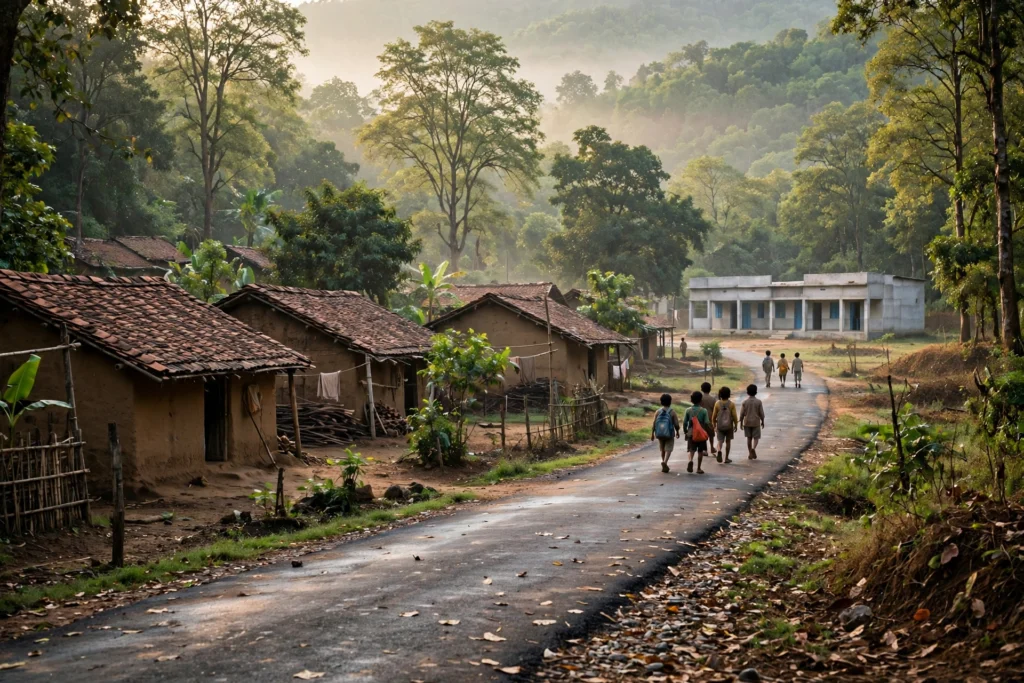
That is also where the story connects to everyday life. For families in Bastar, Gadchiroli and the Jharkhand forests, the end of the Naxal-affected label should mean roads that stay open, children who can reach school without crossing a conflict zone, and welfare that arrives without an armed group standing in between. If the Seva Dera Kendras work as promised, the dividend will be visible in ordinary things: a health centre that functions, a mobile signal that holds, a harvest that reaches a market. If they do not, the label will change faster than the reality.
There is a wider signal as well. A credible end to the insurgency changes how the country talks about internal security, frees up security resources for the borders and the cities, and opens some of India’s most mineral-rich and forested regions to investment and infrastructure that was unthinkable a decade ago. The announcement on 24 November is the government saying that shift is now complete. The years ahead will show whether it holds.
Frequently asked questions
When did India become Naxal-free?
The government says the country became effectively free from Left-Wing Extremism on 31 March 2026, the deadline it had set in August 2024. The formal announcement was made on 24 November 2026.
How many districts were affected at the peak?
126 districts were classified as LWE-affected in 2014. The number fell steadily to zero by March-April 2026, with the most-affected districts falling from 35 to zero.
What are Legacy and Thrust Districts?
Thirty-eight districts have been designated as Legacy and Thrust Districts. They are no longer counted as Naxal-affected, but they will continue to receive security and development support to prevent a resurgence.
What are Seva Dera Kendras?
They are Integrated Development Centres the government plans to create by converting one-third of the security camps in former Maoist areas, so that villages can access citizen services locally.
Is Naxal violence completely over?
No. Naxal-related incidents fell from 870 in 2014 to 33 in 2026 as of 29 July, but incidents still occur. The government says its focus has now shifted to preventing a resurgence and sustaining development in formerly affected areas.
India’s Naxal-free declaration closes one of the longest internal security chapters in the country’s history. Whether it stays closed will be decided in the villages of the old red corridor, one road, one school and one harvest at a time.