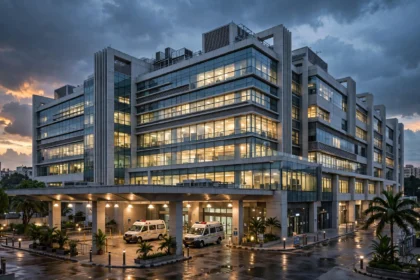
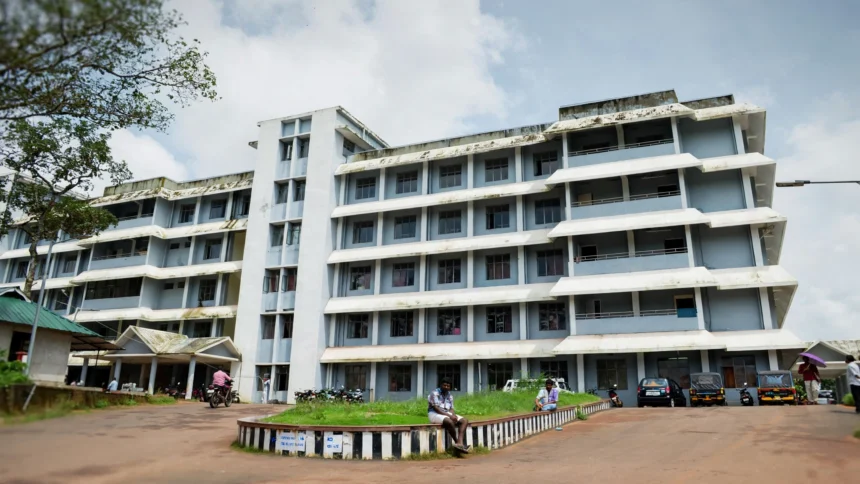
Kerala has ordered an immediate structural safety audit of every government hospital in the state, putting operation theatres, intensive care units and inpatient wards first in line. The order, issued on Tuesday, gives hospital heads one month to report back with their findings.
The circular was issued by APM Mohammed Hanish, Additional Chief Secretary (Health), and covers hospitals under both the Directorate of Medical Education and the Directorate of Health Services. Superintendents have been told to inspect their buildings at once and to move patients out of any area found unsafe, according to a report in The Times of India.
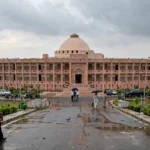
The move comes weeks after repeated ceiling collapses at the new surgical block of Government Medical College, Kottayam, a Rs 270-crore building inaugurated only in February this year.
What the audit order says
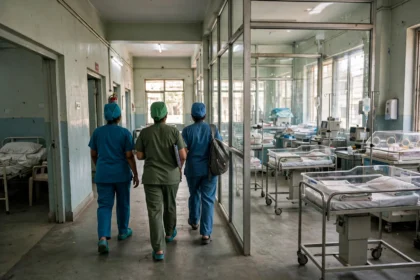
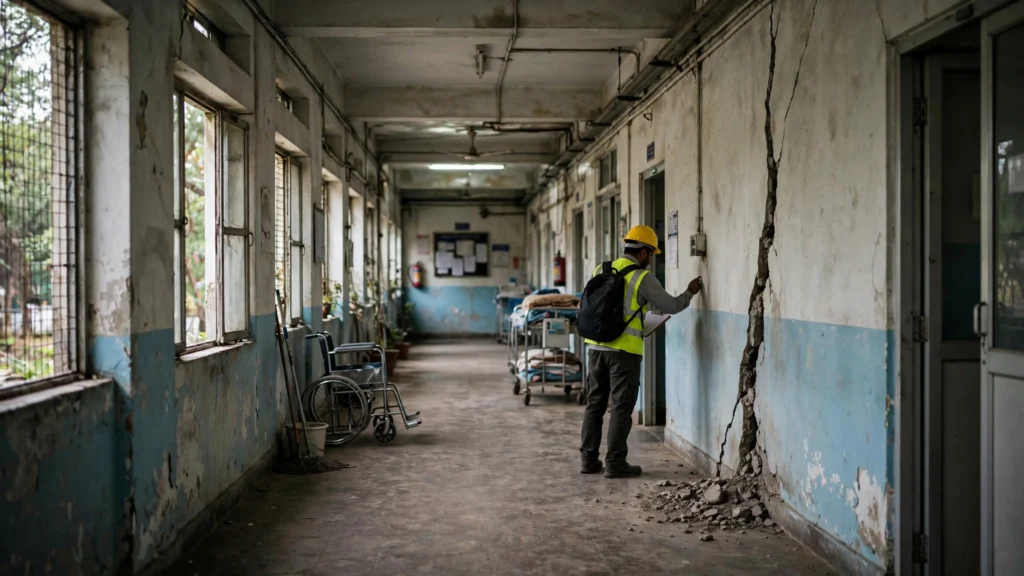
Under the order, every government hospital superintendent must carry out a thorough check of the building’s structural integrity, looking beyond routine maintenance. The checks focus on facilities that house the most vulnerable patients: operation theatres, intensive care units, inpatient wards and diagnostic laboratories.
Administrators have been told to flag specific warning signs and report them immediately: cracks in load-bearing walls, support columns and beams, persistent water leakage, seepage and dampness, and damaged ceilings, sagging false roofs and falling plaster. Any area found unsafe must be vacated, with patients shifted to safer parts of the hospital.
The two directorates, Medical Education and Health Services, have a strict one-month deadline to compile hospital-level findings and submit a consolidated structural safety status report to the state government.
Why now: the Kottayam warning
The new surgical block at Government Medical College, Kottayam, was inaugurated on February 16, 2026, by the previous government. Within months, portions of its ceiling collapsed repeatedly, and defects were reported in the civil, plumbing and electrical works of the Rs 270-crore building.
On November 5, Health Minister K Muraleedharan sought a Vigilance probe into alleged irregularities in the block’s construction, writing to Home Minister Ramesh Chennithala. He also directed the health department’s Additional Chief Secretary to appoint a technical committee to inspect the building, assess its structural safety and recommend corrective measures.
The Kottayam case matters because the building was brand new. If a block opened this year can develop such defects within months, the state cannot assume that older hospitals, many of them built decades ago, are safe simply because nothing has fallen yet.
Kerala’s heavy monsoon makes the checks especially relevant: water seeping into concrete can corrode the steel reinforcement inside it, quietly weakening a building over years. The audit builds on existing protocols, including the state disaster management authority’s hospital safety checklist and the Union Health Ministry’s national guidelines on fire and life safety in healthcare facilities, released in May 2026.
Why it matters
One new building failing is a construction story. A statewide audit is a system story, and that is the real shift here. The order accepts that the risk is not confined to old buildings or a single contractor, and it puts the responsibility for finding problems on the people who run the hospitals every day.
The one-month deadline is the real test of this order. An audit that produces a report is only the first half of the job. The second half is repairs, and that needs money, engineers and decisions about which wards can be closed for work without cutting off care. For patients, the most important line in the circular is the instruction to move people out of unsafe areas at once, because an ICU or an operation theatre cannot simply be vacated without somewhere safe to go.
What happens next
Hospital superintendents must send in their findings, the two directorates have a month to compile a consolidated report, and the government will then decide which buildings need urgent repair. The Kottayam technical committee’s findings and the Vigilance probe will run alongside the audit.
For now, the order is a check, not a closure notice. No hospital has been ordered shut. The next milestone is the consolidated report, due in about a month, which will show whether this was a paperwork exercise or the start of real repairs.
FAQs
Which hospitals does the audit cover?
All state-run hospitals under the Directorate of Medical Education and the Directorate of Health Services, from medical colleges to district and taluk hospitals.
What happens if a hospital building is found unsafe?
Patients must be moved out of the unsafe area immediately, and the findings go into the consolidated report due within a month. Repairs and further action follow from that report.
Why is Kerala auditing its hospitals now?
The immediate trigger is the repeated ceiling collapses at the new Rs 270-crore surgical block of Government Medical College, Kottayam, inaugurated in February 2026. A Vigilance probe into that building was sought on November 5.
What are inspectors looking for?
Cracks in load-bearing walls, columns and beams, water leakage and dampness, damaged ceilings, sagging false roofs and falling plaster, with priority to operation theatres, ICUs, inpatient wards and diagnostic laboratories.
What should patients and visitors do?
If you notice cracks, leaking ceilings or falling plaster in a government hospital, report it to the hospital superintendent’s office or the duty medical officer.
Kerala’s hospital safety audit is a developing story. We will update this report as the findings come in.