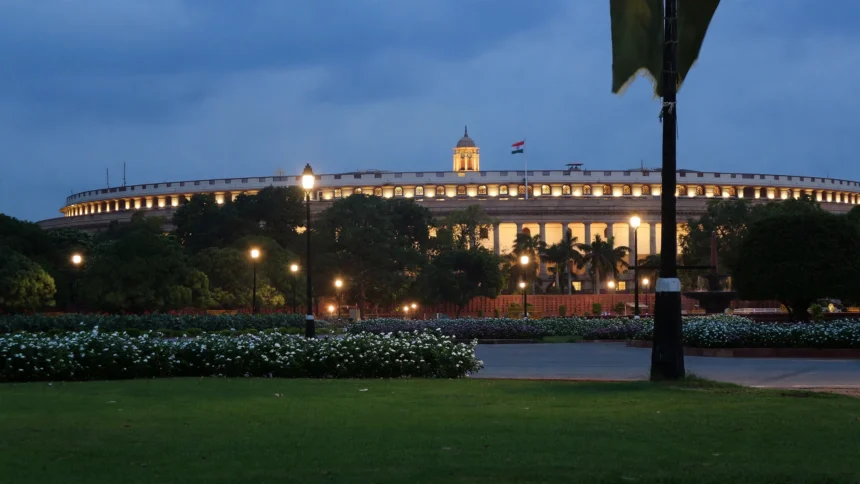
New Delhi: Prime Minister Narendra Modi has asked his ministers to be ready for the next session of Parliament before December 15, signalling that the long-delayed Winter Session could finally be near. The message came at Wednesday’s Cabinet meeting, where Modi also told ministers to avoid foreign travel.
As of Wednesday night, the Monsoon Session had still not been formally prorogued, more than 100 days after both Houses were adjourned indefinitely on August 13. The Cabinet Committee on Parliamentary Affairs will now fix the date and duration.
What the Prime Minister told his ministers
Sources cited by news agency PTI said the issue came up at the Cabinet meeting chaired by Modi on Wednesday. The Prime Minister suggested the session be convened before December 15 and asked ministers to ensure their ministries were fully prepared.
The instruction suggests the government wants its full ministerial bench in Delhi for a sitting expected to see important legislative battles, after sharp opposition criticism over the delay.
The delimitation test: the numbers game
The delay has fuelled speculation about a special sitting linked to delimitation of Lok Sabha and Assembly constituencies and the women’s reservation bill. The Constitution (131st Amendment) Bill, 2026, which seeks to implement reservation after delimitation, failed to win the required two-thirds majority in a special sitting on April 17.
That defeat shapes the government’s calculations. The bill needs 361 votes in the 543-member Lok Sabha. With three vacancies, the House has 540 members, and the ruling National Democratic Alliance has 320 MPs, well short. It would need opposition support to pass the bill.
The arithmetic has shifted since April, though not enough. Twenty-six MPs have left the opposition camp: 20 rebel Trinamool Congress MPs joined the Nationalist Citizens Party of India, pledging support to the NDA, and six Shiv Sena (UBT) MPs joined the Eknath Shinde-led Shiv Sena. Even so, two parties could prove decisive: the DMK (22 MPs) and the NCP (Sharadchandra Pawar) (eight seats).
- Votes needed: 361 of 543 seats
- NDA strength: 320 MPs in a 540-member House
- Recent shifts: 26 MPs left the opposition, 20 from Trinamool, six from Shiv Sena (UBT)
- Key players: DMK (22 MPs), NCP (Sharad Pawar) (eight)
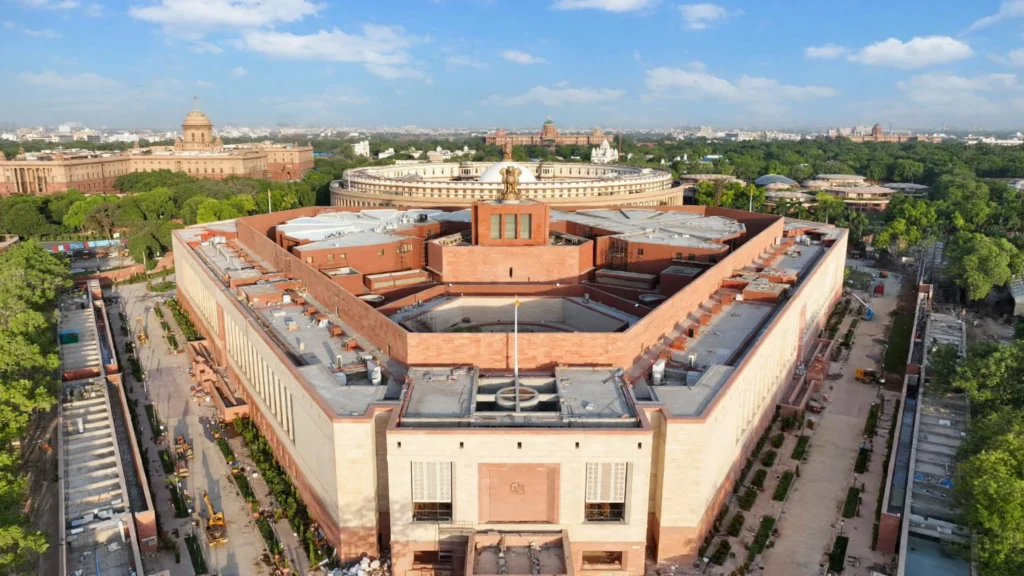
The 50 per cent formula and southern concerns
The government is also working on the substance of the proposal. Sources say it is exploring a formula under which Lok Sabha seats would rise by 50 per cent across states, while retaining the existing inter-state share based on the 1971 Census. The aim is to reassure southern states that delimitation based on current population will not cut their relative representation.
The bill, as introduced, sought to raise the Lok Sabha’s maximum strength from 550 to 850 seats and facilitate 33 per cent reservation for women in Parliament and state legislatures. No final decision has been taken on the formula. The Congress argues the government has not tried to build consensus: general secretary Jairam Ramesh said party president Mallikarjun Kharge had written to the Prime Minister four times in seven months proposing talks, without even an acknowledgement.
Why it matters
This is not just a scheduling announcement. If the bill returns, the session tests whether the government can assemble the two-thirds majority it lacked in April. That is a test of persuasion, not just arithmetic, since the votes it needs must come from parties that opposed the bill’s shape, not merely its timing.
For voters, the stakes are concrete: delimitation will redraw the map of parliamentary constituencies, deciding how much voice each state carries in the Lok Sabha. The women’s reservation, promised as a landmark reform, cannot take effect until the amendment passes, so every delay pushes it further away. The session is also likely to be stormy over the Special Intensive Revision of electoral rolls, with the opposition set to demand the resignation of Chief Election Commissioner Gyanesh Kumar.
What happens next
The Cabinet Committee on Parliamentary Affairs will finalise the date and duration. The first week of December is emerging as the likely window, though nothing has been officially announced. When the agenda is published, all eyes will be on whether the Constitution (131st Amendment) Bill returns, and whether the NDA can win over the DMK, the NCP (Sharad Pawar), or other opposition parties.
FAQs
When will the next Parliament session begin?
No official date has been announced. Modi has asked ministers to complete preparations before December 15, and the Cabinet Committee on Parliamentary Affairs will finalise the date, with reports pointing to the first week of December.
What is the Constitution (131st Amendment) Bill, 2026?
It is the bill linked to delimitation and women’s reservation. It would raise the Lok Sabha’s maximum strength from 550 to 850 seats and bring in 33 per cent reservation for women in Parliament and state legislatures after delimitation. It failed to win the required majority on April 17, 2026.
Why does the government need 361 votes?
A constitutional amendment needs a two-thirds majority, 361 votes in the 543-member House. The NDA has 320 MPs, so it needs opposition support.
What is the 50 per cent formula?
It would raise Lok Sabha seats by 50 per cent across all states while retaining their existing share based on the 1971 Census, reassuring southern states that delimitation will not cut their representation.
The coming days will show whether the government has the numbers to make this the decisive session it wants.