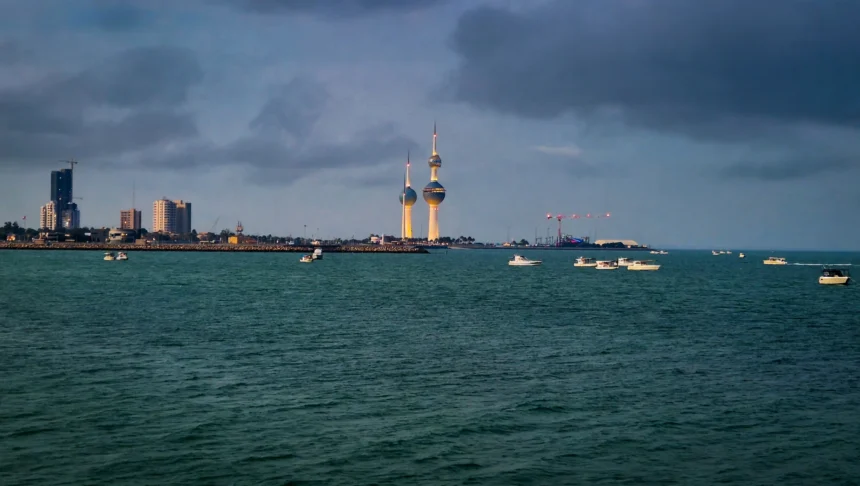
Two Italian technicians were killed in Kuwait on Thursday when drones struck a military site where they were maintaining an air defence system. Italy and Kuwait blamed Iran for the attack. Tehran denied any involvement.
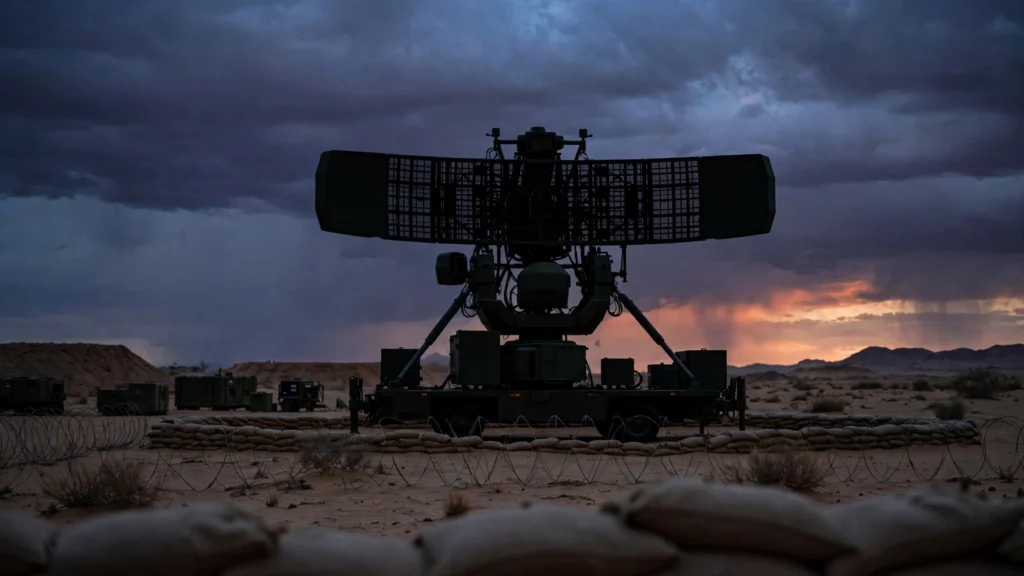
The two men, Antonio Saccoccio, 65, from Formia, and Emanuele Lo Russo, 36, from Rome, worked for Rheinmetall Italia, the Italian arm of the German defence company. They were carrying out maintenance on detection antennas for the Skyguard air defence system used by Kuwait’s armed forces.
According to Kuwaiti and Italian reports, the men were killed by falling shrapnel after Kuwaiti forces intercepted the incoming drones. Two other people, a Kuwaiti national and a Pakistani national, were injured in the same incident.
What happened on Thursday
Italian Foreign Minister Antonio Tajani told the Italian Senate that several drones of Iranian origin targeted Kuwaiti military installations at around 2pm on Thursday, November 26, including an air defence detection station where the two technicians were working.
“A powerful explosion occurred, and, according to reports reaching us from Kuwait, both of our fellow citizens have unfortunately died,” Tajani said in a statement.
Kuwait’s defence ministry said its armed forces had detected and engaged several hostile drones in Kuwaiti airspace. The ministry blamed what it called “Iranian aggression” for an attack on a “vital site”, and said falling debris wounded two other people. It later confirmed the deaths of the two Italians. The attack came as Kuwait’s National Guard and military were meeting an Italian delegation visiting the country, including senior Italian officers and the Italian ambassador to Kuwait.
Iran denies responsibility
Iran quickly denied that it was behind the attack. Foreign Minister Abbas Araghchi spoke by phone with his Kuwaiti and Italian counterparts, insisting Tehran had no role in the strike. A senior Iranian military spokesperson said Iranian forces had conducted no offensive or military operations in the area.
Al Jazeera reported that Iran said its last strike on Kuwait took place on November 18, and that Kuwait had activated its air defences days before Thursday’s attack to counter drone strikes, the first since early September.
Kuwait’s foreign ministry called the attack a flagrant violation of its sovereignty and a breach of international law. The Amir of Kuwait sent condolences to Italy’s president and prime minister.
A wider conflict spilling across the Gulf
The two dead men are the first European civilians to be killed as a result of the US-Israel war on Iran since it began in late February, according to Al Jazeera. Their deaths show how a war centred on Iran is now reaching the Gulf states that sit between the warring sides.
Kuwait is not the only Gulf state under pressure. On the same day, a Houthi attack on Saudi Aramco’s Jazan oil refinery killed a Nepali worker and injured several others.
The Gulf Cooperation Council condemned the attack, and Saudi Arabia led Arab condemnation, holding Tehran responsible.
Why it matters
This attack changes who is at risk in the Gulf. Until now, the fighting has mostly hit military targets and energy infrastructure. The deaths of two civilian technicians from a European country, killed while maintaining a defensive system, bring the war into a new category.
For India, the stakes are direct. Hundreds of thousands of Indians live and work across the Gulf, including in Kuwait, many in technical, construction and maintenance roles near sensitive sites. Any escalation that turns Gulf military installations into targets raises the risk for Indian workers, not just soldiers and diplomats.
The attack also tests the Gulf states’ balancing act. Kuwait, Saudi Arabia and their neighbours have tried to stay out of the US-Israel war on Iran while keeping their airspace and bases secure. Each strike on their soil makes that neutrality harder to hold.
Timeline: how the Gulf became a front line
- Late February 2026: The US-Israel war on Iran begins.
- March 1, 2026: An Iranian drone strike at Port Shuaiba in Kuwait kills multiple US soldiers and injures dozens more.
- November 18, 2026: Iran says it last struck Kuwait on this date.
- November 26, 2026: Drones hit a Kuwaiti air defence site, killing two Italian technicians and injuring two others. A Houthi attack on Saudi Arabia’s Jazan refinery kills a Nepali worker the same day.
FAQs
Who were the two Italians killed in Kuwait?
Antonio Saccoccio, 65, from Formia, and Emanuele Lo Russo, 36, from Rome. They were civilian technicians working for Rheinmetall Italia, maintaining antennas for the Skyguard air defence system used by Kuwait’s armed forces.
Who does Kuwait blame for the attack?
Kuwait’s defence ministry blamed what it called “Iranian aggression” for the strike on a “vital site”. Italy’s foreign minister said the drones were of Iranian origin. Iran has denied any involvement.
Why is this attack significant?
The two men are the first European civilians killed as a result of the US-Israel war on Iran since it began in late February 2026. The attack shows the conflict reaching Gulf states that have tried to stay out of the fighting.
What has the international reaction been?
The Gulf Cooperation Council condemned the attack, Saudi Arabia led Arab condemnation, and the Amir of Kuwait sent condolences to Italy’s president and prime minister. Iran’s foreign minister denied responsibility in calls with his Kuwaiti and Italian counterparts.
Thursday’s deaths made that plain.