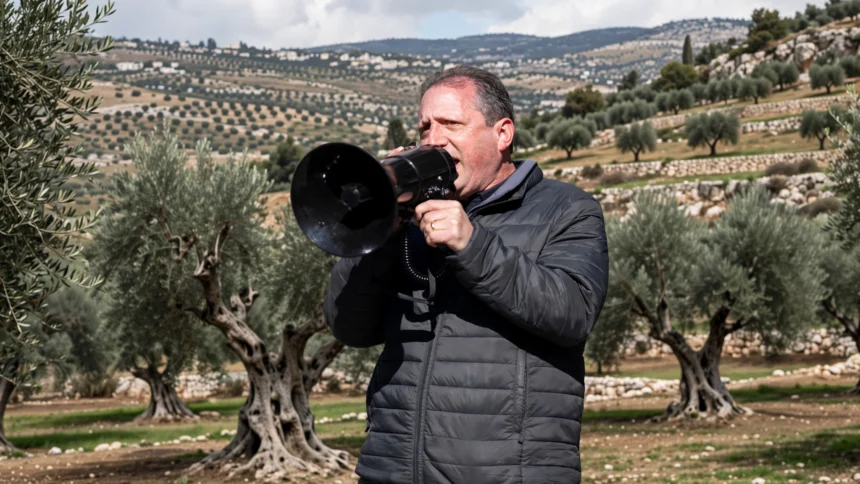
It started as a quiet morning in an olive grove and ended with a US congressional candidate sitting in the back of a military bus.
Brad Lander, the Democratic candidate running for New York’s 10th Congressional District, was detained by Israeli forces on Wednesday while helping Palestinian farmers harvest olives in the occupied West Bank. He was released a few hours later with a warning. Dozens of other volunteers, including a group of American rabbis, were still in custody on Wednesday night.
The episode, less than two weeks before the November 3 midterms, has turned a routine act of harvest solidarity into a diplomatic flashpoint.
What happened in the olive grove
Lander had joined Palestinian farmers near the village of Nahalin in the central West Bank, along with roughly 80 activists and volunteers from the United States, Britain, Canada and Israel. The group was standing with farmers during a harvest season that has repeatedly turned violent.
On Wednesday afternoon, Lander posted a photograph from the back of a filled bus, with two uniformed men visible near the front.
“I’ve been detained by the IDF, along with a group of rabbis and volunteers. We were simply harvesting olives in a grove near Nahalin in the West Bank,” Lander wrote. “The occupation is a crime under international law. Harvesting olives isn’t a crime under any law I know.”
After his release, he said he had been let go because of his public profile and demanded the release of the others. “These detentions by the IDF are one more attempt to undermine Palestinians’ right to harvest their olive groves, travel on their roads, and live in their homes,” he posted.
A harvest season shadowed by violence
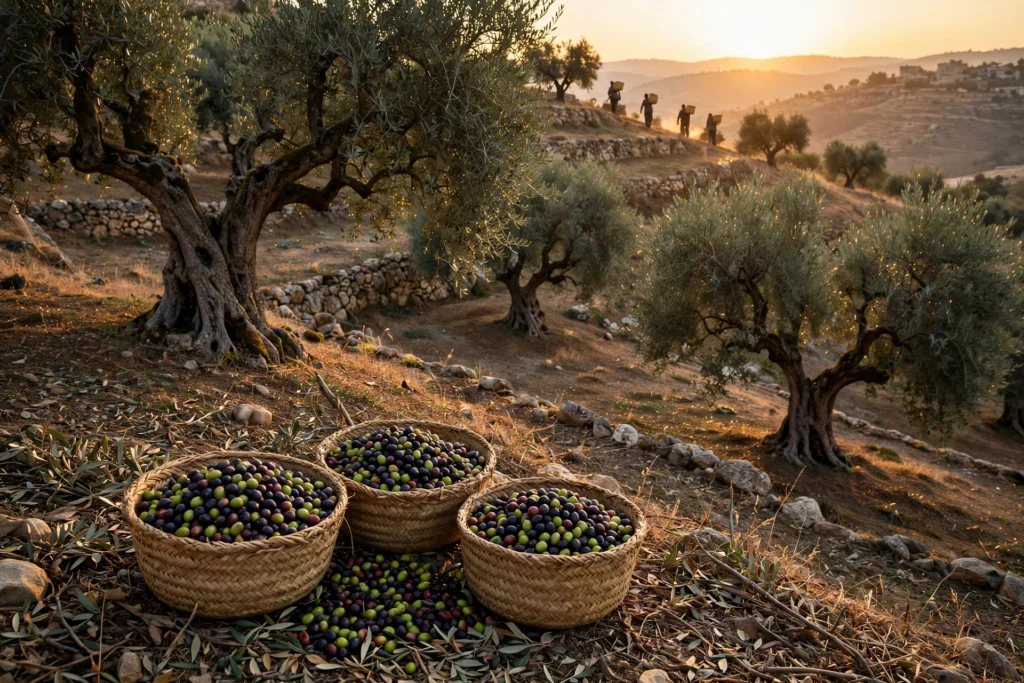
The olive harvest is far more than an agricultural ritual in the West Bank. For thousands of Palestinian families, it is a cultural tradition and a vital source of income. This year’s season has been marked by running clashes between Israeli settlers and Palestinian villagers trying to gather their crops.
Peace Now says the army expanded by nearly 30 percent the area of farmland Palestinians cannot enter without prior approval, to about 34 square miles, or 88 square kilometers. The Israeli military declined to comment on the exact figures.
Israel calls it a political provocation
The Israeli military said the farmers and volunteers had failed to seek prior approval and were detained “due to the security risk posed by conducting an uncoordinated harvest near an Israeli community.” It later added that it viewed “the arrival of dozens of activists as an act intended solely to provoke.”
Israel’s Foreign Ministry described Lander’s actions as a “political provocation,” saying his team had contacted Israeli representatives in the United States ahead of the visit and was told that proper coordination was required. “He chose to ignore those instructions,” the ministry said.
Lander disputes that account. He said coordination was generally advised, not required, and that the area was not restricted when the group arrived. The military only restricted it after they had entered the zone, he said.
An official map undercuts the authorities’ claim
A detail reported by The Times of Israel has complicated the official version. A map distributed to Palestinian farmers by the Israeli Defense Ministry’s Civil Administration unit shows that the area where the group was detained was not actually in a zone requiring prior coordination.
Roughly 80 activists are still being held at a police station in the Beitar Illit settlement. Only Lander has been released, after he was identified as a candidate for the US Congress, a sign that Israeli authorities wanted to avoid a fresh international incident.
Opposition lawmaker Gilad Kariv warned that if Israeli officials “don’t stop this madness, it will cause enormous damage to relations with Jews of the United States, and entirely justifiably so.”
Why it is reverberating in Washington
Lander is not a random visitor. The former New York City comptroller is Jewish, is allied with NYC Mayor Zohran Mamdani, and has criticised Israel’s conduct in the Gaza war. He is contesting the November 3 midterms in a heavily Democratic New York district.
The timing is delicate. Days ago, settler attacks on reporters and foreign diplomats prompted US Secretary of State Marco Rubio to publicly call on Prime Minister Benjamin Netanyahu’s government to crack down on the violence.
For a candidate for federal office to be detained by the forces of a close US ally is the kind of image that travels fast. Lander’s campaign now has one, taken from the back of a bus in an olive grove.
Frequently asked questions
Who is Brad Lander?
The Democratic candidate for New York’s 10th Congressional District in the US midterm elections on November 3, and a former New York City comptroller.
Why was he in the West Bank?
He was accompanying Palestinian farmers during the annual olive harvest, part of an international volunteer presence shielding them from settler attacks.
Why did Israel detain him?
Israel says the group conducted an uncoordinated harvest without prior approval and calls the visit a political provocation. Lander says the area was not restricted when the group arrived.
What happens next?
About 80 activists remain detained at the Beitar Illit police station. The incident is likely to add pressure on both Washington and Jerusalem as the November 3 elections approach.
The Informeia newsroom will keep tracking this story as it develops.