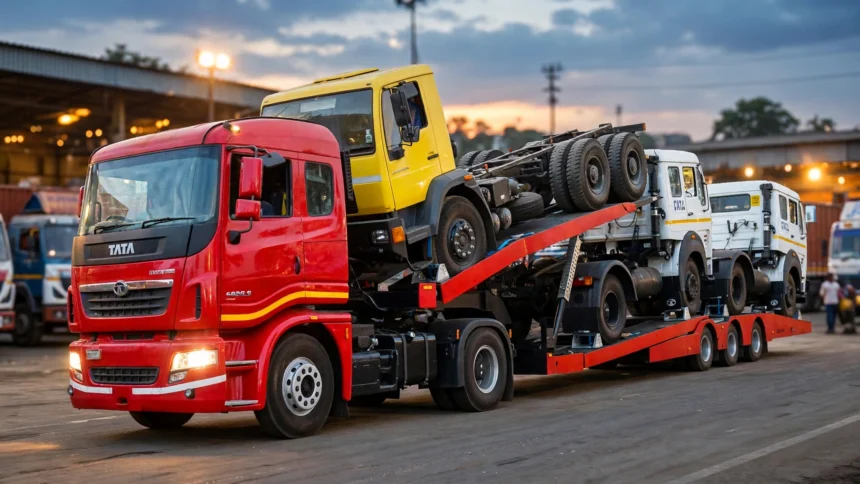
Tata Motors’ commercial vehicles business roared back into the black in the September quarter. The company, announcing its numbers after market hours on Friday, reported a consolidated net profit of Rs 1,257 crore for Q2 FY27, a sharp turnaround from the Rs 867 crore loss it had posted in the same quarter last year. Consolidated revenue jumped 36.3% year-on-year to Rs 25,338 crore, riding on strong truck sales at home and a surge in exports.
The numbers are those of the listed commercial vehicles company that emerged from the Tata Motors demerger, with the passenger vehicles business now listed separately. On Friday, before the results were declared, Tata Motors shares had closed 4.41% lower at Rs 395.70 on the BSE.
The numbers behind the comeback
Here is how the quarter stacked up:
- Consolidated net profit: Rs 1,257 crore, against a loss of Rs 867 crore in Q2 FY26.
- Consolidated revenue: Rs 25,338 crore, up 36.3% from Rs 18,585 crore a year ago.
- Consolidated EBITDA: around Rs 2,800 crore, up 31%; EBITDA margin at 10.9%, down 40 basis points.
- Standalone revenue: Rs 23,930 crore, up 42% year-on-year, with profit after tax at Rs 2,138 crore against a Rs 1,021 crore loss last year.
- Profit before tax (before exceptional items): Rs 2,660 crore, up 51% year-on-year.
- Free cash flow: Rs 4,600 crore for the quarter, up Rs 2,400 crore from last year.
- Net cash position: Rs 15,900 crore on a consolidated basis and Rs 11,300 crore standalone, as of September 30, 2026.
- Auto return on capital employed: 65%, compared with 68% in the June quarter.
The company said the consolidated profit jump was helped by lower mark-to-market losses on its investments in Tata Capital, on top of the operating improvement in the truck business.
Volumes did the heavy lifting
Tata Motors sold 135,100 vehicles in the quarter, up 42% from the year-ago period. Domestic volumes grew 30%, but the real surprise was exports, which soared 177% year-on-year.
On the ground, the company tightened its grip on the Indian truck market. It said its domestic commercial vehicle market share, measured by VAHAN registrations, stood at 36.2% for the first half of FY27, up 110 basis points from last fiscal. The company also gave a segment-wise split: 41.1% in CV passenger, 36.3% in ILMCV, 27.6% in SCV pickups and 7% in heavy commercial vehicles.
Margins are the wrinkle
The one soft spot in the results was profitability per vehicle. The standalone EBITDA margin slipped 90 basis points to 11.7%, although the company pointed out that it held steady sequentially despite rising commodity costs. Girish Wagh, the managing director and CEO, warned that the pressure is not going away soon. He expects commodity costs, particularly metals and tyre rubber, to rise further in the current quarter.
Tata Motors has already started pushing back. Vehicle prices were raised from October 1, and Wagh said a call on any further price action for the January-March quarter would be taken towards the end of this quarter. He also cautioned that growth rates could ease in the second half of the fiscal as year-ago comparisons get tougher.

The Iveco deal enters the home stretch
Beyond the quarterly numbers, all eyes are on the closing of the Iveco acquisition. Following receipt of all regulatory approvals, the tender offer for the Italian truckmaker has commenced and will remain open until October 26, 2026. At Iveco’s extraordinary general meeting on October 16, shareholders approved all the proposed resolutions. Subject to successful completion of the offer, settlement is scheduled for October 30.
A regulatory filing showed the offer value was revised to approximately Rs 42,561 crore on October 9, from Rs 41,363 crore on September 30.
What to watch from here
- Q4 pricing call: whether Tata Motors pushes through another price hike to defend margins against rising input costs.
- Iveco settlement: the October 30 closing would mark a major expansion of the company’s global truck footprint.
- Freight demand: management has tied truck demand to infrastructure activity and fleet utilisation, so the pace of government capex matters.
- Commodity costs: steel and tyre rubber trends will decide whether margins recover or stay under pressure in the second half.
FAQs
Q. Why did Tata Motors’ share price fall despite the strong results?
A. The stock fell 4.41% to Rs 395.70 on Friday before the results were announced after market hours. Margin pressure and management’s warning about rising commodity costs ahead may have tempered enthusiasm, along with the broader market selloff.
Q. Is the CV business separate from Tata Motors’ passenger vehicles?
A. Yes. Following the demerger, Tata Motors Limited is the listed commercial vehicles company, while the passenger vehicles business is separately listed.
Q. What is the Iveco acquisition about?
A. Tata Motors is acquiring Italian truckmaker Iveco through a tender offer open until October 26, 2026, with settlement scheduled for October 30. The offer value was revised to about Rs 42,561 crore.
Q. How strong is the company’s balance sheet?
A. Net cash stood at Rs 15,900 crore on a consolidated basis and Rs 11,300 crore standalone as of September 30, 2026, with quarterly free cash flow of Rs 4,600 crore.
Q. What hurt margins this quarter?
A. Rising commodity costs, mainly metals and tyre rubber, shaved 90 basis points off the standalone EBITDA margin, which came in at 11.7%.
Tata Motors has shown it can sell more trucks and make money doing it. The next test is protecting margins while closing the biggest acquisition in its history.