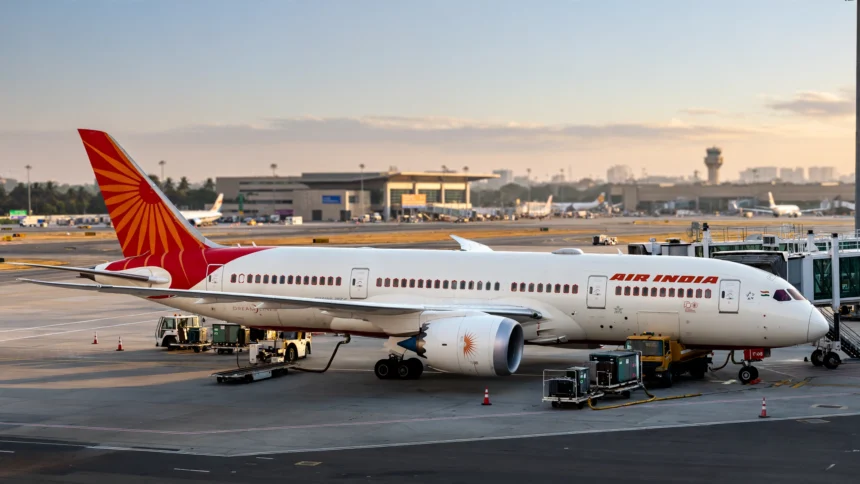
Air India Group has started the financial year with a sharply wider loss. The Tata Group airline group lost more than Rs 6,000 crore in the April to June quarter of FY27, roughly double the loss of more than Rs 3,000 crore in the same quarter a year earlier, according to a report published on October 28. Air India did not comment on the figures when contacted for the report.
The number lands at a difficult moment. Fuel is expensive, the rupee is under pressure, and several long-haul routes are still flying the long way round because of airspace closures.
Air India is not listed on the stock market, so it does not announce quarterly results like listed airlines do. The Q1 figure comes from industry sources cited in the reporting. It follows a stark audited picture for FY26, when the wider airline business reported a consolidated loss of Rs 22,238 crore, against Rs 10,859 crore in the previous year.
Fuel now eats more than half the operating bill
The biggest pressure is fuel. Aviation turbine fuel now accounts for more than 50 per cent of Air India Group’s operating expenditure, industry sources said. Brent crude was trading near 114 to 115 dollars a barrel this week, a level that leaves little room for error for an airline that burns as much fuel as Air India does on long-haul flying.
The fuel bill is heavier than it needs to be because the flying itself has got longer. Pakistan closed its airspace to Indian airlines in April 2025, forcing Air India to reroute Europe and North America services. Longer routes mean more flying time, more fuel and poorer use of each aircraft. Air India had earlier estimated that the Pakistan closure alone could cost around Rs 4,000 crore a year. Restrictions affecting Gulf airspace have since compounded the problem, a senior executive said recently.
Currency swings added to the strain
Foreign exchange was the second blow. Much of an airline’s spending is in dollars, from leases and maintenance to spares and overseas handling, while most ticket sales are in rupees. Consolidated forex losses rose to around Rs 7,400 crore in FY26, from around Rs 1,500 crore a year earlier. The rupee was trading around Rs 95.21 to the dollar this week.

A cost drive, led from the top
Chief executive and managing director Tewolde Gebremariam has answered with a blunt message: cost consciousness must become part of the culture. Earlier this month he told employees that airspace closures, the West Asia conflict and persistently high jet fuel costs were placing significant pressure on airlines, and he called for frugality, accountability and thoughtful decision making.
The airline has set up a full-time, cross-functional cost savings team, Gebremariam said. Staff-on-duty travel requests have required clearance through the head of department, a CXO-level executive and the chief executive since October 1. The board has endorsed the measures and authorised the chief executive to act on expenditure and wastage. It has also ratified a plan to bring departments of Air India and Air India Express under a common structure over about six months, with both brands retained. Air India Express lost Rs 6,767 crore in FY26, so the pressure runs across the group.
What to watch next
Three things will decide whether the next few quarters look better: airspace, crude and the rupee. Any easing of the Pakistan closure or Gulf restrictions would shorten routes and cut fuel burn. A sustained fall in oil prices would ease the largest cost line, and a steadier rupee would slow forex losses. Until one of those turns, Air India must squeeze costs and protect cash. A loss that doubled in a year leaves little room to absorb another bad quarter.
- Q1 FY27 loss: more than Rs 6,000 crore, against more than Rs 3,000 crore a year earlier.
- FY26 consolidated loss: Rs 22,238 crore, against Rs 10,859 crore in FY25.
- Fuel share: more than 50 per cent of operating expenditure.
- Airspace cost: around Rs 4,000 crore a year, on Air India’s earlier estimate for the Pakistan closure.
- Forex losses in FY26: around Rs 7,400 crore, up from around Rs 1,500 crore.
FAQs
How much did Air India Group lose in Q1 FY27?
More than Rs 6,000 crore in the April to June quarter, roughly double the loss a year earlier, according to industry sources cited in reporting published on October 28.
Why did the loss widen?
High fuel costs, foreign exchange fluctuations and airspace closures that forced longer Europe and North America routes.
Is Air India a listed company?
No. It is part of the Tata Group and is not listed, so the quarterly figure comes from industry sources rather than a stock exchange filing.
What is Air India doing about costs?
Chief executive Tewolde Gebremariam has set up a cost savings team, tightened staff travel approvals since October 1, and won board backing for a common Air India and Air India Express structure over about six months.
What could improve the result?
An easing of airspace restrictions, lower crude prices and a steadier rupee would all help. Until then, cost control is the main lever the airline can pull itself.
Reported on October 28, 2026, based on industry sources. Air India did not comment. This article will be updated if the airline issues a statement.