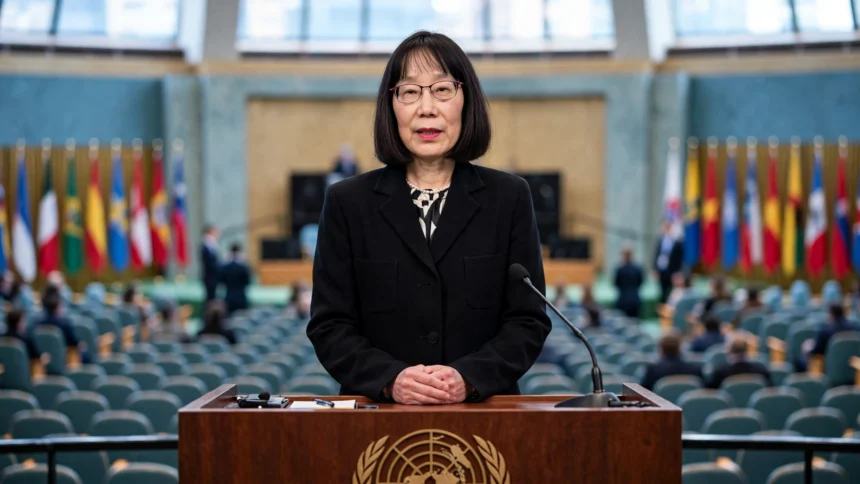
NEW YORK: The president of the International Criminal Court (ICC) has delivered a blunt message to the United Nations: the court will not be bullied out of existence. Addressing the UN General Assembly on Monday, Judge Tomoko Akane accused the United States of trying to obstruct international justice through sanctions, and urged all 193 member states to stand up for the tribunal.
Akane could not deliver her annual report in person. She spoke remotely, by pre-recorded video, because US sanctions have barred her from travelling to New York. It was, she said, an extraordinary and unprecedented situation for the head of a court created to prosecute the world’s gravest crimes.
“Let me be clear: the court will continue to fully discharge its mandate with independence and impartiality, acting only on the basis of the law and the evidence, for the sake of the countless victims of grave crimes,” she told the Assembly.
A court under pressure
The Trump administration first imposed sanctions on individual ICC officials, including Akane herself, and then widened them last month to target the entire court. Secretary of State Marco Rubio said the US would ban transactions with what he called a “rogue court”, cutting off its resources and crippling its ability to operate against America and its allies.
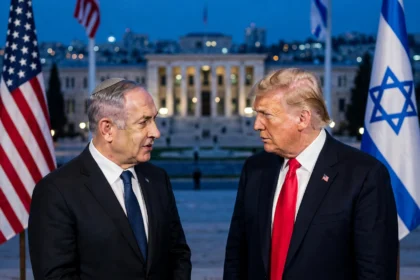
The sanctions campaign is linked to ICC investigations into the United States and its allies, including Israel. The court has outstanding arrest warrants against Israeli Prime Minister Benjamin Netanyahu and former defence minister Yoav Gallant, and Akane noted that those warrants remain in force.
Akane drew attention to the timing of the latest round of sanctions. They were announced on October 9, the very day the Nobel Peace Prize was awarded to South African jurist Navi Pillay, a former ICC judge, for her work promoting peace and international law.
“The contrast could not be starker,” she said. “On the one hand, global recognition of the value of international justice, on the other, an attempt to subdue the institution that embodies it.”
An appeal to all 193 nations
Akane’s appeal was deliberately broad. She called on all 193 UN member nations, not just the 125 states that are parties to the ICC, “to take concrete action, individually and collectively, in defense of the court”. The point was plain: defending international justice, she argued, is not only the business of the court’s members.
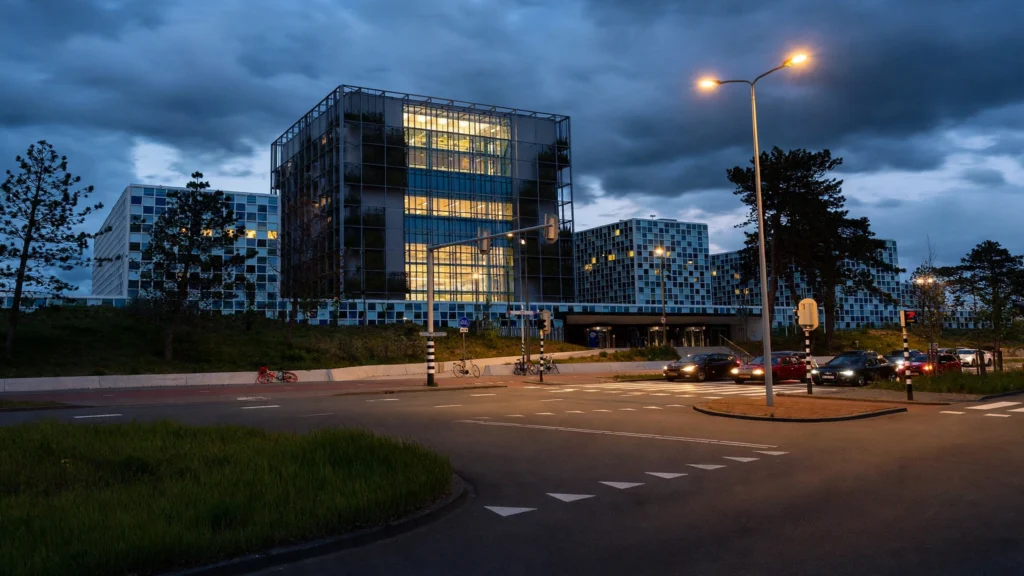
The ICC, set up in 2002, prosecutes war crimes, crimes against humanity and genocide in cases where countries are unwilling or unable to do so themselves. The United States is not a party to the court, a fact that has long shaped the uneasy relationship between Washington and The Hague.
The State Department had no immediate comment on Akane’s remarks. But the court president framed the sanctions as a test for the whole international system, warning that they “strike at the heart of the sovereign equality of states” and amount to an attempt to obstruct the course of justice.
What happens next
For now, the court says its work goes on. Judges and prosecutors continue to handle cases, and the tribunal’s annual Assembly of States Parties is due to meet in The Hague later this month, rather than in New York, after sanctions and visa restrictions complicated travel for delegates.
The bigger question is whether member states will answer Akane’s call with practical support, from funding to political backing, or whether the sanctions will slowly choke the court’s operations. The Assembly’s response in the coming weeks will show how much appetite there is, beyond words, to defend an institution that was built to hold even the powerful to account.
Akane closed with a line aimed squarely at those betting the court will fold. The attempt to subdue it, she said, would not succeed.
FAQs
Who is Tomoko Akane?
Tomoko Akane is a Japanese judge and the president of the International Criminal Court, the Hague-based tribunal that prosecutes war crimes, crimes against humanity and genocide.
Why did she address the UN remotely?
She addressed the UN General Assembly by video on November 2 because US sanctions have barred her from travelling to New York.
What sanctions has the US imposed on the ICC?
Washington first sanctioned individual ICC officials, including Akane, and then widened the measures in October to target the entire court, banning transactions with it.
Why is the US targeting the court?
The sanctions campaign is linked to ICC investigations into the United States and its allies, including Israel, whose leaders face outstanding ICC arrest warrants.
Is the US a member of the ICC?
No. The United States is not a party to the court, which was set up in 2002 and has 125 member states.
The ICC says it will continue its work despite the sanctions. Member states will now decide how far their support goes.