India’s factories kept growing in October, even as the pace cooled a touch. Fresh survey data released on Monday puts the HSBC India Manufacturing Purchasing Managers Index, compiled by S&P Global, at 54.7 for October, down from 55.1 in September. The number still sits comfortably above 50, the line that separates expansion from contraction, and it tells a story that will matter for jobs, prices and exports in the months ahead: foreign orders are doing a lot of the heavy lifting right now.
That split, strong exports on one side and softer domestic demand on the other, is the real headline behind the single PMI figure. New business overall stayed strong, easing only slightly from September’s seven-month high, while export orders grew at their fastest pace in six months. For a manufacturing sector navigating high global uncertainty, that overseas demand has become a cushion.
What the headline number actually says
A PMI is a survey of purchasing managers on output, orders, hiring and prices. Above 50 means more firms report improvement than deterioration, so at 54.7, October was firmly in expansion, just not quite as brisk as September’s 55.1.
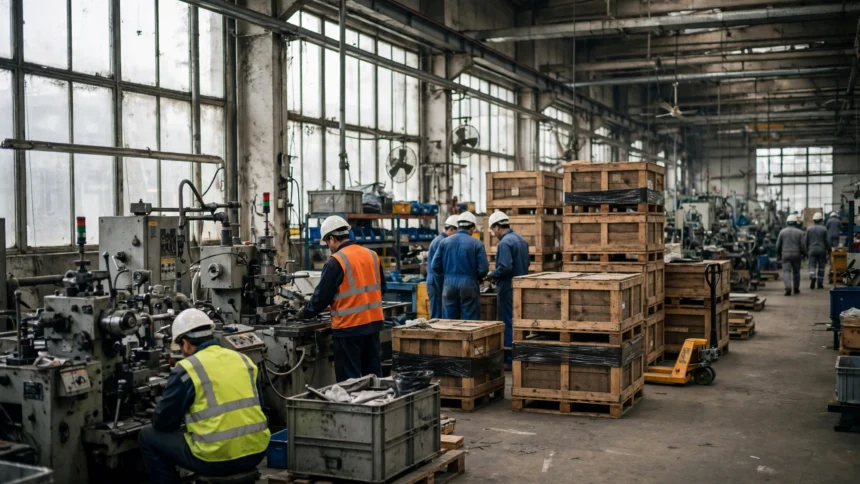
Output rose sharply in October and stayed above its long-run average, supported by rising sales and new product launches. Growth did soften compared with September, and the survey points to a slowdown among makers of intermediate goods, the parts and materials that feed into finished products. Even so, that category still led the expansion, which suggests supply chains kept moving rather than stalling.
HSBC’s chief India economist, Pranjul Bhandari, said strong international demand supported a robust rise in output, while firms are building precautionary inventory buffers in a volatile global environment.
Exports hit a six-month high
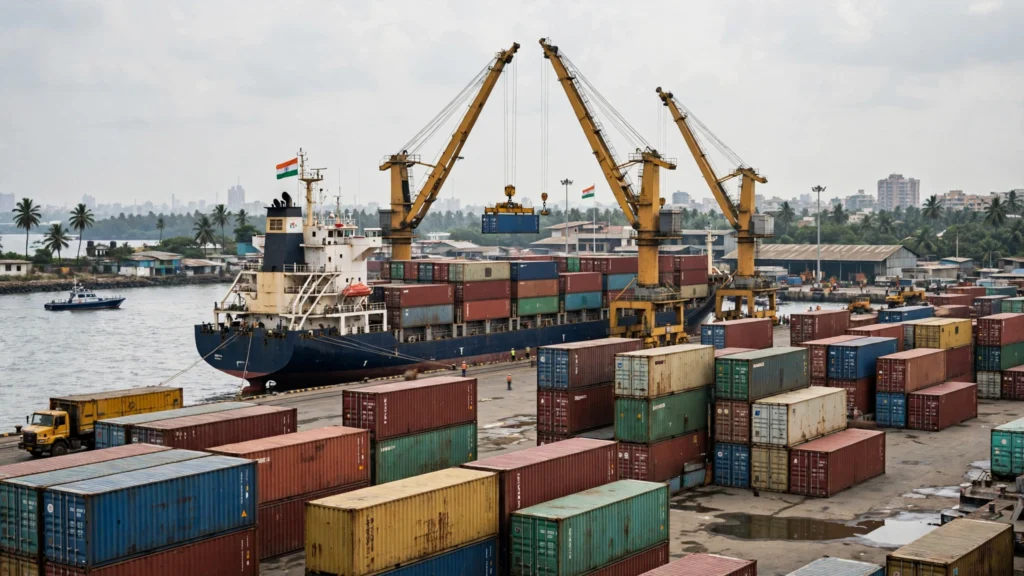
The brightest part of the October survey is the export book. Manufacturers reported higher overseas demand from a strikingly wide map: Bangladesh, Canada, Indonesia, Nepal, Oman, Saudi Arabia, Sri Lanka, the United Kingdom, the United States and the UAE all featured among the destinations driving new export orders.
That breadth matters. When export growth depends on one or two markets, a single tariff change or slowdown can knock it over. A spread across Asia, the Gulf, North America and Europe gives Indian exporters more than one route to growth, and it fits with the wider trade picture in recent weeks, where officials have been pushing for preferential market access for textiles, pharmaceuticals, footwear, leather, gems and jewellery, and marine products.
Price pressures are easing, at last
The second piece of good news in the survey is on costs. Input cost inflation fell to its lowest level since February, even though prices for some materials and energy rose. The increase in selling prices was the weakest in just under four years, which means factories passed on less of their cost burden to buyers than they have in a long time.
That combination matters for households too. Factory gate prices feed, with a lag, into shop prices, so easing costs remove one reason for fresh price hikes, even if they do not guarantee cheaper goods tomorrow.
- PMI: 54.7 in October, down from 55.1 in September, still firmly in expansion.
- Export orders: fastest growth in six months, led by demand from the US, UK, UAE, Saudi Arabia and several Asian markets.
- Input costs: inflation at its lowest since February; selling price rises at their weakest in nearly four years.
- Output: rose sharply and above its long-run average, despite a softer month for intermediate goods.
The cautious side: confidence and hiring
Not everything in the survey points up. Business confidence slipped from September and stayed below its long-run average. Only around 18 percent of manufacturers expected output to rise over the coming year, with the rest largely neutral. New client enquiries and demand for industrial automation and technology solutions were among the reasons optimists gave for expecting growth.
Hiring growth also stayed soft. That is the part of the factory story that matters most to jobseekers: orders can rise without an immediate hiring surge if firms meet demand with longer hours, overtime or productivity gains first. If export orders stay strong for a few more months, hiring usually follows, but October’s survey alone does not yet show that turn.
What to watch next
What happens next depends on three things: whether domestic orders recover in November, whether input costs stay near their February low, and whether the services survey tells a similar story. For now, the message is
clear: factories are still finding buyers abroad, even as they stay cautious at home.
FAQs
What is the India Manufacturing PMI for October 2026?
The HSBC India Manufacturing PMI, compiled by S&P Global, eased to 54.7 in October from 55.1 in September.
Does a PMI above 50 mean growth?
Yes. A reading above 50 signals expansion in manufacturing activity, while a reading below 50 signals contraction.
Why did export orders stand out in October?
New export orders grew at their fastest pace in six months, with higher demand reported from markets including the US, UK, UAE, Saudi Arabia, Bangladesh, Canada, Indonesia, Nepal, Oman and Sri Lanka.
What happened to prices in the survey?
Input cost inflation fell to its lowest since February, and the rise in selling prices was the weakest in just under four years.
India’s factories are not roaring, but they are moving, and right now it is the world’s orders keeping the lines busy.