India’s fertiliser subsidy bill for this financial year is set to overshoot its Budget estimate by a wide margin, the government confirmed on Friday. Fertiliser Secretary Rajat Kumar Mishra said the bill for 2026-27 will exceed the Rs 1.71 lakh crore provided in the Budget, as the West Asia crisis keeps pushing up the cost of imported fertilisers and their raw materials.
How far above the Budget it lands is still open. The Fertiliser Association of India has estimated the bill at Rs 2.5 lakh crore, while rating agency ICRA puts it at Rs 2.76 lakh crore. That would be an all-time high, beating the previous peak of Rs 2.55 lakh crore recorded in 2022-23 after the Russia-Ukraine war sent global prices soaring. Around 70 to 75 percent of the budget has already been spent, and analysts estimate about 80 percent of it was exhausted by mid-November.
The numbers at a glance
- Budget estimate for FY27: Rs 1.71 lakh crore
- ICRA estimate: Rs 2.76 lakh crore, a record high
- Fertiliser Association of India estimate: Rs 2.5 lakh crore
- Previous peak: Rs 2.55 lakh crore in FY23
- Last year (FY26): Rs 2.11 lakh crore
- Urea subsidy budgeted: Rs 1.17 lakh crore; phosphorus and potash: Rs 54,000 crore
The Budget split the allocation between urea, at about Rs 1.17 lakh crore, and phosphorus and potash fertilisers, at Rs 54,000 crore. ICRA estimates the phosphorus and potash requirement alone will reach about Rs 1.02 lakh crore this year, nearly double its Budget allocation.
Why the bill is ballooning
West Asia supplies much of the world’s urea, ammonia, sulphur and phosphoric acid, and the conflict in the region has disrupted supplies and driven prices sharply higher. Since March 2026, urea prices have jumped about 85 percent to around $950 a tonne, according to CareEdge Ratings. DAP, the most widely used phosphorus fertiliser, is up about 30 percent to $900 a tonne, ammonia is up 60 percent and sulphur is dearer by 50 percent.
India is heavily exposed because it imports so much of what its farms need. The country imports more than 80 percent of its DAP requirement, and domestic urea production covers only 30 to 35 percent of total demand. Natural gas, the main feedstock for making urea at home, has also become costlier. The government has revised subsidy rates for the second half of the year, nearly doubling the subsidy for nitrogen and raising it more than three times for sulphur. Even so, DAP imports and manufacturing remain loss-making at current prices, ICRA said.
What the government is doing
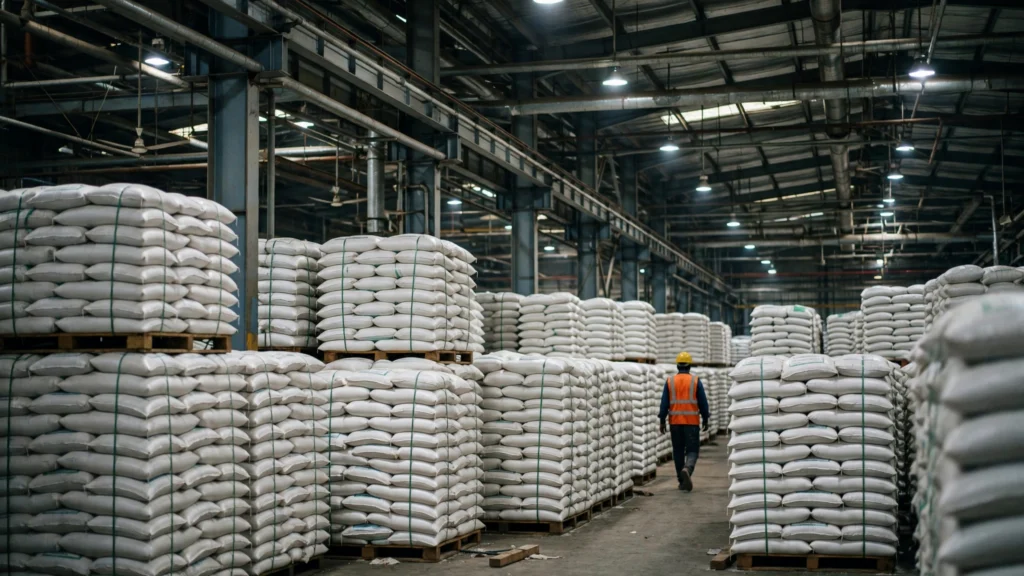
Despite the rising bill, the government has kept fertiliser supplies flowing to farmers. The Union Cabinet recently approved Rs 62,370 crore of fertiliser support for the 2026-27 rabi season, and National Fertilizers has floated a fresh urea import tender ahead of the next sowing season. Officials say healthy inventories offer some relief: stocks of all major fertilisers were higher than a year earlier as of November 11.
Why it matters
A subsidy bill of Rs 2.76 lakh crore would be the largest the exchequer has ever carried for fertilisers, and it lands in a year when the government is also trying to hold its fiscal deficit to 4.3 percent of GDP. Every extra rupee on fertiliser subsidy is a rupee that cannot go to capital spending, tightening the Finance Ministry’s room ahead of the Union Budget.
For farmers, the subsidy is the reason shop prices have not followed global prices upward. Without it, the 85 percent jump in urea prices since March would have landed directly on the cost of growing every crop.
For consumers, the link is quieter but real. Fertiliser costs feed into food production costs, and food inflation, already at 8.5 percent in October, is the main reason overall retail inflation breached the RBI’s 6 percent tolerance limit.
What to watch next
- Next five months: Global urea, ammonia and sulphur prices will decide the final figure.
- Rabi season: Whether supplies hold up through peak sowing.
- Urea import tender: Prices discovered in National Fertilizers’ latest tender will signal where costs are heading.
- Union Budget: Whether the government raises the fertiliser allocation or finds savings elsewhere.
FAQs
How big is India’s fertiliser subsidy bill this year?
The Budget provided Rs 1.71 lakh crore. ICRA estimates a record Rs 2.76 lakh crore, and the industry body estimates Rs 2.5 lakh crore.
Why has the bill risen so sharply?
The West Asia crisis has pushed up global prices of urea, DAP, ammonia, sulphur and natural gas. Urea prices have risen about 85 percent since March 2026, and India imports most of its fertiliser needs.
Will farmers pay more for fertiliser?
No. The subsidy absorbs the higher international cost, so retail prices for farmers stay unchanged. The extra burden falls on the government, not on farmers.
What was the previous record?
Rs 2.55 lakh crore in 2022-23, after the Russia-Ukraine war disrupted global fertiliser markets. Last year the bill stood at Rs 2.11 lakh crore.
Does this affect the fiscal deficit?
Yes. A bill Rs 1.05 lakh crore above Budget adds pressure on the deficit target of 4.3 percent of GDP, unless savings are found elsewhere or revenues beat expectations.
The fertiliser bill shows how closely India’s farm economy is tied to geopolitics as much as to the monsoon. The subsidy keeps food growing and prices stable, but it comes at a record cost this year.