India’s ambitious green-fuel programme ran into its biggest policy U-turn yet this weekend. In a quantity-bid tender dated October 16, the country’s five state-run oil marketing companies told ethanol producers that sugar, in any form, is out. No sugarcane juice. No sugar syrup. No B-heavy molasses. For the entire 2026-27 ethanol supply year, the government has ordered sugar diversion for ethanol to be reduced to zero.
The tender, floated by five state-run oil companies for around 1,100 crore litres of ethanol for the supply year starting November 1, 2026, redraws the map of a programme that powered India’s rise to 20 per cent ethanol blending in petrol. Sugar-based feedstocks drove much of that expansion, and their sudden exit leaves a gap the industry must fill with maize, rice and leftover molasses.
What the tender says
The order is blunt: the government has directed that sugar diversion for ethanol be reduced to zero for ESY 2026-27, and no offers have been sought for ethanol made from sugarcane juice, sugar, sugar syrup or B-heavy molasses.
The procurement is being run by Indian Oil Corporation, Bharat Petroleum, Hindustan Petroleum, Mangalore Refinery and Petrochemicals, and Numaligarh Refinery. Bidders must offer ethanol in kilolitres against the OMCs’ feedstock-wise, quarter-wise requirement across four quarters: November 2026 to January 2027, February to April 2027, May to July 2027, and August to October 2027. Roughly 300 crore litres are to come in each of the first two quarters and 250 crore litres in each of the last two.
Why the government hit pause on sugar
The trigger is the kitchen shelf, not the fuel pump. Domestic sugar output is expected to stay low while retail sugar prices have been climbing, and the government is unwilling to let more sugarcane be diverted into fuel when household sugar availability could tighten. The central bank’s October 7 policy had already flagged broad-based food price pressures, with sugar and onion singled out. The ethanol decision fits the same pattern: food security first.
What replaces sugar: maize, rice and C-heavy molasses
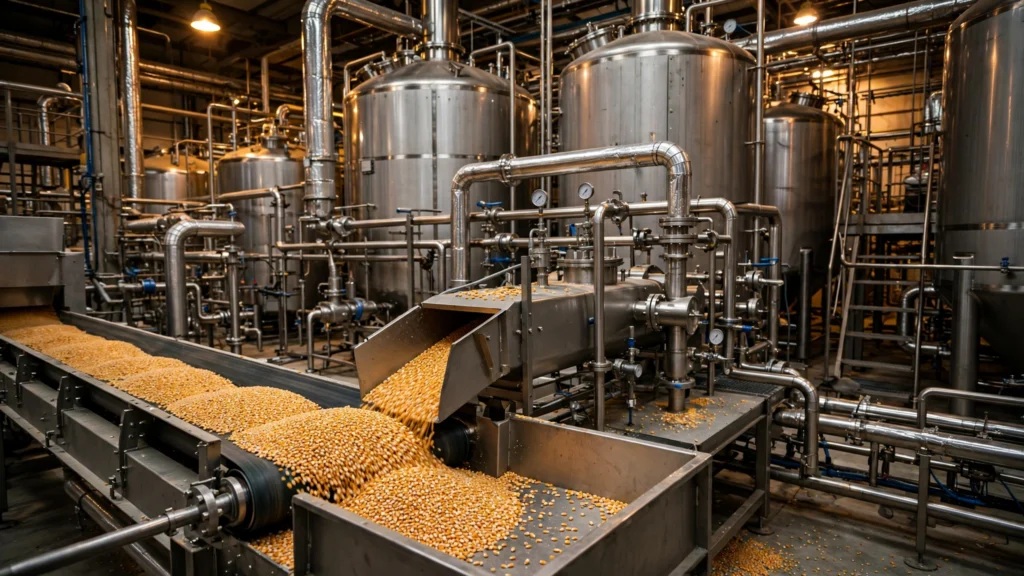
With sugar out, the tender leans on C-heavy molasses, damaged food grains, surplus rice from the Food Corporation of India, maize, and a long tail of feedstocks permitted under the National Policy on Biofuels 2018: sugar beet, sweet sorghum, cassava, rotten potatoes, and agro-food and pulp industry waste.
The feedstock-wise procurement rates set in the tender are:
- Maize: Rs 66.07 per litre, plus an incentive of Rs 2.79 per litre, excluding GST
- Damaged food grains: Rs 64 per litre
- Surplus FCI rice: Rs 60.32 per litre, though offers are not accepted for the fourth quarter
- C-heavy molasses: Rs 57.97 per litre
Transportation charges and GST are payable over and above these basic rates, and other eligible feedstocks will be procured at the lowest prevailing tender rate. The pricing clearly tilts the field toward maize, which now becomes the backbone of the blending programme.
The 266 crore-litre question
The numbers explain why the industry is rattled. In the 2025-26 supply cycle, sugar-based feedstocks supplied roughly 266 crore litres of ethanol to the national grid: about 151 crore litres from sugarcane juice and 115 crore litres from B-heavy molasses. Against a 1,100 crore-litre target, that is nearly a quarter of supply wiped out in a single tender.
Maize and grain-based distilleries will have to scale up fast. A demand surge of this size can spill into maize and rice prices, handing the government a new inflation headache even as it solves the sugar one.
Who wins, who loses
Sugar mills and cane farmers face the sharpest adjustment. Ethanol had become a prized revenue stream for mills, absorbing surplus cane when sugar prices were soft. With that channel closed for a year, mills will push more cane into sugar, which could weigh on sugar realisations.
Maize farmers and grain-based distilleries stand to gain, with assured offtake at Rs 66.07-plus per litre. For motorists, nothing changes at the pump: E20 petrol continues, and retail fuel prices are unaffected by the feedstock switch.
FAQs
Is India scrapping its E20 ethanol blending target?
No. The 1,100 crore-litre procurement target for 2026-27 is unchanged. Only the feedstock mix has changed, with sugar-based ethanol barred and grain and molasses-based ethanol taking its place.
Why has the government barred sugar-based ethanol?
Domestic sugar output is expected to stay low while retail sugar prices are elevated. The government wants available sugar to stay in the food chain rather than being diverted into fuel.
How much ethanol will oil companies buy, and at what price?
The OMCs will buy 1,100 crore litres over four quarters from November 1, 2026. Maize-based ethanol fetches Rs 66.07 per litre plus a Rs 2.79 incentive, damaged food grains Rs 64, surplus FCI rice Rs 60.32, and C-heavy molasses Rs 57.97, all excluding GST.
What happens to sugar mills and cane farmers?
Mills lose a major revenue stream for a full year and will channel more cane into sugar production. Cane procurement continues, but mill payment cycles could feel the strain.
Will this push up maize or rice prices?
That is the risk markets are watching. Roughly 266 crore litres of supply must now come from grains and molasses, and a sudden demand surge could lift maize and rice prices, adding fresh pressure on food inflation.
India’s biofuel story was built on sugarcane. For one full supply year, it will have to run on maize and leftovers instead.