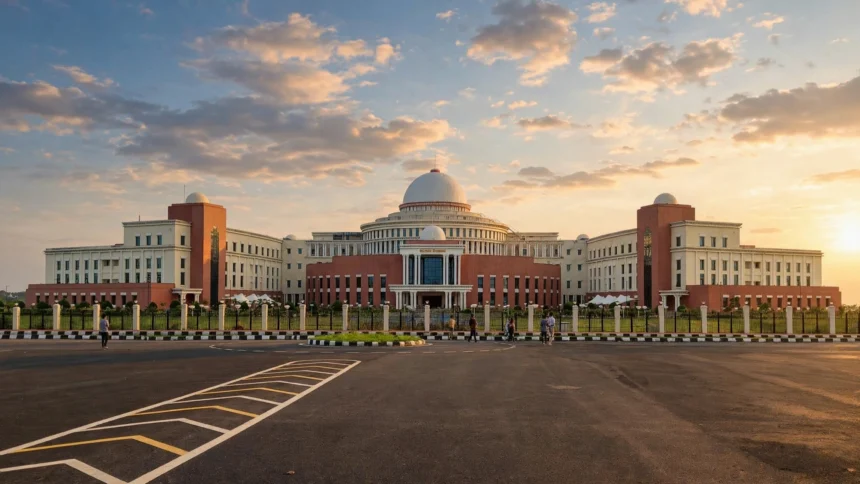
Ranchi is set for two days of sharp political sparring as the Jharkhand Assembly begins a special session on Wednesday, with the Hemant Soren government preparing to move resolutions against two decisions of the Centre: the amended mining law and the Special Intensive Revision (SIR) of electoral rolls. Proceedings begin at 11 am on both days, November 25 and 26, and the ruling alliance and the opposition BJP have both drawn up their battle lines.
What the mining law fight is about
The first flashpoint is the Mines and Minerals (Development and Regulation) Amendment Act, 2026. The state government says the amended law curtails its fiscal powers over mineral-bearing land. It places conditions on the levies states can impose on mineral rights and mineral-bearing land, with the restrictions to be prescribed by the Centre.
Jharkhand Congress in-charge K. Raju argued that the changes could restrict the state’s powers to impose taxes and cess on mineral rights, and hit Jharkhand’s mineral revenue and welfare spending in a state where mining is a lifeline.
The BJP has rejected that argument. At a meeting of its Legislature Party chaired by state president Aditya Sahu, in the presence of Leader of Opposition Babulal Marandi, chief whip Naveen Jaiswal said the MMDR law is a national law. He accused the state government of opposing it to retain the power to impose cess and taxes that could increase coal prices.
The SIR dispute reaches the Assembly floor
The second resolution concerns the Special Intensive Revision of electoral rolls. The state government has raised concerns that the documentation and verification requirements of the exercise could lead to eligible voters being excluded from the rolls.
Raju said notices had been issued to a large number of voters and hearings in several cases were still pending. He sought more time and transparency in the process, warning that it could affect vulnerable communities, particularly tribal people, in exercising their voting rights.
The BJP has dismissed the move as a political exercise. Jaiswal described SIR as a constitutional exercise conducted by the Election Commission, with Booth Level Officers carrying out door-to-door verification under district administration supervision. He questioned the government for opposing a process that involves its own administrative machinery.
Why it matters
This session is about more than two resolutions. Jharkhand is a mineral-rich state where coal and mining revenues fund much of the government’s welfare spending, so any change in who controls levies on mineral land goes straight to the state’s budget. At the same time, the SIR debate touches the most basic democratic right: whether every eligible voter stays on the rolls. For readers, the practical stakes are clear. On mining, the outcome shapes how much revenue Jharkhand can raise from its own mineral wealth. On SIR, it decides whether voters who received notices get enough time and a fair hearing before their names are struck off.
The timing adds weight. The Soren government completes two years in office on November 28, just two days after the session ends, so the proceedings double as a test of the ruling alliance’s political positioning ahead of that milestone. The resolutions themselves are not binding on the Centre, but they put Jharkhand’s objections on the formal record and add to the chorus of opposition-ruled states questioning both the mining law changes and the voter-roll revision.
Timeline: how the session came about
- August 11, 2026: The Monsoon Session of the Jharkhand Assembly is adjourned sine die.
- October 27, 2026: The state Cabinet, chaired by Chief Minister Hemant Soren, decides to call a special session.
- November 24, 2026: Both sides hold strategy meetings. Soren meets ministers and ruling alliance legislators virtually; the BJP Legislature Party finalises its counter-strategy.
- November 25-26, 2026: The two-day special session runs from 11 am each day, with resolutions planned on the MMDR amendments and SIR.
- November 28, 2026: The Hemant Soren government completes two years in office.
What happens next
Over the two days, the House will debate both resolutions before putting them to a vote. If passed, they will be forwarded to the Union government. The BJP, with Marandi leading the opposition benches, is expected to contest both resolutions, while the ruling JMM-Congress-RJD alliance will use the debate to frame the two issues as questions of the state’s constitutional rights.
FAQs
When is the Jharkhand Assembly special session?
The two-day session runs on November 25 and 26, 2026, with proceedings beginning at 11 am each day.
What will the Jharkhand Assembly debate?
Two resolutions against the Centre: one on the Mines and Minerals (Development and Regulation) Amendment Act, 2026, and one on the Special Intensive Revision of electoral rolls.
Why is the government opposing the mining law amendment?
It says the amended law restricts the state’s powers to impose taxes and cess on mineral rights and mineral-bearing land, which could affect Jharkhand’s mineral revenue and welfare spending.
Are the Assembly resolutions binding on the Centre?
No. The resolutions record the state’s formal opposition and are forwarded to the Union government, but they do not by themselves change central law or the SIR process.
The next two days in Ranchi will show whether the Assembly’s voice carries beyond its walls. For now, both sides have made their positions clear, and the debate begins at 11 am.