
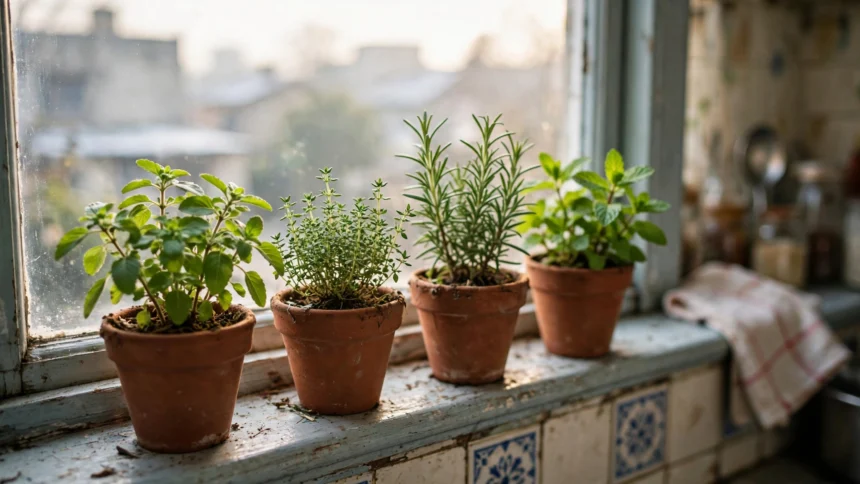
As winter settles in across India, the sniffles start doing the rounds. But a quieter fix is growing in popularity, quite literally on the windowsill. A small row of potted medicinal herbs can give you fresh leaves for teas and home remedies all season, for the price of a few seed packets.
Moneycontrol highlighted the idea this week in a round-up of six herbs that thrive on a sunny windowsill through winter. Fresh herbs keep their volatile oils and flavour, and a living plant is always within reach when a sore throat starts at night.
Thyme: the cough and congestion helper
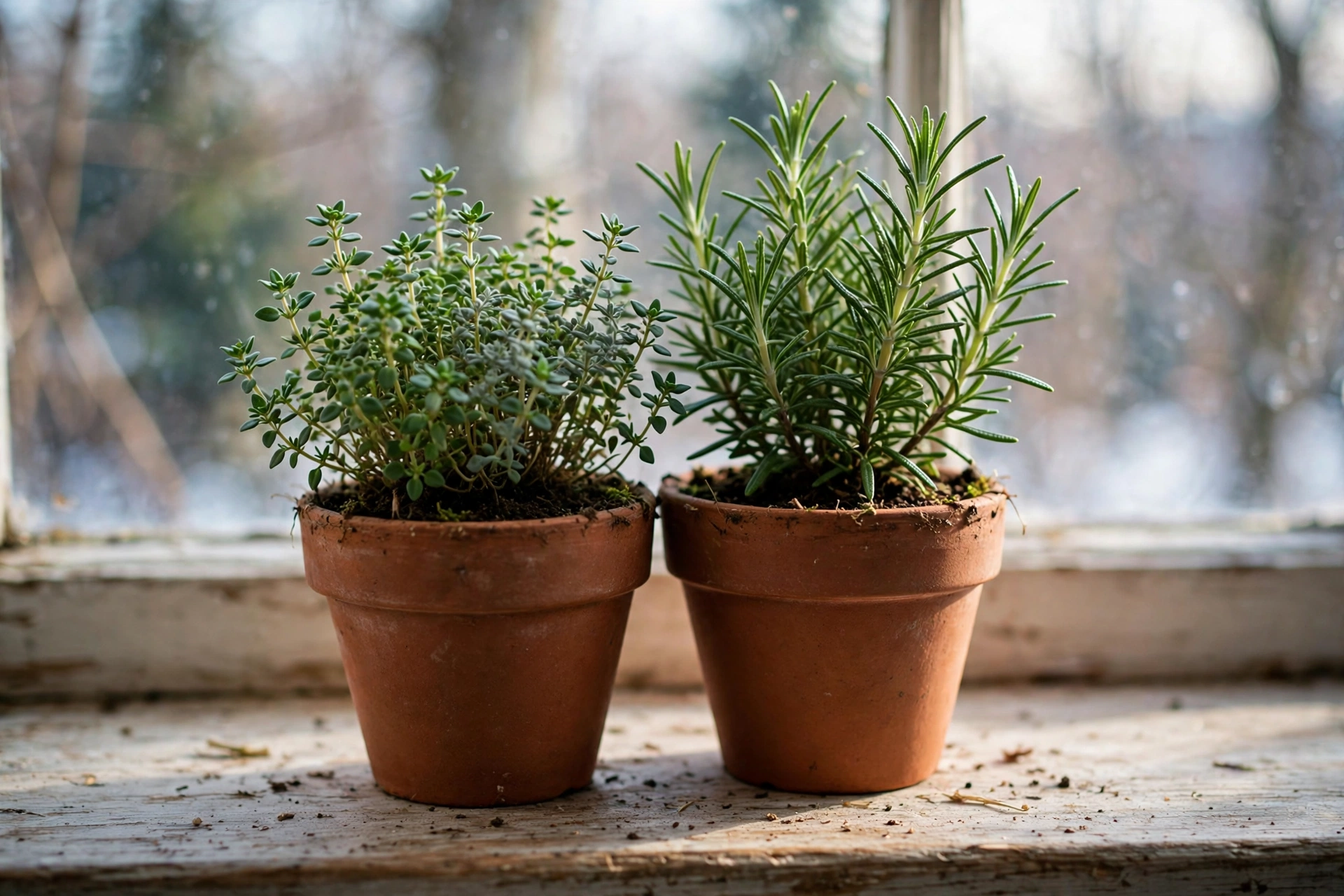
Thyme is the workhorse of the winter windowsill. Its leaves carry thymol, a compound with natural antimicrobial and antiseptic properties, and a tea from fresh sprigs is a classic remedy for a persistent cough and a congested chest. Steep a few sprigs in hot water for five minutes and sip it warm. It likes a bright spot and poor, well-drained soil that dries out slightly between waterings.
Rosemary: the antioxidant evergreen
Rosemary is packed with antioxidants and anti-inflammatory compounds, and it is one of the few herbs that stays green and fragrant right through the cold months. A sprig in hot water makes a warming infusion, and the leaves are just as useful in roasted vegetables, soups and dals. Give it the sunniest window you have, with good airflow and light, well-draining soil.
Oregano: the low-maintenance fighter
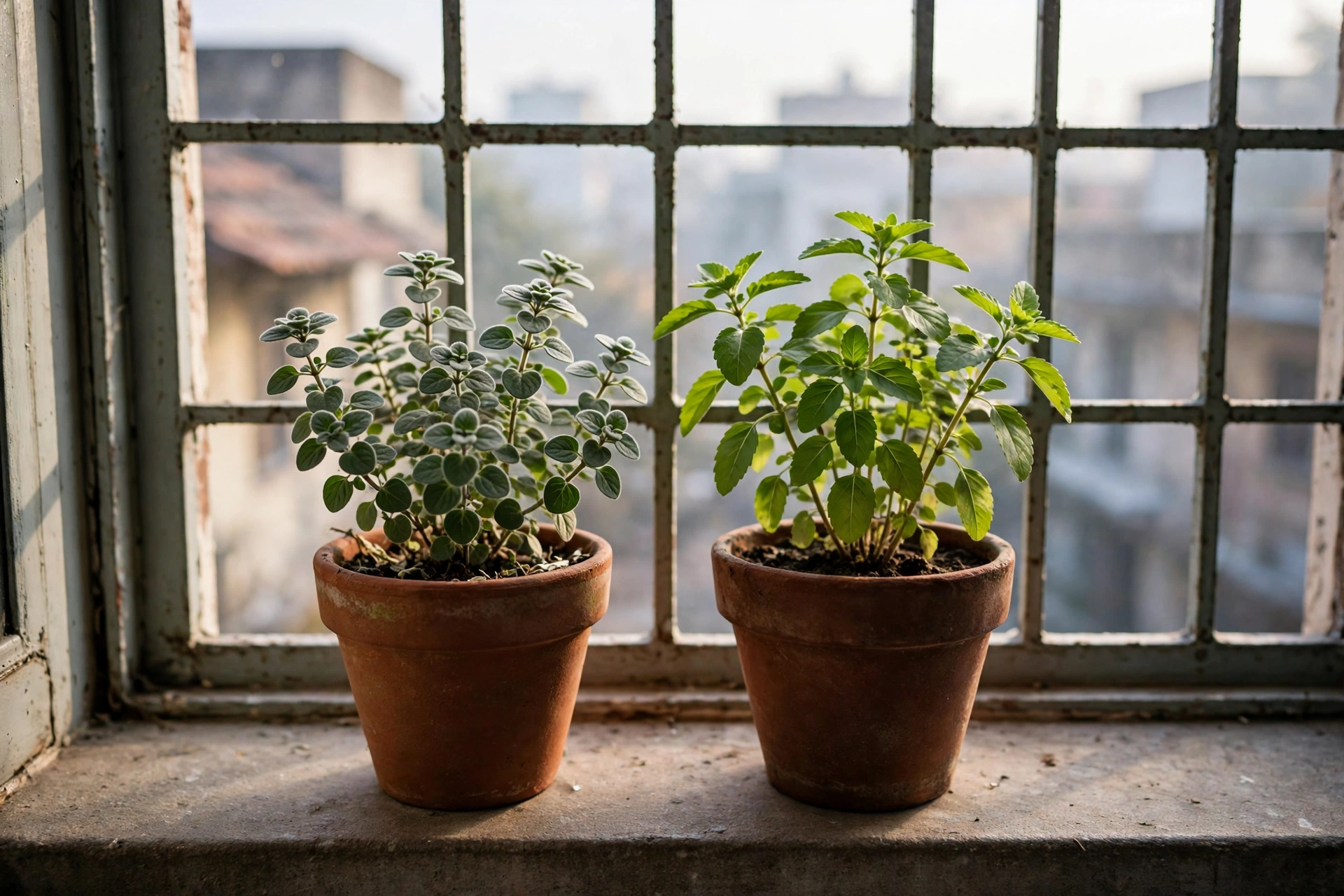
Oregano is a kitchen staple, but its leaves also carry carvacrol, a compound with antiviral and antibacterial properties that helps the body fight off early cold symptoms. Steeped into a warm infusion, its pungent leaves release soothing vapours that feel made for a blocked nose. It tolerates cooler windowsill temperatures and needs very little water in winter.
Tulsi: the Indian adaptogen
No Indian herb garden is complete without tulsi, or holy basil. Revered for centuries as an immunity-boosting adaptogen, it is brewed into comforting teas that ease fever, cough and seasonal stress. For most Indian homes, it is also the easiest herb on this list to source, since saplings are sold at nearly every nursery. Place it on your sunniest, warmest windowsill, away from cold drafts, and water moderately.
Sage: the sore-throat soother
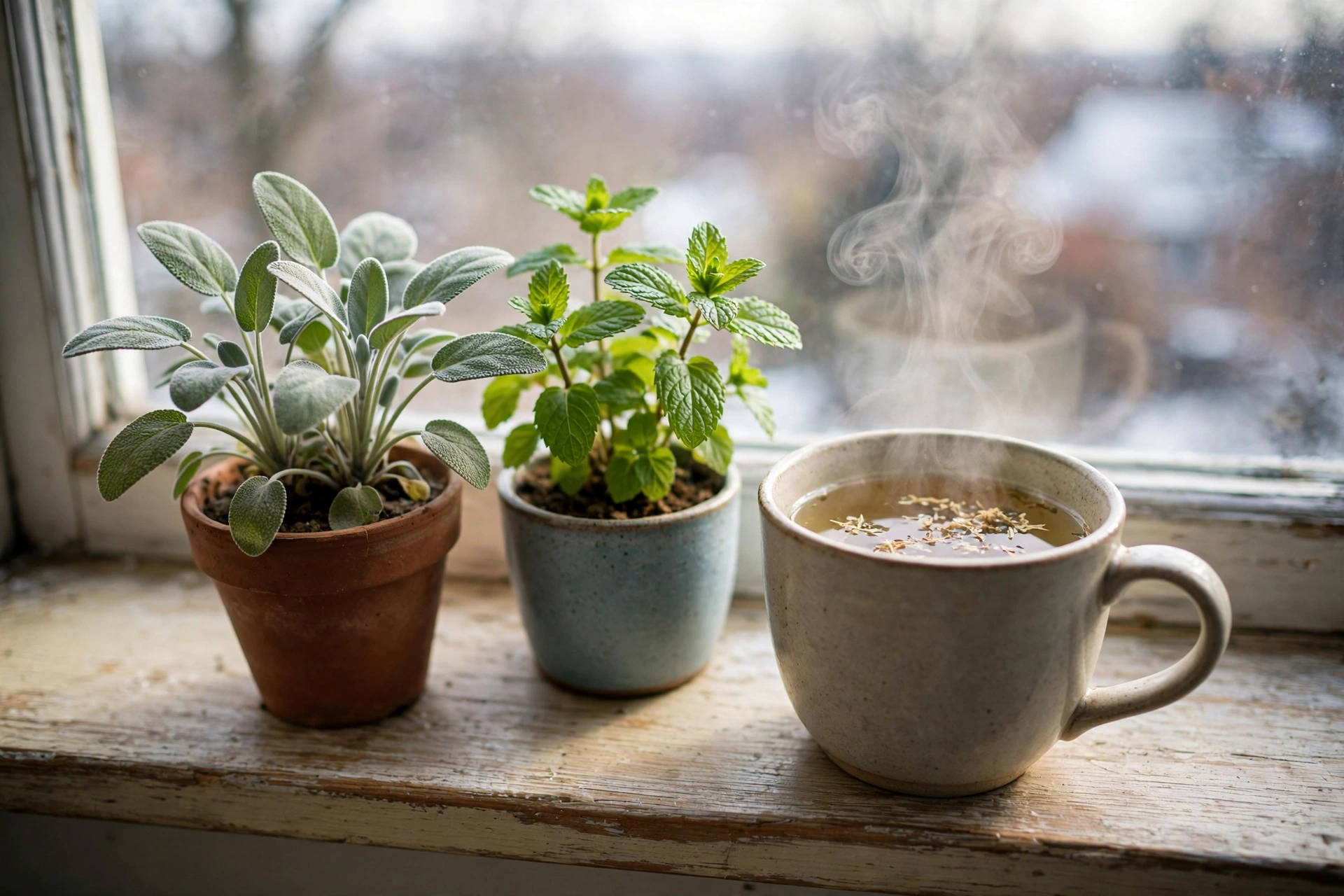
Sage has soft, silvery-green leaves valued for their astringent properties, which calm a sore, scratchy throat and ease mild inflammation. A warm sage tea, sometimes with a little honey, is a gentle gargle and drink when the throat feels raw. It grows best in a sunny spot with well-drained soil, and picking leaves from the top keeps it bushy.
Peppermint: the decongestant
Peppermint rounds out the set. Its menthol-rich leaves make a tea that opens up a stuffy nose and settles a queasy stomach, and a few fresh leaves in hot water are enough to clear the head on a foggy morning. It is also the most vigorous grower of the six, so give it its own pot, or it will crowd out its neighbours.
Why it matters
The value of a windowsill herb garden is not that it replaces medicine. It does not. Its value is timing and freshness. A cold usually announces itself at night, when shops are shut and a doctor is a morning away. Having thyme for a cough tea, tulsi for a feverish evening and peppermint for a blocked nose means the first response is already in the house.
There is also a cost angle. A single nursery sapling costs less than a small packet of cough lozenges, and one pot can supply a household for months. And a green windowsill in December is a small daily reminder that the season can be managed, not merely endured.
Getting started this weekend
Start with three pots, not six: tulsi, peppermint and thyme cover the most common winter complaints between them. Add the rest once the first three are settled. Most nurseries sell saplings for a few dozen rupees each.
- Light: a south or west-facing window gives the strongest winter sun. Rotate pots every few days so all sides get light.
- Pots: small terracotta or plastic pots with drainage holes, with a saucer underneath to protect the sill.
- Soil: light, well-draining potting mix, with a little sand or cocopeat if the mix feels heavy.
- Water: in the morning, only when the top inch of soil feels dry. Winter herbs rot faster from overwatering than from thirst.
- Harvest: snip leaves in the morning, when their oils are strongest, and never take more than a third of the plant at once.
One caution: herbs support the body, they do not cure illness. If a fever lasts more than a couple of days, breathing becomes difficult, or a cough lingers beyond two weeks, see a doctor.
FAQs
Which herbs are easiest for a beginner to grow on a windowsill?
Tulsi, peppermint and thyme are the most forgiving. They tolerate a missed watering, grow fast, and are useful from the first few weeks.
How long will one pot last?
With regular snipping, a healthy pot of thyme, rosemary or sage can last the whole winter and into spring. Peppermint and tulsi may need replanting sooner if they outgrow the pot.
Can I use these herbs in cooking too?
Yes. Rosemary, oregano and sage are kitchen staples, and fresh leaves beat dried ones.
Winter will do what winter does. A windowsill full of green is a small, practical way to meet it on your own terms.