NITI Aayog has published the first full health check of India’s Production Linked Incentive (PLI) schemes, and it tells two stories at once. Factories are coming up fast and money is flowing in, but jobs are not keeping pace. The report, prepared with IIM Ahmedabad as knowledge partner, was released on 12 November 2026. It covers all 14 PLI sectors on four counts: investment, production, exports and employment.
The headline numbers are large. By March 2026, the schemes had attracted investment of Rs 2,40,138 crore and generated production and sales worth Rs 22,66,412 crore. Employment stood at 8,49,069 people, incentives worth Rs 35,354 crore had been paid out, and nearly 70 per cent of targeted segments were broadly on track.
What the PLI schemes actually are
The PLI schemes pay companies an incentive linked to the extra production they achieve above a base year, provided they also meet investment conditions. The idea is simple: reward firms that build capacity in India instead of importing. The government set aside a combined Rs 1,91,049 crore across 14 sectors, from electronics and pharmaceuticals to telecom equipment, automobiles, drones, textiles, white goods, solar modules, food products and speciality steel.
The schemes were launched in waves from 2020 onwards. About 58 per cent of their combined implementation period had elapsed by March 2026, the report’s data cutoff. That timing matters: this is a mid-course check, not a final verdict.
The headline numbers, in context
Against the targets set for the full life of the schemes, investment has reached 76 per cent of its target, about Rs 3.15 lakh crore. Production and sales are at 64 per cent of a target of about Rs 35.37 lakh crore. Employment, however, is at only 28 per cent of its full target of about 30.18 lakh jobs. With 58 per cent of the time gone, investment is ahead of schedule and production is roughly on course, but hiring is well behind. The report cautions that outcomes do not move in a straight line with time.
- Investment: Rs 2,40,138 crore, or 76 per cent of the full target
- Production and sales: Rs 22,66,412 crore, or 64 per cent of the full target
- Employment: 8,49,069 jobs, or 28 per cent of the full target
- Incentives paid: Rs 35,354 crore, or 18.51 per cent of the Rs 1,91,049 crore outlay
- Time elapsed: about 58 per cent of the schemes’ combined implementation period
Where the schemes are working
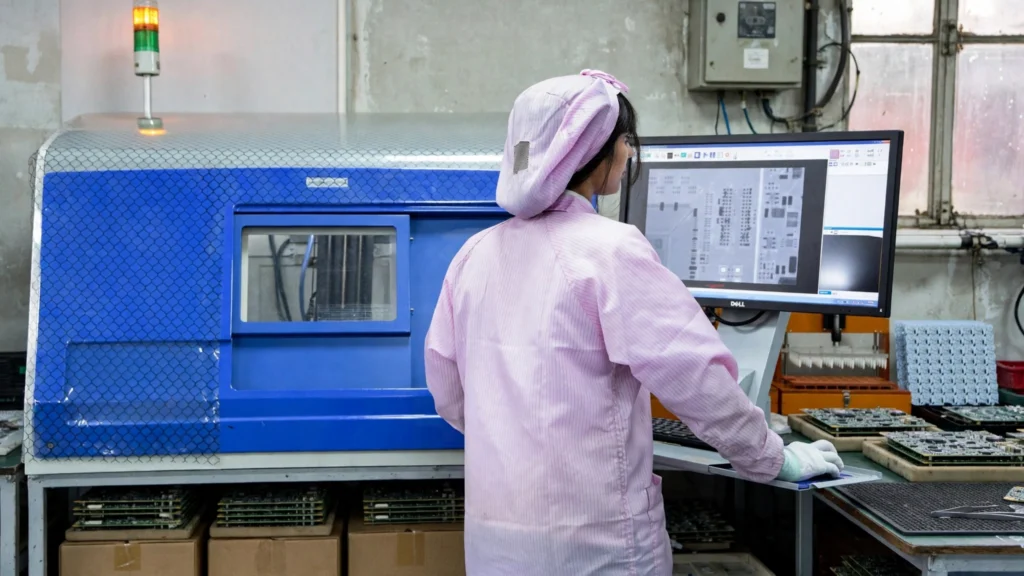
Four sectors stand out as on track across investment, production, exports and employment: large-scale electronics manufacturing, pharmaceutical drugs, telecom and networking products, and food products. The report also names medical devices, white goods and drones among the stronger performers. Electronics is the clearest success: mobile phone and component manufacturing has scaled up sharply, and India now exports phones in large volumes. Other sectors are at earlier stages. Batteries and solar modules involve long construction cycles and technology still being built up in India, so their results will take longer to show.
The jobs gap is the real story
The employment shortfall deserves the closest attention. Annual job creation ran ahead of target in the early years, but it fell well short in FY2025-26, the most recent year covered. That single-year slowdown is a large part of why the cumulative figure sits at 28 per cent.
There are a few possible explanations, and the report does not settle on one. Modern factories are capital intensive, and some plants are still in construction, where hiring comes later. What is clear is that the schemes were sold partly as a jobs programme, and on that measure they are behind. Manufacturing is central to India’s ambition to become a developed country by 2047, and the case for spending Rs 1.91 lakh crore of public money rests heavily on employment.
Why only 18.5 per cent of the money has gone out
The low disbursement figure looks alarming, but the report explains it as a feature of how the schemes work. Incentives are paid only after firms meet investment and production conditions, not upfront, so money is released late in the cycle, after factories are built and output is verified. Annual disbursements did pick up in FY26.
Even so, a fair question remains: if firms are investing and producing, why is the payout ratio still under a fifth of the outlay? Part of the answer is timing, but some claims may be stuck in verification.
What happens next
The report’s purpose is to guide changes while the schemes still have time to run. NITI Aayog has shared its findings with the ministries concerned, and weaker schemes are expected to be redesigned. Three decisions now face policymakers: whether to extend support to lagging but strategic sectors such as batteries and solar modules; whether to tighten employment conditions so payouts reward hiring more directly; and how to deepen domestic component manufacturing, so assembly here does not mean simply importing parts.
The takeaway is straightforward. The PLI experiment has proved India can attract large manufacturing investment quickly. The next test is whether that investment turns into the jobs and domestic supply chains that were promised. The report gives the government about two years of scheme time to show it can.
Frequently asked questions
What are PLI schemes?
Production Linked Incentive schemes pay companies based on the extra production they achieve in India, linked to investment and output conditions. Fourteen sectors are covered, with a combined outlay of Rs 1,91,049 crore.
How much investment have PLI schemes attracted?
By March 2026, the schemes had attracted Rs 2,40,138 crore of investment, 76 per cent of the full target of about Rs 3.15 lakh crore, according to the NITI Aayog assessment.
How many jobs have PLI schemes created?
The report records employment of 8,49,069 people by March 2026, 28 per cent of the full target of about 30.18 lakh jobs. Job creation is the weakest of the four measures tracked.
Which sectors are performing best under PLI?
Large-scale electronics, pharmaceutical drugs, telecom and networking products, and food products are on track across investment, production, exports and employment. Medical devices, white goods and drones are also performing relatively strongly.
Why has only 18.5 per cent of the incentive money been paid out?
Incentives are paid only after firms meet investment and production conditions, so payouts come late in the cycle. The report also notes outcomes should not be attributed to the incentives alone.
The PLI report card is encouraging on factories and sobering on jobs. Whether the schemes are remembered as a manufacturing success or a missed employment opportunity will be decided in the time that remains.