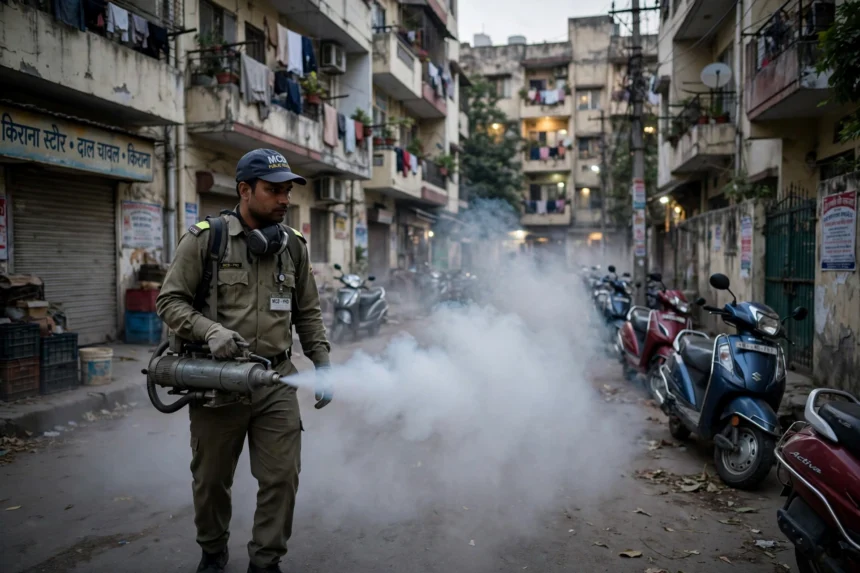
Delhi is getting a much-needed boost in its fight against mosquito-borne diseases. The Municipal Corporation of Delhi (MCD) has cleared the filling of 1,066 vacant posts in its Public Health Department, a move aimed squarely at plugging the staff shortages that have weakened dengue and malaria control work across the capital.
The decision was taken at a meeting of the MCD Standing Committee on Friday, October 30, chaired by Satya Sharma. Officials have been told to start recruitment without delay, and to consider contractual appointments wherever regular hiring would take too long. The message from the committee was blunt: field work cannot wait for paperwork.
Why the hiring matters right now
The timing is no coincidence. Delhi recorded 396 dengue cases and 94 malaria cases in October alone, according to the civic body’s mosquito-borne disease report cited at the meeting. October’s dengue tally has already crossed the 377 cases recorded during the whole of October last year, and the cumulative count for 2026 has gone past 993 for dengue and 337 for malaria.
Those numbers explain the urgency. Mosquito control is labour-intensive work. It depends on people walking lanes, checking coolers and water tanks, clearing stagnant water, spraying larvicide and following up in neighbourhoods where cases cluster. When inspector posts lie vacant, breeding sites go unchecked and cases quietly multiply.
Sharma warned at the meeting that staff shortages could directly hit prevention, field inspection and monitoring, the three legs on which the city’s vector-control programme stands. The committee therefore directed that recruitment begin immediately, with a contractual route kept ready as a backup.
Which posts will be filled
The 1,066 vacancies break down as follows:
- 14 anti-malaria officers: senior field officers who supervise control operations across zones.
- 105 malaria inspectors: inspectors who lead teams, verify breeding sites and coordinate fogging and anti-larval work.
- 398 assistant malaria inspectors: the frontline supervisory layer that carries out daily checks in wards and colonies.
- 549 multi-tasking staff (public health): field workers who do door-to-door checks, breeding-source elimination and awareness work.
Together, the four categories cover the full chain, from planning and supervision to the doorstep visits that actually stop mosquitoes from breeding.
What the new staff will actually do
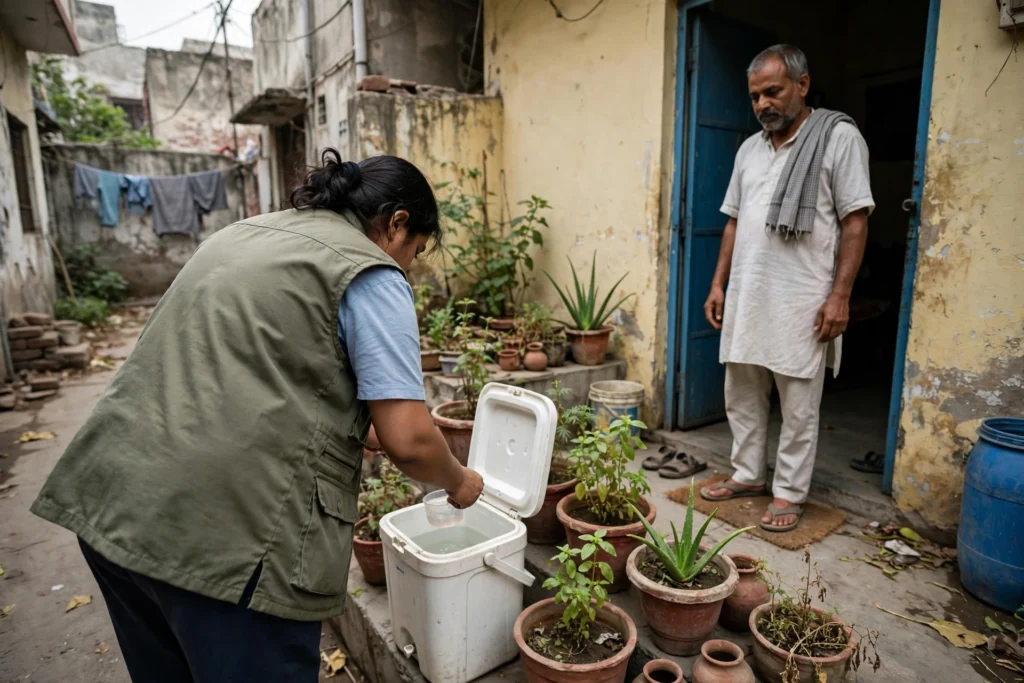
The Public Health Department’s job goes well beyond fogging, though fogging is what most residents notice. Its teams inspect homes, offices, construction sites and public places for mosquito breeding, destroy larvae at source, run anti-larval operations in drains and water bodies, and track areas reporting fresh cases so teams can be rushed there.
They also do the quieter, unglamorous work that prevents outbreaks: checking overhead tanks, flower pots, discarded tyres and coolers, and telling residents what to fix before the next rain. With more hands on the ground, the department can cover more localities in the same window, and revisit high-risk pockets more often.
The hiring decision came alongside two other civic approvals at the same meeting: a Rs 923.57 crore project to deploy 70 mechanical road-sweeping machines over 10 years, and a barrier-free toll collection system at 126 entry points into the capital.
What Delhi residents should do meanwhile
Recruitment, even on a contractual basis, takes some weeks to translate into staff on the street. Until then, the simplest protection remains at home, and it costs nothing:
- Empty coolers, flower-pot trays and any stored water at least once a week.
- Cover overhead tanks and water containers tightly.
- Do not let water collect in tyres, broken pots, coconut shells or discarded containers.
- Use mosquito repellent and nets, especially in the early morning and late evening.
- Seek medical advice early for high fever, severe headache or joint pain, rather than waiting it out.
Early testing and reporting help the civic body target fogging and larval control to the right streets.
What to watch next
The key question now is speed. The committee has directed immediate recruitment and allowed a contractual route if regular appointments drag on. Residents and councillors will be watching whether the posts are actually filled in the coming weeks, and whether the added staff shows up in the areas reporting the most cases.
If the hiring lands on time, Delhi’s mosquito-control machinery should enter the next transmission season far stronger than it has been this year. For a city that has already crossed last October’s dengue total with days of the month still in play, that cannot come soon enough.
FAQs
How many posts will the MCD fill?
1,066 vacant posts in the Public Health Department, including 14 anti-malaria officers, 105 malaria inspectors, 398 assistant malaria inspectors and 549 multi-tasking staff.
Why is the hiring happening now?
Delhi recorded 396 dengue cases and 94 malaria cases in October 2026, and the cumulative dengue count for the year has crossed 993, raising concern about staff shortages in mosquito control.
Will the appointments be permanent?
Officials have been told to start recruitment immediately and to consider contractual appointments if regular hiring takes time.
Who approved the decision?
The MCD Standing Committee, chaired by Satya Sharma, at its meeting on Friday, October 30.
What can residents do to prevent dengue?
Remove stagnant water weekly, cover tanks and containers, use repellent, and seek medical advice early for fever.
Delhi’s mosquito-control push will only work if the new teams reach the streets quickly. The approval is a strong first step, and the weeks ahead will show whether it turns into staff on the ground.