New Delhi: The Centre has released an additional Rs 1,09,019 crore to state governments as tax devolution, giving states fresh money to speed up capital spending and meet development and welfare commitments in the festive season. The amount, released on Saturday, 31 October 2026, is over and above the regular monthly devolution, the Finance Ministry said.
This is the second additional instalment in the current financial year, 2026-27. The first, of the same size, was released on 1 August 2026. Together, the two extra instalments underline how strong tax collections have translated into earlier, larger transfers to states, rather than money held back at the Centre until the end of the year.
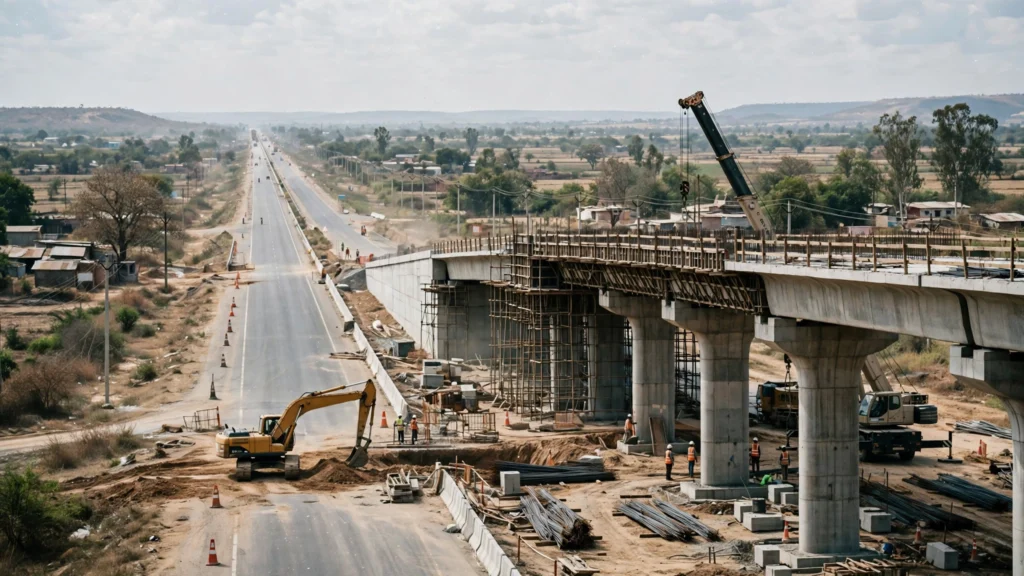
Tax devolution is not a grant or a favour. It is the states’ share of the taxes collected by the Centre, passed on under the existing arrangement in which 41 percent of the divisible pool goes to states. The Finance Ministry said the latest release should help states accelerate capital expenditure, which means building roads, schools, hospitals and other long-lasting assets, alongside development and welfare spending.
Which states received the most
Uttar Pradesh received the largest share, Rs 19,208 crore, followed by Bihar at Rs 10,845 crore and Madhya Pradesh at Rs 8,010 crore. West Bengal received Rs 7,866 crore, Maharashtra Rs 7,022 crore and Rajasthan Rs 6,460 crore.
Among other major states, Odisha received Rs 4,819 crore, Andhra Pradesh Rs 4,597 crore, Karnataka Rs 4,504 crore, Tamil Nadu Rs 4,466 crore and Gujarat Rs 4,094 crore. Jharkhand received Rs 3,660 crore, Chhattisgarh Rs 3,602 crore, Assam Rs 3,552 crore, Kerala Rs 2,597 crore and Telangana Rs 2,370 crore.
Why the timing matters
The release comes at a point in the year when states are pushing to complete projects before the winter session rush and the final quarter of the financial year. Capital spending is often back-loaded, with work slowing during the monsoon and picking up afterwards. An additional instalment in late October gives state governments room to pay contractors, clear bills and start new works without waiting for the next regular monthly transfer.
It also matters for welfare spending. States run a large part of everyday public services, from health centres and schools to rural roads and water supply. When transfers arrive on time and in full, states are less likely to delay payments or cut back on planned work. When they are delayed, the pressure shows up quickly in stalled projects and pending dues.
For the Centre, the release is also a signal about collections. The Finance Ministry linked the additional instalment to strong economic activity and buoyant tax collections. The Union Budget for 2026-27 has estimated tax devolution to states at Rs 15.26 lakh crore, compared with Rs 13.93 lakh crore in the revised estimates for 2025-26, a rise that reflects the higher tax base on which devolution is calculated.
What states are expected to do with the money
The Finance Ministry has said the money is meant to accelerate capital spending and meet development and welfare expenditure. In practice, that covers a wide range of work:
- Roads, bridges, schools, hospitals and other public infrastructure
- Ongoing capital projects that need payments to stay on schedule
- Development schemes in rural and urban areas
- Welfare-related spending that states fund from their own budgets
States are not required to spend the devolution on one named scheme. That flexibility is the point of devolution: unlike tied central schemes, it lets each state government decide its own priorities within its budget. The trade-off is accountability. Citizens and state assemblies will judge whether the extra money shows up as completed roads, staffed facilities and cleared dues, or simply disappears into routine spending.
What to watch next
Three things will show whether this instalment delivers. First, whether capital spending picks up in the coming months in state budget data. Second, whether states with large shares, such as Uttar Pradesh and Bihar, announce or accelerate specific projects. Third, whether the next regular monthly devolution arrives on schedule, keeping the flow steady rather than lumpy.
For now, the headline is simple. States have received Rs 1.09 lakh crore more than the regular monthly transfer, for the second time this financial year. How well that money is used will be decided not in New Delhi, but in state capitals and district headquarters across the country.
FAQs
What is tax devolution?
Tax devolution is the share of central taxes that is transferred to state governments. Under the current arrangement, 41 percent of the divisible pool of central taxes goes to states.
Is this Rs 1,09,019 crore extra money or an advance?
It is an additional instalment over and above the regular monthly devolution for 2026-27, and the second such additional instalment this financial year after the one on 1 August 2026.
Which state received the largest amount?
Uttar Pradesh received the largest share at Rs 19,208 crore, followed by Bihar at Rs 10,845 crore and Madhya Pradesh at Rs 8,010 crore.
How is each state’s share decided?
Shares follow the Finance Commission formula, which takes into account factors such as population and income levels, rather than being fixed afresh for each release.
What are states supposed to spend it on?
The Finance Ministry said the release should help states accelerate capital expenditure and meet development and welfare-related expenditure.
States now have the funds in hand. The next test is delivery on the ground.