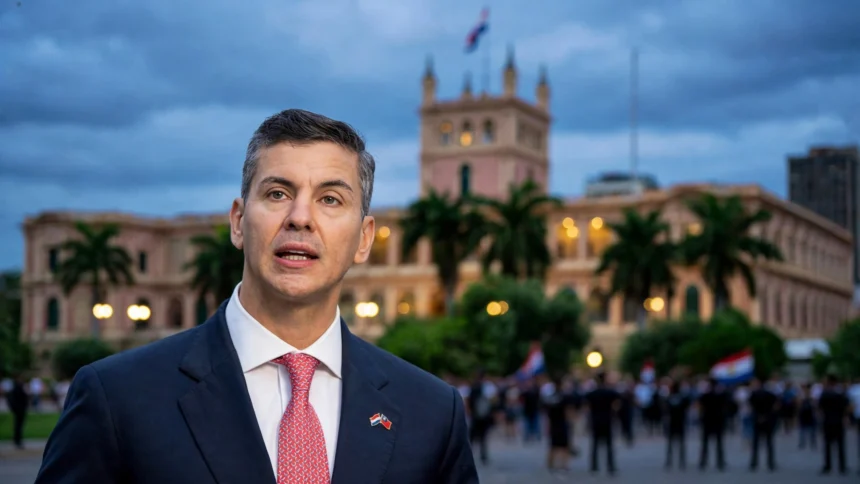
Paraguay has a new president tonight, and the old one is under house arrest. In one of the fastest political collapses South America has seen in years, the Senate voted on Friday to remove President Santiago Pena from office over a banking crisis that froze the savings of nearly three million people, close to half the country’s population.
Pedro Alliana, Pena’s vice president, was sworn in as president within hours of the vote. Pena was placed under house arrest minutes after his removal and must report to the prosecutor’s office on Saturday morning to face questions over alleged breach of trust, influence peddling and misappropriation of funds.
The trigger was the collapse of Ueno Bank, a digital lender that had grown from an obscure finance company into a household name in less than five years. When Paraguay’s central bank seized the bank on Tuesday, November 3, around three million customers suddenly found they could not touch their money.
How a bank brought down a president
Pena’s fall was strikingly fast. On Thursday, he announced his resignation, hoping to end the crisis on his own terms. Congress refused to accept it, and within minutes the lower house voted 78-0 to impeach him, with lawmakers from his own long-ruling Colorado Party joining the opposition.
The Senate went further than that: 44 of the 45 senators voted to remove him, with one lawmaker absent. Senate President Basilio Nunez declared Pena guilty of poor performance in his duties.
It made Pena only the second Paraguayan president to be forced out by impeachment since the country’s return to democracy in 1989, after Fernando Lugo in 2012. Pena, a former IMF economist who took office in August 2023, had been welcomed in Washington just weeks ago as a key ally of the Trump administration. Now he faces criminal prosecution, because the impeachment vote also stripped him of his parliamentary immunity.
The charges alleged conflicts of interest, manipulation of regulatory oversight, diversion of pension funds and a cover-up involving the central bank. The attorney general has opened three criminal investigations into the crisis.
What happened to depositors’ money
Ueno Bank claimed more than 60 percent of Paraguay’s adults as customers, and it held as much as 850 million dollars in public money. Around 380 million dollars of that came from the state pension and health fund, which is now relocating about 32,000 retirees to other arrangements. A judge has since ordered six Ueno executives, including founder Miguel Vazquez and bank president Juan Manuel Gustale, jailed pending trial, while two others were placed under house arrest.
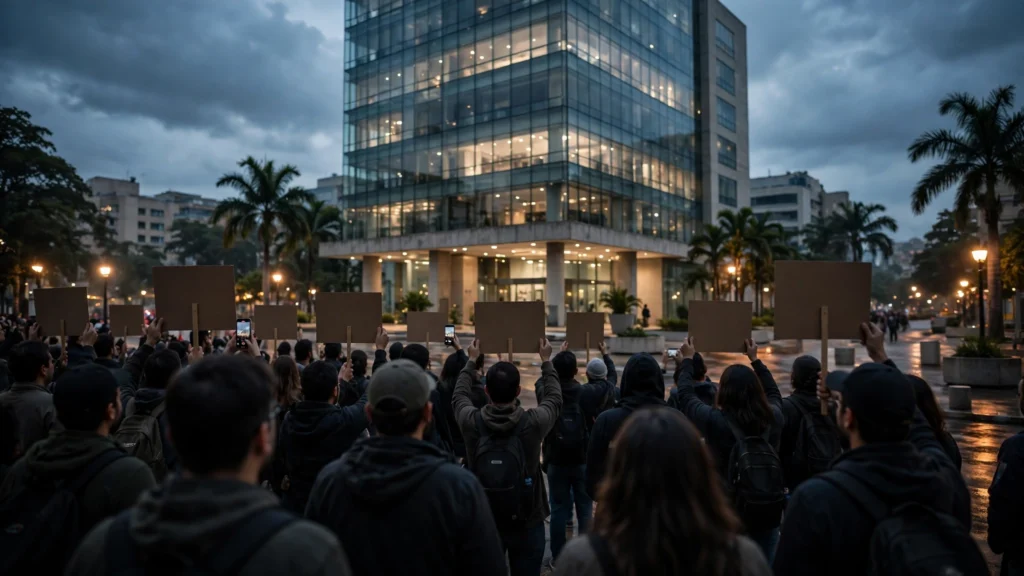
For ordinary savers, there is some relief. Paraguay’s deposit guarantee covers up to about 38,000 dollars per depositor, and central bank estimates suggest 97 percent of account holders fall fully within that ceiling. Banking law requires payment within 15 days, and advance payments to some depositors began on Thursday. But for balances above the cap, the central bank has offered no guarantee of full recovery, and that uncertainty drove thousands of protesters onto the streets of Asuncion for three days.
The link to Pena turned a banking failure into a political one. Until March 2025, he held a stake in Grupo Vazquez, the group that controlled Ueno Bank.
Who is Pedro Alliana?
Alliana, 52, was Pena’s running mate and vice president, and he now serves out the remainder of Pena’s term, which runs through August 2028. He has promised not to abandon the almost three million depositors caught up in the crisis. His immediate task is to restore confidence in a banking system many Paraguayans now distrust and to get money back to savers and pensioners quickly.
What happens next
Pena is due at the prosecutor’s office on Saturday morning. The attorney general’s office has said the investigations will examine how authorities supervised the bank, how they handled its failure, and how public funds came to be placed with the lender.
Frequently asked questions
Why was Paraguay’s president impeached?
President Santiago Pena was removed by the Senate over alleged misconduct linked to the collapse of Ueno Bank, whose failure froze the accounts of nearly three million people. The charges cited conflicts of interest, manipulation of regulatory oversight and diversion of pension funds.
Who is Paraguay’s new president?
Pedro Alliana, the former vice president, was sworn in on Friday, November 6, 2026. He will serve the remainder of Pena’s term, which runs through August 2028.
How many people were affected?
Around three million customers, more than 60 percent of Paraguay’s adults and nearly half of the country’s 6.5 million people, were unable to access their accounts after the central bank seized the lender on November 3.
Will depositors get their money back?
Paraguay’s deposit guarantee covers up to about 38,000 dollars per depositor, and the central bank estimates 97 percent of account holders are fully covered, with payments due within 15 days. Balances above the cap are not guaranteed in full.
What happens to Santiago Pena now?
Pena was placed under house arrest immediately after his removal and must report to the prosecutor’s office on Saturday morning. He faces possible charges including breach of trust, influence peddling and misappropriation of funds.
Paraguay’s crisis is still unfolding, and the next test will be whether the new government can return depositors’ savings quickly enough to calm a country that has spent three days on the streets.