Bahrain accused Iran on Saturday of striking a civilian industrial facility, as three tankers were reported hit in the Strait of Hormuz. The two incidents ended a weeks-long lull in fighting and put the world’s most important oil lane back at the centre of the crisis.
Bahrain’s interior ministry said the attack caused a fire at the facility and material damage, but no injuries. “As a result of the heinous Iranian aggression, a civilian industrial facility was targeted, causing a fire at the site. Civil Defence is working to bring the fire under control,” the ministry said in a post on X, without naming the location. Residents told AFP they saw smoke over Sitra Island, home to industrial sites including a refinery run by the state oil company Bapco.
What happened in Bahrain
Iran’s Revolutionary Guards said they had attacked two American bases on the island, Sheikh Isa and Juffair, according to the Fars news agency, which described the strikes as a response to “the illegal actions of the United States”. Bahrain hosts the US Navy’s 5th Fleet, and the island kingdom has said it intercepted several Iranian aerial attacks during the past week.
Saturday’s fire was the latest in a series of attacks on Bahrain this week, raising pressure on Gulf states hosting American forces.
Tankers under fire in Hormuz
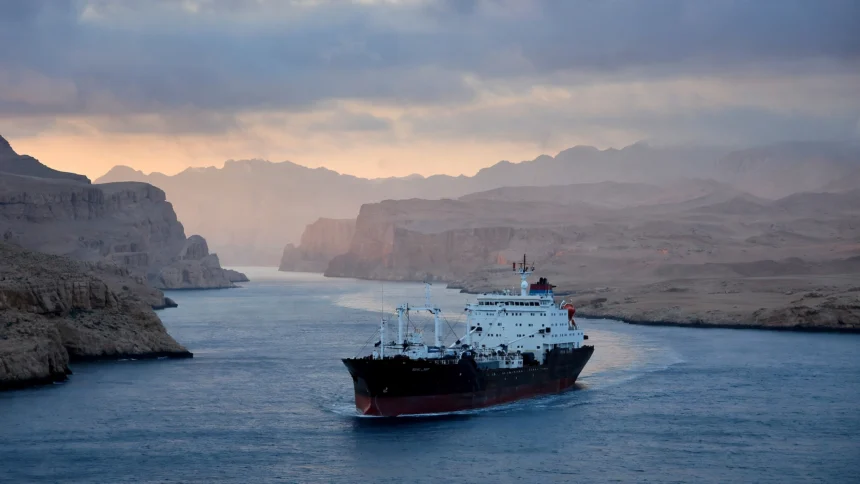
At sea, the British maritime agency UKMTO said two tankers were struck separately by projectiles while leaving the Persian Gulf through the Strait of Hormuz. One vessel was hit in the stern and another in the engine room. There were no reported casualties.
Iranian state media reported a third vessel, saying it caught fire after entering a restricted zone and striking a mine. Iran’s army said the ship had switched off its identification systems in defiance of warnings. The US military says it recently cleared all mines from the main routes.
Iran also said on Saturday that it had shot down an American drone over Qeshm Island. American fighter jets had struck an Iranian missile site on Qeshm the previous Tuesday. Iran’s army also claimed its air defences had damaged a US F-16 fighter jet over the Persian Gulf on Friday night, forcing an emergency landing. Washington has denied that account.
A conflict that paused, then flared again
The fighting began with US and Israeli strikes on Iran in late February, and the Gulf had seen a weeks-long lull before this week’s attacks. The Strait of Hormuz, which carried one-fifth of the world’s oil before the war, has become the focus of the stalemate, with Iran trying to blockade the lane and the US escorting vessels through it while blockading Iranian ports in return.
US Central Command said last month it had helped Gulf countries export 1.5 billion barrels of oil through Hormuz since the summer. Gulf News reported that Tehran is preparing to send 14 oil tankers to breach the American naval blockade.
Why it matters
For India, the stakes are direct. India is among the world’s largest importers of crude oil, and Gulf supplies are watched closely in New Delhi: any disruption in Hormuz feeds quickly into global crude prices, then petrol and diesel prices at home.
The escalation also matters because it widens the map of the conflict. Bahrain is not a distant theatre. It hosts the US Navy’s 5th Fleet, and attacks on its soil put a Gulf Arab state that has tried to stay on the sidelines in the line of fire. Each strike tests how long Gulf states can host American forces without becoming targets themselves.
What happens next
Diplomacy has not stopped. A Qatari delegation held two hours of talks in Tehran on Friday evening, Iran’s deputy foreign minister Kazem Gharibabadi said. Foreign Minister Abbas Araghchi said the talks “must be given a chance”.
But Tehran has set out firm demands: an end to the war, unfrozen Iranian assets, lifted oil sanctions and an end to the US counter-blockade of Iranian ports. “As long as Iran’s demands are not met, the discussion on the Strait of Hormuz and its opening is pointless,” Araghchi said.
What to watch in the coming days is whether the 14 tankers sail, whether oil markets react when trading resumes, and whether the Qatari channel delivers anything.
FAQs
What happened in Bahrain on Saturday?
Bahrain said Iran struck a civilian industrial facility, causing a fire and damage but no injuries. Iran’s Revolutionary Guards said they attacked the US bases of Sheikh Isa and Juffair.
How many tankers were hit near Hormuz?
UKMTO reported two tankers struck by projectiles leaving the Gulf, with no casualties. Iranian state media reported a third vessel caught fire after hitting a mine.
Why is the Strait of Hormuz so important?
It carried one-fifth of the world’s oil before the war and is the main shipping route for Gulf crude. Any disruption pushes up global oil prices.
What does this mean for India?
India is a major crude importer, so a Hormuz disruption can raise global oil prices and feed into petrol and diesel costs at home.
Are talks still going on?
Yes. A Qatari delegation held two hours of talks in Tehran on Friday, though Iran has set firm conditions for any deal.
Informeia will keep tracking developments in the Gulf and what they mean for oil markets and India.