Retirement planning for lakhs of private sector employees just got a big number attached to it. The Employees Provident Fund Organisation has told its board that paying higher pensions to about 4.45 lakh applicants could cost it an additional Rs 1.1 lakh crore, a figure that shows just how large the bill from a four-year-old Supreme Court order has become.
The disclosure came in a communication from the EPFO to its Central Board of Trustees, which meets in Mumbai on Thursday, November 19. The board has been asked to take note and give directions, including on arrears and the pending court cases.
What the EPFO told its board
Four years after the Supreme Court’s November 2022 judgment allowed employees to seek pension based on their actual higher wages, the EPFO has received 17.49 lakh applications for pension on higher wages. Of these, 2.24 lakh were never forwarded by employers before the last date of January 31, 2025, leaving 15.24 lakh applications to process. As of November 13, the EPFO said it had disposed of 99.2 per cent of them.
Demand letters have gone out to 4,45,471 people, asking them to deposit the additional contribution needed. Pension payment orders have been issued to 1,51,874 pensioners, and another 2,027 orders are being finalised. Around 80,067 cases were later found ineligible, mainly because the demand amount was not paid. So far, 2,62,102 applicants have deposited the amount or given consent.
How the Rs 1.1 lakh crore figure is worked out
For the 3,15,601 applications approved in principle so far, the additional liability works out to Rs 78,501.42 crore, or about Rs 24.9 lakh per person: Rs 25.99 lakh for active members and Rs 23.14 lakh for pensioners.
For the 2,62,102 applicants who have already deposited the demand amount or given consent, the proportionate liability is about Rs 65,263 crore. If every one of the 4.45 lakh applicants who received a demand letter were approved, the bill would rise to about Rs 1.109 lakh crore. The EPFO cautioned the estimate could change with future eligibility and litigation.
The contrast with earlier estimates is striking. In March this year, official figures put the additional liability at Rs 78,500 crore, contradicting the Centre’s earlier claim of a Rs 10 lakh crore cost. The new figure is higher because it covers all 4.45 lakh demand-letter cases.
A four-year wait, and the court cases still running
It goes back to November 4, 2022, when the Supreme Court upheld the 2014 amendments to the Employees’ Pension Scheme of 1995, allowing subscribers to opt for higher pension on their actual wages. The court struck down the 1.16 per cent member contribution and gave eligible subscribers four more months to opt in.
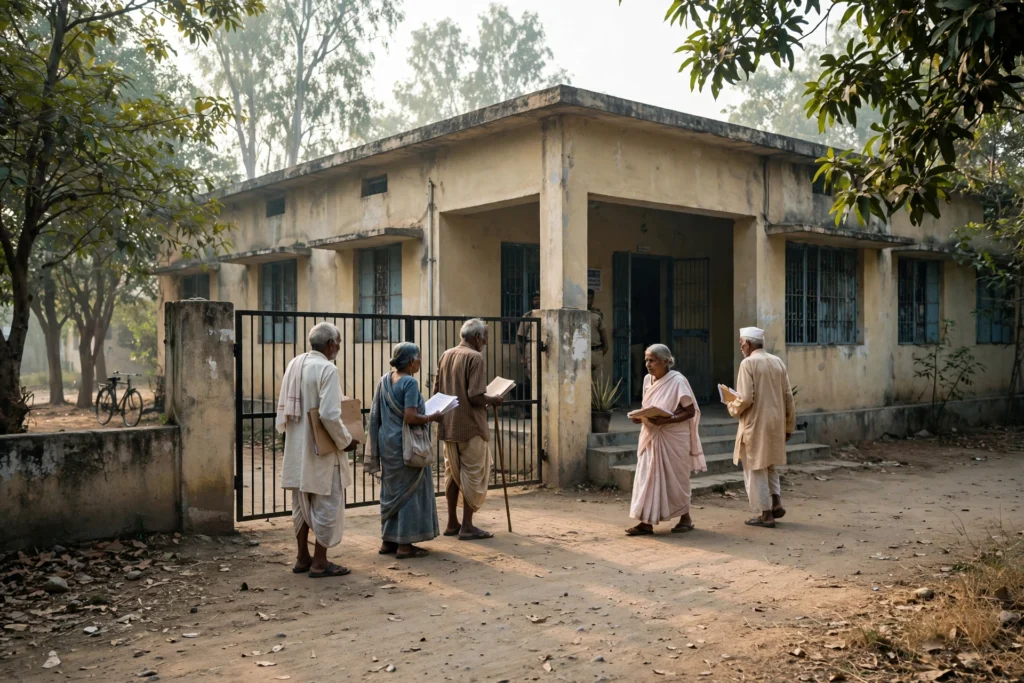
Since then, the process has moved slowly through paperwork, employer verification and courtrooms. “This is a burning issue adversely affecting all EPS pensioners in the evening of their lives, as they have all crossed 70 years of age,” pension activist Parveen Kohli said ahead of the board meeting. Cases are still pending over exempted trust rules, pro-rata calculation disputes, and claims by employees who retired before September 1, 2014.
Why it matters
For the 4.45 lakh applicants, most of them retired private sector workers in their seventies, this is not an abstract budget line. A higher pension based on actual wages can mean several times the pension they receive today under the Rs 15,000 monthly wage ceiling. Only 1.51 lakh payment orders have been issued so far, against 4.45 lakh demand letters, so much of the promise is still stuck in process.
For the EPFO and the government, the stakes are fiscal as well as administrative. The pension fund is built from employer contributions of 8.33 per cent of wages plus budgetary support of 1.16 per cent from the Centre. A bill of Rs 1.1 lakh crore will force hard choices about funding, and Thursday’s board directions will signal the government’s plan.
What happens next
All eyes are on the Central Board of Trustees meeting on Thursday. The board is expected to review the status of higher pension cases, the funding question and the pending litigation. Applicants should check they have deposited the required amount, since non-payment is the main reason cases were declared ineligible, and track payment orders on the EPFO portal.
Frequently asked questions
What is the higher pension issue about?
The Supreme Court ruled in November 2022 that employees could opt for pension based on their actual wages instead of the Rs 15,000 monthly ceiling, raising the monthly pension for eligible members.
How much will it cost the EPFO?
About Rs 1.109 lakh crore if all 4.45 lakh demand-letter cases are approved; Rs 78,501 crore for the 3.15 lakh approved so far.
How many pensioners have received higher pension so far?
As of November 13, pension payment orders have been issued to 1,51,874 pensioners, with another 2,027 orders being finalised.
Why were some applications rejected?
Around 80,067 cases were found ineligible, mainly because the demand amount was not deposited. Others are stuck over trust rules and pro-rata disputes in court.
What should applicants do now?
Ensure the required amount is deposited or consent given, and track the payment order status on the EPFO portal.
Thursday’s board meeting is the next big moment in a case that has already run for four years.